How Forests Affect Air
Interactive passage with audio narration, comprehension questions, and printable PDF.
By completing this purchase you agree to our Terms of Use and Privacy Policy. Your subscription renews automatically until you cancel. You can cancel anytime from your account settings. All sales are final and non-refundable. Digital content is available for download in your account immediately upon purchase.
What's included
How Forests Affect Air preview and details
About this printable How Forests Affect Air science reading passage, NGSS-aligned (Grades 4-6)
Sample passage and quiz from How Forests Affect Air
Reading passage and comprehension quiz preview
How Forests Affect Air
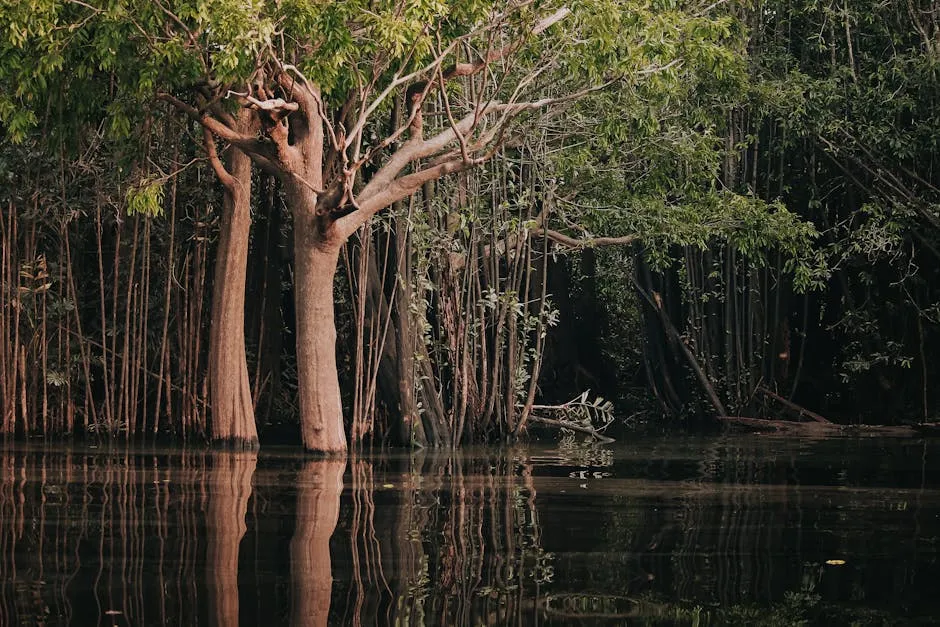
Amazon rainforest trees reflected in the calm water, capturing the serene beauty of Manaus, Brazil. by Jean Gc / Pexels.
Photosynthesis is the process that plants use to make their own food using sunlight, water, and carbon dioxide from the air. During photosynthesis, plants take in carbon dioxide—a gas that humans and animals breathe out—and release oxygen, the gas we need to breathe in. This process is important because it helps keep the right balance of gases in Earth's atmosphere, the layer of air surrounding our planet.
Trees and other plants act like natural air cleaners. When there are many trees together in a forest, they take in large amounts of carbon dioxide from the atmosphere. At the same time, they release oxygen back into the air. Think of forests as Earth's lungs—just as your lungs take in oxygen and release carbon dioxide, forests do the opposite. They breathe in what we breathe out and give us back fresh oxygen to breathe.
Forests also affect the atmosphere in another way. Trees release water vapor, which is water in gas form, through tiny holes in their leaves. This process is called transpiration. When millions of trees release water vapor together, it can affect local weather. The water vapor rises into the atmosphere and can form clouds. These clouds may bring rain to the area. In fact, large forests like the Amazon rainforest release so much water vapor that they help create their own rain.
The interaction between forests and the atmosphere shows how Earth's systems are connected. The biosphere—the parts of Earth where living things exist—affects the atmosphere through the actions of plants and trees. When forests are cut down, there are fewer trees to take in carbon dioxide and release oxygen. This means more carbon dioxide stays in the atmosphere, which can affect air quality and climate. Protecting forests helps keep our air clean and our atmosphere balanced.
Interesting Fact: A single large tree can produce enough oxygen in one year to supply oxygen for two people for that entire year!
Comprehension quiz (8 questions)
1. What gas do plants take in?
2. What do trees release during photosynthesis?
3. What is the atmosphere?
4. How do forests act like lungs?
5. What happens when trees release water vapor?
6. Why does cutting down forests harm air?
7. Forests are part of Earth's biosphere.
8. What is transpiration?
Perfect for the way you teach
- Build comprehension skills
- Auto-graded quiz
- Differentiated reading
- Read together at home
- Improve fluency
- Quiet reading time
- Reading curriculum support
- Independent practice
- Track Lexile growth