How Weather Breaks Down Rocks
Interactive passage with audio narration, comprehension questions, and printable PDF.
By completing this purchase you agree to our Terms of Use and Privacy Policy. Your subscription renews automatically until you cancel. You can cancel anytime from your account settings. All sales are final and non-refundable. Digital content is available for download in your account immediately upon purchase.
What's included
How Weather Breaks Down Rocks preview and details
About this printable How Weather Breaks Down Rocks science reading passage, NGSS-aligned (Grades 4-6)
Sample passage and quiz from How Weather Breaks Down Rocks
Reading passage and comprehension quiz preview
How Weather Breaks Down Rocks
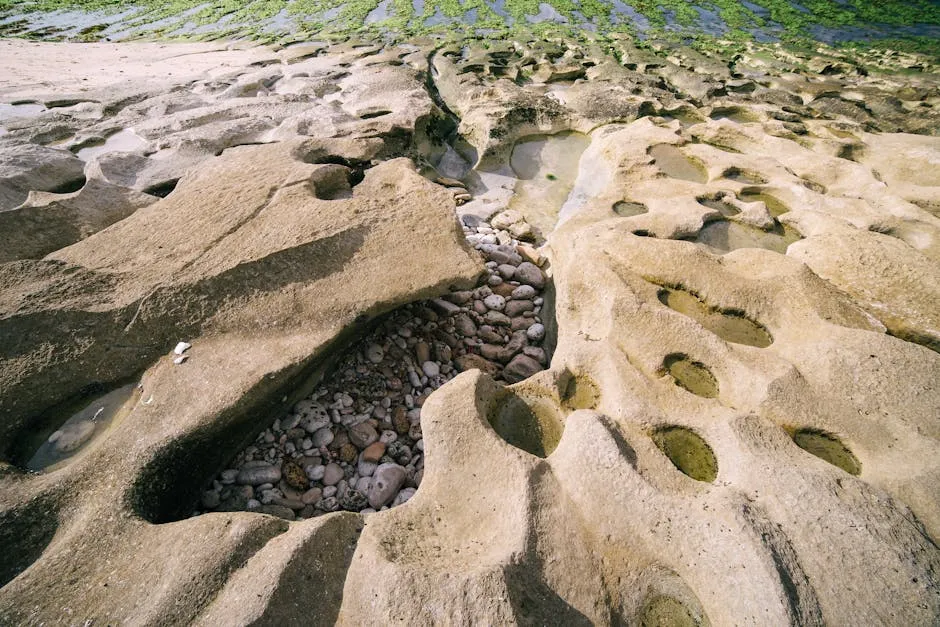
Detailed view of erosion patterns and rock formations on a seaside landscape by Yan Krukau / Pexels.
Weathering is the process that breaks down rocks into smaller pieces. Weather conditions like wind, rain, ice, and changing temperatures slowly wear away even the hardest rocks on Earth's surface. This process is important because it creates soil, changes landscapes, and moves materials around our planet.
One powerful type of weathering happens when water gets inside tiny cracks in rocks. During cold weather, this water freezes and turns into ice. When water freezes, it expands and takes up more space. This expansion pushes against the inside of the crack with tremendous force, making the crack bigger. When the ice melts, more water can flow into the now-larger crack. This freeze-thaw cycle repeats many times, eventually splitting the rock apart. Think of it like filling a water bottle completely and putting it in the freezer—the expanding ice can crack even plastic containers.
Wind also breaks down rocks through a process called abrasion. Abrasion means wearing something away by rubbing or scraping. Wind picks up tiny particles of sand and dust and blows them against rock surfaces. Over many years, these particles act like sandpaper, slowly grinding away the rock. You can see evidence of wind abrasion in desert areas where rocks have smooth, polished surfaces or unusual shapes carved by windblown sand.
Rain contributes to weathering too, especially through chemical weathering. Chemical weathering happens when rainwater reacts with minerals in rocks and dissolves them. Rainwater is naturally slightly acidic because it mixes with carbon dioxide in the air. When this acidic rain falls on certain rocks, it can dissolve minerals like limestone. The dissolved minerals wash away, weakening the rock structure. This is similar to how sugar dissolves in water—the sugar doesn't disappear, but it breaks apart and mixes with the liquid.
Temperature changes also crack rocks through a process called thermal expansion. Thermal expansion means materials get bigger when heated and smaller when cooled. Rocks heat up during the day and cool down at night. Different minerals inside the rock expand and contract at different rates, creating stress. Over time, this stress causes cracks to form. In places like deserts, where temperatures change dramatically between day and night, thermal expansion can break rocks quickly.
All these weathering processes show how the atmosphere interacts with the geosphere. The atmosphere is the layer of air surrounding Earth, and the geosphere is the solid, rocky part of our planet. Weather in the atmosphere constantly changes the rocks in the geosphere, reshaping Earth's surface one tiny piece at a time.
Interesting Fact: Scientists have discovered that weathering on Mars happens much more slowly than on Earth because Mars has almost no liquid water and a very thin atmosphere with little wind.
Comprehension quiz (8 questions)
1. What is weathering?
2. What happens when water freezes in cracks?
3. How does wind cause abrasion?
4. Why can rainwater dissolve certain minerals?
5. What causes thermal expansion in rocks?
6. Where does thermal expansion break rocks quickly?
7. Weathering happens faster on Mars than Earth.
8. What does the word geosphere mean?
Perfect for the way you teach
- Build comprehension skills
- Auto-graded quiz
- Differentiated reading
- Read together at home
- Improve fluency
- Quiet reading time
- Reading curriculum support
- Independent practice
- Track Lexile growth