How Glaciers Store Water
Interactive passage with audio narration, comprehension questions, and printable PDF.
By completing this purchase you agree to our Terms of Use and Privacy Policy. Your subscription renews automatically until you cancel. You can cancel anytime from your account settings. All sales are final and non-refundable. Digital content is available for download in your account immediately upon purchase.
What's included
How Glaciers Store Water preview and details
About this printable How Glaciers Store Water science reading passage, NGSS-aligned (Grades 4-6)
Sample passage and quiz from How Glaciers Store Water
Reading passage and comprehension quiz preview
How Glaciers Store Water
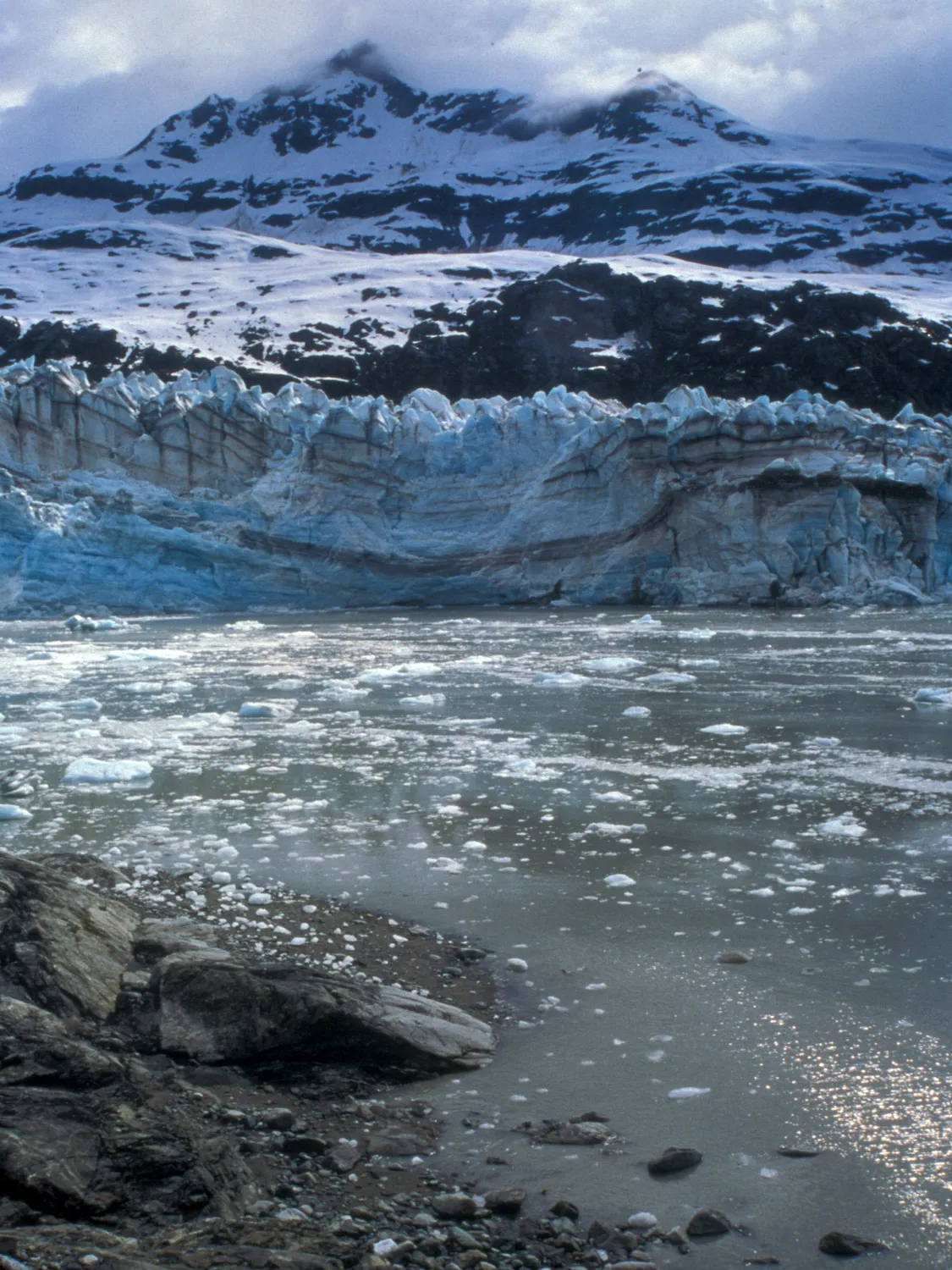
Glacier Bay National Park and Preserve by National Park Service Digital Image Archives / Wikimedia Commons
A glacier is a huge mass of ice that forms on land and moves slowly over time. Glaciers are important because they store the largest share of Earth's freshwater. About 69% of all freshwater on our planet is frozen in glaciers and ice sheets. This means that most of the water we could drink is locked up as ice, which explains why so little freshwater is available for people, animals, and plants to use.
Glaciers form over many years when snow falls and does not melt completely. Each winter, new snow piles on top of old snow. The weight of the new snow presses down on the layers below. Over time, this pressure squeezes the snow together and turns it into solid ice. Think of it like making a snowball—when you pack snow tightly in your hands, it becomes hard and dense. In a glacier, this process happens on a much larger scale and takes hundreds or even thousands of years.
Freshwater is water that contains very little salt and is safe for drinking, farming, and other uses. Most of Earth's water is saltwater in the oceans, which people cannot drink. Only about 3% of Earth's water is freshwater, and most of that freshwater is frozen in glaciers. Ice sheets are the largest type of glacier, covering huge areas of land in polar regions like Antarctica and Greenland. These ice sheets can be several miles thick.
Glaciers are found in two main places: polar regions near the North and South Poles, and high mountains around the world. Even in warmer countries, glaciers exist on tall mountains where temperatures stay below freezing. Mountain glaciers are smaller than ice sheets but still hold large amounts of frozen water.
Understanding where Earth's freshwater is stored helps us see why water is such a precious resource. Since most freshwater is frozen in glaciers, only a small amount is available as liquid water in lakes, rivers, and underground. This is why protecting our water sources matters so much.
Interesting Fact: If all the ice in glaciers and ice sheets melted, sea levels around the world would rise by about 230 feet—that's taller than a 20-story building!
Comprehension quiz (8 questions)
1. What percentage of Earth's freshwater is frozen?
2. Where are ice sheets found?
3. How do glaciers form over time?
4. Why is so little freshwater available?
5. What would happen if all glaciers melted?
6. Where can mountain glaciers be found?
7. Glaciers move quickly across the land.
8. What is freshwater?
Perfect for the way you teach
- Build comprehension skills
- Auto-graded quiz
- Differentiated reading
- Read together at home
- Improve fluency
- Quiet reading time
- Reading curriculum support
- Independent practice
- Track Lexile growth