Water Wave Pattern
Interactive passage with audio narration, comprehension questions, and printable PDF.
By completing this purchase you agree to our Terms of Use and Privacy Policy. Your subscription renews automatically until you cancel. You can cancel anytime from your account settings. All sales are final and non-refundable. Digital content is available for download in your account immediately upon purchase.
What's included
Water Wave Pattern preview and details
About this printable Water Wave Pattern science reading passage, NGSS-aligned (Grades 3-5)
Sample passage and quiz from Water Wave Pattern
Reading passage and comprehension quiz preview
Water Wave Pattern
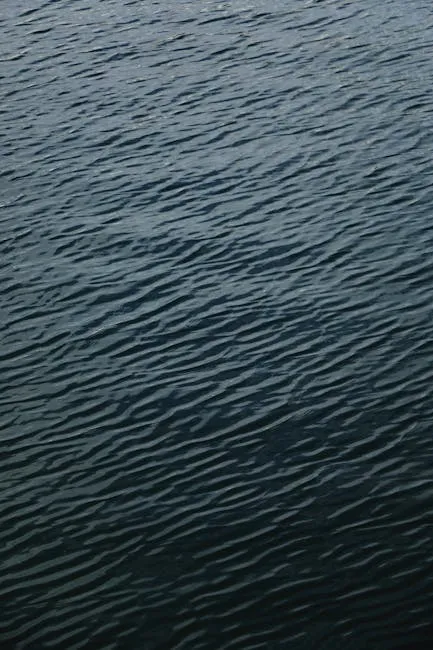
Detailed view of rippling ocean water, showcasing serene patterns and textures. Image credit Maksim Goncharenok / Pexels.
Waves are disturbances that move through water or other materials. When you drop a stone into a pond, you create waves that spread across the water's surface. Understanding wave patterns helps scientists predict how energy moves through different materials.
Water waves move in a repeating pattern, which means they happen over and over in the same way. When the stone hits the water, it pushes the water down. The water then bounces back up and creates a bump, or crest, which is the highest point of a wave. Next to each crest is a low point called a trough. These crests and troughs move outward in circles from where the stone landed.
The pattern repeats because energy from the stone travels through the water. Think of it like pushing a swing—one push creates a back-and-forth motion that keeps repeating. Each wave looks similar to the one before it. The circles get bigger as they move away from the center, but the pattern stays the same.
You can observe wave patterns in many places. Raindrops create tiny waves in puddles. Wind makes waves on lakes. Even throwing a ball into a pool creates the same circular pattern. Scientists measure the distance between wave crests to understand how much energy is moving through the water. By studying these patterns, we learn how waves carry energy from one place to another without moving the water itself very far.
Comprehension quiz (8 questions)
1. What are waves?
2. What is the highest point of a wave?
3. What creates waves in a pond?
4. Why do wave patterns repeat?
5. How do waves carry energy?
6. What do scientists measure about waves?
7. Waves move water very far from its starting place.
8. What does 'repeating pattern' mean?
Perfect for the way you teach
- Build comprehension skills
- Auto-graded quiz
- Differentiated reading
- Read together at home
- Improve fluency
- Quiet reading time
- Reading curriculum support
- Independent practice
- Track Lexile growth