Reading PassagePremium

Why Do Pools Have Waves When You Jump In

Interactive passage with audio narration, comprehension questions, and printable PDF.

No ratings yet
Grades 3–5ScienceElaReadingEnglish · SpanishInteractive · Printable
Aligned toNGSS PS4.A
Just this resource
$1.50
One-time purchase
Best value
Unlock everything
$49.99$24.99/yr
50% off until Sept 15 — 10,000+ resources
Renews at $49.99/year.

By completing this purchase you agree to our Terms of Use and Privacy Policy. Your subscription renews automatically until you cancel. You can cancel anytime from your account settings. All sales are final and non-refundable. Digital content is available for download in your account immediately upon purchase.

Unlock above to use these actions

What's included

Reading passage
Audio narration
Comprehension quiz
Writing activity
Glossary & flashcards
Differentiated version
Spanish translation

Why Do Pools Have Waves When You Jump In preview and details

About this printable Why Do Pools Have Waves When You Jump In science reading passage, NGSS-aligned (Grades 3-5)

This engaging 250-word reading passage introduces fourth-grade students to the fundamental concept of wave energy transfer through a relatable, everyday experience: jumping into a pool. Aligned with NGSS standard PS4.A (Waves and Their Applications in Technologies for Information Transfer), the passage explains how waves are regular patterns of motion that transfer energy from place to place without transferring matter. Students learn that when a body enters water, it pushes the water aside and transfers energy that travels outward as waves in circular patterns. The passage includes age-appropriate vocabulary with bolded key terms like energy, waves, and matter, each defined in context. Audio-integrated features support diverse learners, while the simplified differentiated version ensures accessibility for all reading levels. Accompanying activities include an 8-question multiple-choice quiz testing recall, comprehension, and application; three short-answer writing prompts; and two graphic organizers (Sequence/Process Table and Cause-Effect Table) that help students visualize the step-by-step process of wave formation and energy transfer. Spanish translations of both passage versions support English language learners. This comprehensive resource builds foundational understanding of wave mechanics through concrete, observable phenomena that fourth graders can easily relate to their own experiences.
Written by Workybooks TeamPublished by Workybooks
Preview

Sample passage and quiz from Why Do Pools Have Waves When You Jump In

Reading passage and comprehension quiz preview

Why Do Pools Have Waves When You Jump In
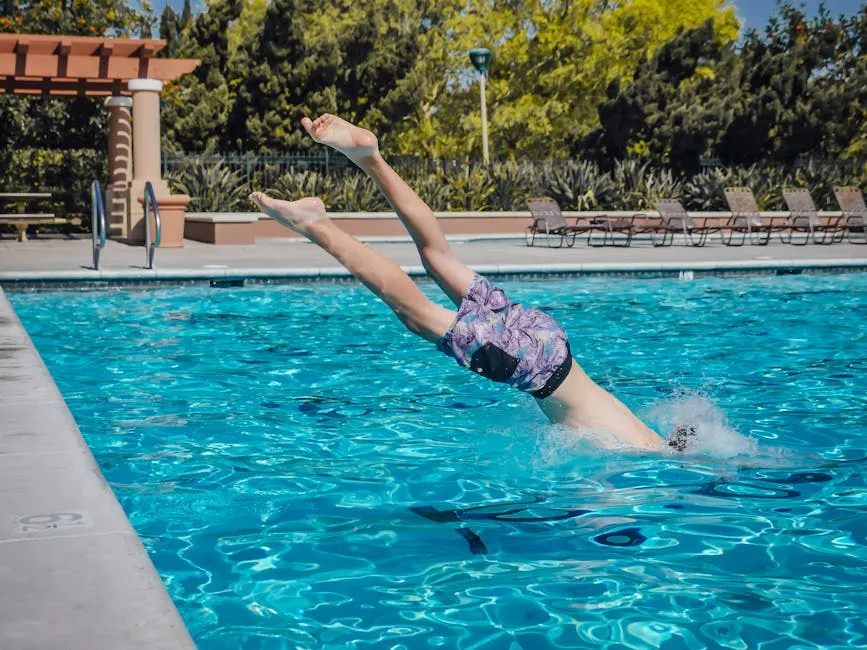
Person diving into a swimming pool, capturing summer fun and leisure outdoors.
 

When you jump into a pool, something interesting happens to the water. Your body pushes the water out of the way as you enter. This push transfers energy to the water. Energy is the ability to make things move or change.

The energy you gave to the water doesn't just disappear. It travels outward through the water as waves. Waves are regular patterns of motion that move energy from one place to another. You can see the waves spreading out in circles from where you jumped in, getting bigger and bigger until they reach the pool's edges.

A bigger jump creates bigger waves because you transfer more energy to the water. A small jump creates smaller waves with less energy. Think of it like this: tapping a drum lightly makes a quiet sound, but hitting it hard makes a loud sound. Both actions transfer energy, just different amounts.

Here's something important to understand: the waves carry your energy across the pool, but the water itself doesn't travel with the waves. The matter (the water) stays mostly in place while the energy moves through it. Matter is the physical stuff that things are made of. You can test this by watching a toy boat floating in the pool. When waves pass under it, the boat bobs up and down but doesn't move far from its spot. The wave energy passes through, but the water stays put.

Comprehension quiz (8 questions)

1. What happens when you jump into a pool?

Your body pushes water out of the way
The water disappears completely
The pool gets deeper
The water turns into ice

2. What do waves carry across the pool?

Fish and plants
Energy from your jump
Air bubbles only
Sand and dirt

3. What is matter?

The sound waves make
The speed of waves
The physical stuff things are made of
The color of water

4. Why does a bigger jump create bigger waves?

Because the pool is deeper
Because more energy is transferred to water
Because the water is warmer
Because the pool is smaller

5. What happens to a toy boat when waves pass?

It sinks to the bottom
It moves far across the pool
It bobs up and down in place
It breaks into pieces

6. How do waves spread in a pool?

In straight lines only
In circles from where you jumped
In zigzag patterns
They don't spread at all

7. The water travels across the pool with the waves.

True
False

8. What does energy mean in this passage?

The color of the water
The size of the pool
The ability to make things move or change
The temperature of water
Who it's for

Perfect for the way you teach

Teachers
  • Build comprehension skills
  • Auto-graded quiz
  • Differentiated reading
Parents
  • Read together at home
  • Improve fluency
  • Quiet reading time
Homeschoolers
  • Reading curriculum support
  • Independent practice
  • Track Lexile growth
Topics

Reviews & Ratings

No reviews yet. Be the first to share your experience!

More reading you might love

2 more
Passage
Why Do Big Waves Knock You Over - reading educational content
Grades 3–5

Why Do Big Waves Knock You Over

physical science · NGSS PS4.A

$1.50
Passage
Water Wave Pattern - reading educational content
Grades 3–5

Water Wave Pattern

physical science · NGSS PS4.A

$1.50
Copyright © 2026 Workybooks. Made with ♥ in California.