Reduce Your Carbon Footprint: Simple Tips for Home
Interactive passage with audio narration, comprehension questions, and printable PDF.
What's included
Reduce Your Carbon Footprint: Simple Tips for Home preview and details
About this printable Reduce Your Carbon Footprint: Simple Tips for Home science reading passage, NGSS-aligned (Grades 2-4)
Sample passage and quiz from Reduce Your Carbon Footprint: Simple Tips for Home
Reading passage and comprehension quiz preview
Reduce Your Carbon Footprint
What Is a Carbon Footprint?
A carbon footprint is the total amount of greenhouse gases we make through our daily activities. These gases, like carbon dioxide, trap heat in Earth's atmosphere and cause climate change. Everyone has a carbon footprint, and even small actions can add up.
Where Do Carbon Footprints Come From?
Many things we do at home create a carbon footprint. Using electricity for lights, TVs, and computers uses energy. Power plants often burn fossil fuels for this energy, releasing greenhouse gases. Heating and cooling our homes also use a lot of energy. Hot water for showers and washing dishes needs energy, too. Even the food we eat matters—growing, transporting, and packaging food creates emissions. Everything we buy, from toys to clothes, takes energy to make and ship.
How Can We Use Less Energy?
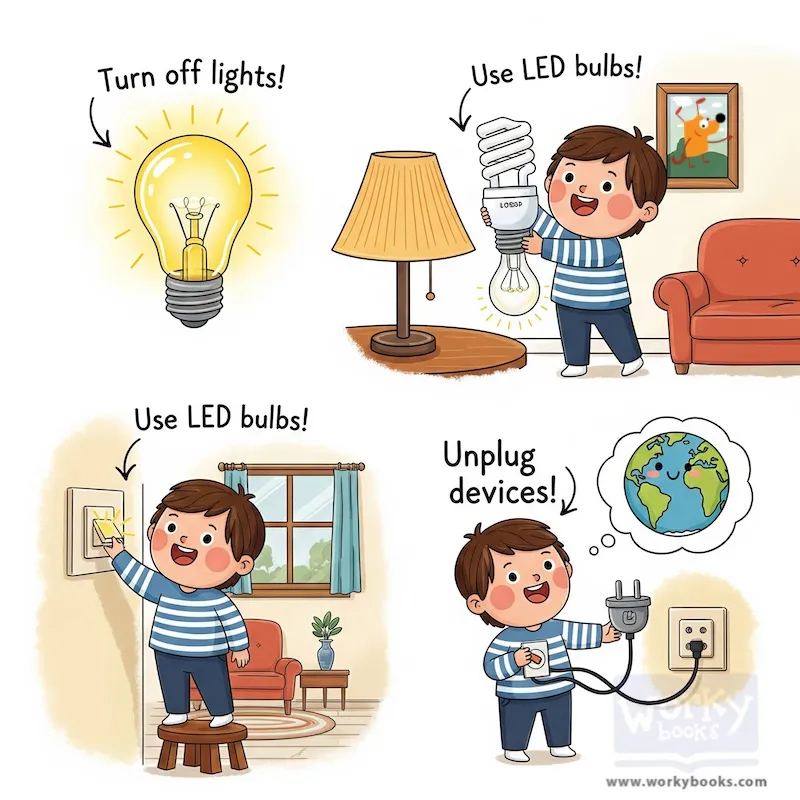
You can make a difference! Turn off lights when you leave a room. Unplug devices when not in use—they still use power! Use LED bulbs because they last longer and use less energy. Open curtains during the day to use sunlight instead of lamps. Wear sweaters instead of turning up the heat. Take shorter showers and run dishwashers or laundry only with full loads.
Transportation and Your Carbon Footprint
Cars, trucks, and buses burn fuel and make emissions. To help, walk or bike for short trips. Carpool with friends or combine errands into one trip.
Reduce, Reuse, Recycle
Use reusable water bottles and bags. Donate old toys and clothes instead of throwing them away. Recycle paper, plastic, glass, and metal. Avoid single-use plastics. Borrow books from the library instead of buying new ones.
Food Choices Matter
Eating less meat, especially beef, lowers your footprint. Reduce food waste by eating leftovers. Grow your own vegetables and choose local foods when you can.
The Power of Many
Reducing your carbon footprint is like turning off a drippy faucet—each drop saved may seem small, but together, millions of drops can fill a whole bathtub! If lots of families make small changes, together we make a big difference for the planet.
Interesting Fact: If every American household changed just one lightbulb to an LED, it would save enough energy to light millions of homes for a year!
Comprehension quiz (8 questions)
1. What is a carbon footprint?
2. Which uses the MOST energy at home?
3. What is a good way to save energy?
4. Why does eating less meat help the planet?
5. What does 'reuse' mean?
6. If you unplug devices, what happens?
7. LED bulbs use more electricity than regular bulbs. True or false?
8. What does 'emissions' mean?
Common Core standards for Reduce Your Carbon Footprint: Simple Tips for Home
Perfect for the way you teach
- Build comprehension skills
- Auto-graded quiz
- Differentiated reading
- Read together at home
- Improve fluency
- Quiet reading time
- Reading curriculum support
- Independent practice
- Track Lexile growth