This learning resource is available in interactive and printable formats. The interactive worksheet can be played online and assigned to students. The Printable PDF version can be downloaded and printed for completion by hand.
This passage educates children about the potential impacts of climate change on food production. It explains how changing weather patterns, including extreme heat, drought, or excessive rainfall, can affect crop growth. The text also mentions how warming oceans might reduce fish populations. By highlighting how these changes could lead to less food availability, the passage helps children understand the connection between climate and food security. It concludes by noting that farmers might need to adapt their practices, introducing the concept of climate resilience in agriculture.
CONTENT PREVIEW
Expand content preview
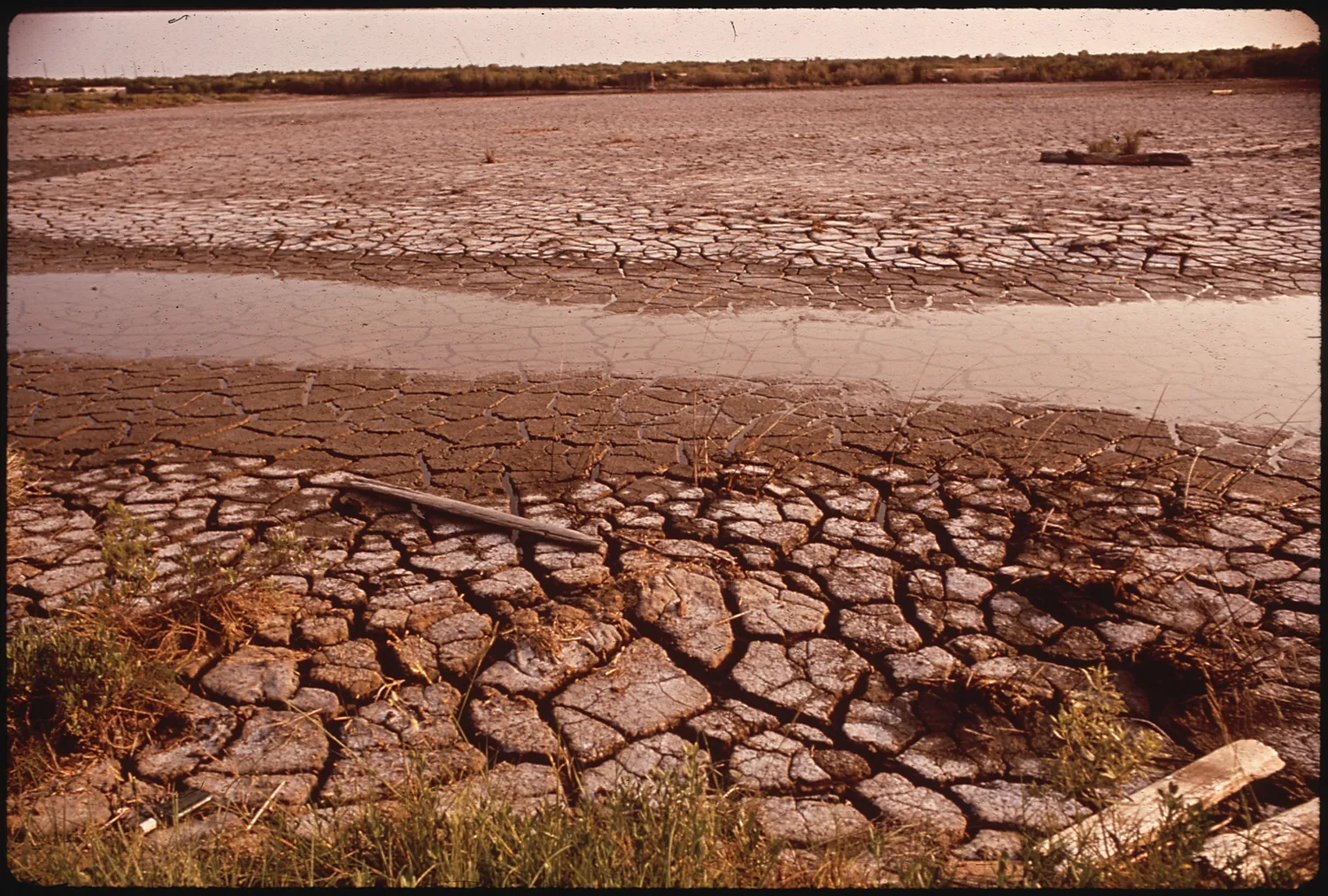
"DRAINING OF MARSH LEAVES FLOOR OF DRY, CRACKED MUD - NARA - 544180" by John Messina / Wikimedia Commons.
Climate change can make growing food harder. Some places might get too hot or dry for certain crops. Other areas might get too much rain, which can damage plants. Unusual weather like early frosts or long droughts can hurt farmers' crops. Some fruits and vegetables might not grow as well. Fish populations could shrink if oceans get too warm. All of this could mean less food for people. Farmers might need to change what they grow or how they grow it.
What might happen to some places where food is grown?
They might get too hot or dryThey might turn into junglesThey might become perfect for all cropsThey might disappear completely
How can too much rain affect crops?
It makes them grow fasterIt can damage plantsIt turns all plants into treesIt makes the food taste better
What could happen to fish populations?
They could grow largerThey could move to landThey could shrink if oceans get too warmThey could learn to live in very cold water
What might farmers need to do because of climate change?
Stop farming completelyOnly grow underwater plantsChange what or how they grow cropsMove all farms to the North Pole
Perfect For:
👩🏫 Teachers
• Reading comprehension practice
• Auto-graded assessments
• Literacy skill development
👨👩👧👦 Parents
• Reading practice at home
• Comprehension improvement
• Educational reading time
🏠 Homeschoolers
• Reading curriculum support
• Independent reading practice
• Progress monitoring
Reading Features:
📖
Reading Passage
Engaging fiction or nonfiction text
❓
Comprehension Quiz
Auto-graded questions
📊
Instant Feedback
Immediate results and scoring
📄
Printable Version
Download for offline reading
🔊
Read Aloud
Voice-over with word highlighting
Reviews & Ratings
No reviews yet. Be the first to share your experience!
Related Content
Natural Disasters and Urban flooding
This reading comprehension worksheet focuses on the topic of natural disasters, specifically urban flooding. Following t...
RI.4.44-ESS3ESS3.B4-ESS3-1
How might climate change affect animals?
This passage explains to children how climate change impacts animal life. It uses specific examples like polar bears los...
RI.3.1RI.4.14.ESS2.D4-ESS3
Reduce Your Carbon Footprint: Simple Tips for Home
This passage focuses on reducing carbon footprints at home by conserving electricity. It suggests practical actions like...
RI.3.1RI.4.14.ESS2.D4-ESS3
How using less plastic helps the environment?
This passage explains to children how reducing plastic use helps the environment. It outlines the life cycle of plastic,...
RI.3.1RI.4.14.ESS2.D4-ESS3
How Kids Can Help Fight Climate Change?
This passage introduces the concept of 'reduce, reuse, recycle' as a way for children to help fight climate change. It e...
RI.3.1RI.4.14.ESS2.D4-ESS3
What is recycling, and why is it important?
This passage introduces the concept of recycling to children. It explains recycling as the process of turning used mater...
RI.3.1RI.4.14.ESS2.D4-ESS3
How can planting trees help fight climate change?
This passage explains to children how planting trees can help combat climate change. It describes trees as 'nature's air...
RI.3.1RI.4.14.ESS2.D4-ESS3
What can happen to sea levels because of climate change?
This passage explains to children how climate change leads to rising sea levels. It describes two main causes: melting i...
RI.3.1RI.4.14.ESS2.D
How is Climate Different from Weather?
This passage distinguishes climate from weather for young readers. It defines climate as the usual weather patterns over...
RI.3.1RI.4.14.ESS2.D
Can you name three greenhouse gases?
This passage introduces children to three common greenhouse gases: carbon dioxide (CO2), methane, and water vapor. It ex...
RI.3.1RI.4.14.ESS2.D
Informational Text —Meet the Governors
This worksheet will get your students thinking about their state governnor. Included is an informational text on the res...
RI.3.10RF.3.4RF.3.4.ARI.3.1
Koi Fish—What’s the Main Idea?
This informational text on koi fish is a great introduction to teaching main idea. Students will be asked, in multiple c...
RI.3.2RF.3.4RI.3.1
Informational Text —Bioluminescence
This informational text on bioluminescence will teach your students about this phenomenon. Examples in nature are provid...
RI.3.10RF.3.4RF.3.4.ARI.3.1
Informational Text —Learn About Dinosaurs
This informational text on dinosaurs with comprehension questions to follow is perfect for teaching main idea. Students ...
RF.3.4RF.3.4.ARF.3.4.CRI.3.2
Informational Text —Volcanoes
This informational text teaches students about the formation and eruptions of volcanoes. Comprehension questions follow ...
RI.3.7RI.3.1RI.3.3RI.3.10
Informational Text —Snowflakes
This informational text on snowflakes will teach your students how snowflakes are formed. Images of several different fl...
RI.3.10RF.3.4RF.3.4.ARI.3.1
Informational Text on Holi
This informational text on Holi is a great way to teach about this holiday and the story of Prahlad. Comprehension quest...
RI.3.10RF.3.4RF.3.4.ARI.3.1
Informational Text on Goods and Services
This short informational text on goods and services will get your students familliar with this concept. Students will re...
RI.3.10RF.3.4RF.3.4.ARI.3.1
Sharks—Informational Text
This informational text on the sharks will teach your students all about these incredible, ancient animals! Free respons...