How Kids Can Help Fight Climate Change? — Reading Comprehension
Rate this|
3
Present
Present in classroom. No work saved
Assign
Classroom with student accounts, Track progress
Quick Play
No student accounts, assign with a link
Grades
2
3
4
Standards
RI.3.1
RI.4.1
4.ESS2.D
4-ESS3
PRINT+DIGITAL RESOURCE
This learning resource is available in interactive and printable formats. The interactive worksheet can be played online and assigned to students. The Printable PDF version can be downloaded and printed for completion by hand.
This passage introduces the concept of 'reduce, reuse, recycle' as a way for children to help fight climate change. It explains each 'R' with relatable examples: reducing by using less electricity, reusing with refillable water bottles, and recycling paper and plastics. The text emphasizes how these actions save energy, reduce pollution, and conserve resources. By stating that every small action can make a big difference when everyone works together, the passage encourages children to take part in environmental protection and understand their role in combating climate change.
CONTENT PREVIEW
Expand content preview
Kids and Climate Action
Climate change is a big problem for our planet, but kids have real power to help. Climate change happens when people release too many gases into the air, making Earth warmer. These gases come from things like cars, factories, and even the electricity we use at home. But every kid can help slow down climate change by making smart choices each day.
Energy Actions at Home Saving energy at home is a great way to help the planet. You can turn off lights when leaving a room, unplug chargers and devices, and take shorter showers to use less hot water. Opening windows instead of using air conditioning and reminding your family to adjust the thermostat also saves energy. Using a fan before air conditioning is another smart choice.
Transportation Choices Did you know that walking, biking, or carpooling helps reduce pollution? Taking the school bus or asking your family to combine errands means fewer cars on the road, which keeps the air cleaner.
Reduce, Reuse, Recycle Making less waste is another way to help. Use reusable water bottles and lunch containers, donate old toys and clothes, and recycle correctly. Try to avoid single-use plastics and choose products with less packaging.
Food Choices Matter Eat all the food on your plate to reduce waste. Help start a compost bin or grow a small garden. Learning about eating less meat, especially beef, can also help the environment.
Spreading Awareness Talking about climate action is important! Share what you learn with family and friends, do school projects about climate, join environmental clubs, or write letters to leaders. Helping clean up your community also makes a difference.
Nature Helpers Planting trees and flowers, creating gardens for pollinators like bees and butterflies, and protecting local habitats helps nature stay strong.
Teamwork and Hope Fighting climate change is like a team sport—kids are important players, and when everyone works together, we can win! Even small actions matter. If millions of kids make changes, the impact is huge.
Interesting Fact: Greta Thunberg started a worldwide climate movement when she was just 15 years old!
What is climate change?
Earth getting warmer from gasesEarth getting colder from icePeople planting treesRainy weather every day
How can kids save energy at home?
Turn off lightsLeave lights onUse more hot waterOpen fridge often
Why is recycling important?
It makes less wasteIt uses more waterIt makes more trashIt wastes energy
Which action helps reduce pollution?
Walking to schoolDriving aloneUsing more plasticKeeping windows closed
What happens if many kids make changes?
Big impact on climateNo change at allMore pollutionHotter showers
If you use a lunchbox every day instead of plastic bags, what is the effect?
Less wasteMore wasteMore energy useMore pollution
Greta Thunberg started a climate movement at age 15.
TrueFalse
What is a pollinator?
Bee or butterflyPlastic bottleRain cloudSchool bus
Perfect For:
👩🏫 Teachers
• Reading comprehension practice
• Auto-graded assessments
• Literacy skill development
👨👩👧👦 Parents
• Reading practice at home
• Comprehension improvement
• Educational reading time
🏠 Homeschoolers
• Reading curriculum support
• Independent reading practice
• Progress monitoring
Reading Features:
📖
Reading Passage
Engaging fiction or nonfiction text
❓
Comprehension Quiz
Auto-graded questions
📊
Instant Feedback
Immediate results and scoring
📄
Printable Version
Download for offline reading
🔊
Read Aloud
Voice-over with word highlighting
Reviews & Ratings
No reviews yet. Be the first to share your experience!
Related Content
Natural Disasters and Urban flooding
This reading comprehension worksheet focuses on the topic of natural disasters, specifically urban flooding. Following t...
RI.4.44-ESS3ESS3.B4-ESS3-1
How might climate change affect animals?
This passage explains to children how climate change impacts animal life. It uses specific examples like polar bears los...
RI.3.1RI.4.14.ESS2.D4-ESS3
Reduce Your Carbon Footprint: Simple Tips for Home
This passage focuses on reducing carbon footprints at home by conserving electricity. It suggests practical actions like...
RI.3.1RI.4.14.ESS2.D4-ESS3
How using less plastic helps the environment?
This passage explains to children how reducing plastic use helps the environment. It outlines the life cycle of plastic,...
RI.3.1RI.4.14.ESS2.D4-ESS3
What is recycling, and why is it important?
This passage introduces the concept of recycling to children. It explains recycling as the process of turning used mater...
RI.3.1RI.4.14.ESS2.D4-ESS3
How can planting trees help fight climate change?
This passage explains to children how planting trees can help combat climate change. It describes trees as 'nature's air...
RI.3.1RI.4.14.ESS2.D4-ESS3
How might climate change affect our food supply?
This passage educates children about the potential impacts of climate change on food production. It explains how changin...
RI.3.1RI.4.14.ESS2.D4-ESS3
What can happen to sea levels because of climate change?
This passage explains to children how climate change leads to rising sea levels. It describes two main causes: melting i...
RI.3.1RI.4.14.ESS2.D
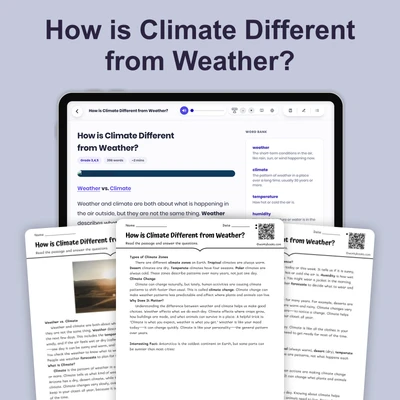
How is Climate Different from Weather?
This passage distinguishes climate from weather for young readers. It defines climate as the usual weather patterns over...
RI.3.1RI.4.14.ESS2.D
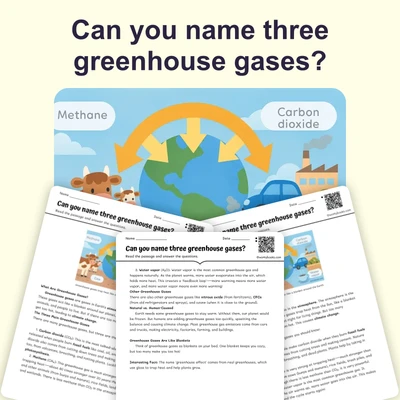
Can you name three greenhouse gases?
This passage introduces children to three common greenhouse gases: carbon dioxide (CO2), methane, and water vapor. It ex...
RI.3.1RI.4.14.ESS2.D
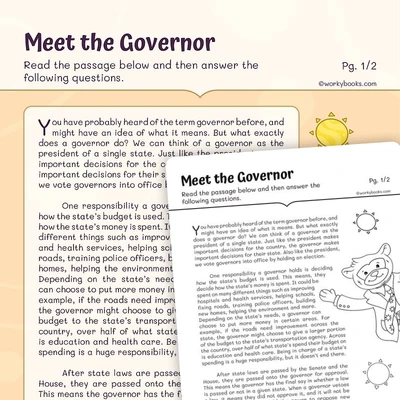
Informational Text —Meet the Governors
This worksheet will get your students thinking about their state governnor. Included is an informational text on the res...
RI.3.10RF.3.4RF.3.4.ARI.3.1
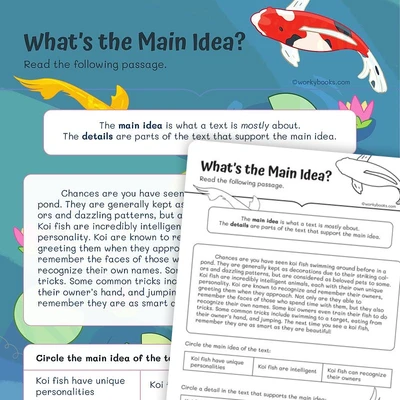
Koi Fish—What’s the Main Idea?
This informational text on koi fish is a great introduction to teaching main idea. Students will be asked, in multiple c...
RI.3.2RF.3.4RI.3.1
Informational Text —Bioluminescence
This informational text on bioluminescence will teach your students about this phenomenon. Examples in nature are provid...
RI.3.10RF.3.4RF.3.4.ARI.3.1
Informational Text —Learn About Dinosaurs
This informational text on dinosaurs with comprehension questions to follow is perfect for teaching main idea. Students ...
RF.3.4RF.3.4.ARF.3.4.CRI.3.2
Informational Text —Volcanoes
This informational text teaches students about the formation and eruptions of volcanoes. Comprehension questions follow ...
RI.3.7RI.3.1RI.3.3RI.3.10
Informational Text —Snowflakes
This informational text on snowflakes will teach your students how snowflakes are formed. Images of several different fl...
RI.3.10RF.3.4RF.3.4.ARI.3.1
Informational Text on Holi
This informational text on Holi is a great way to teach about this holiday and the story of Prahlad. Comprehension quest...
RI.3.10RF.3.4RF.3.4.ARI.3.1
Informational Text on Goods and Services
This short informational text on goods and services will get your students familliar with this concept. Students will re...
RI.3.10RF.3.4RF.3.4.ARI.3.1
Sharks—Informational Text
This informational text on the sharks will teach your students all about these incredible, ancient animals! Free respons...