This learning resource is available in interactive and printable formats. The interactive worksheet can be played online and assigned to students. The Printable PDF version can be downloaded and printed for completion by hand.
Turtle conservation has become an increasingly critical issue as many species face numerous threats in both aquatic and terrestrial environments. habitat loss, pollution, climate change, and over-exploitation for food and the pet trade have led to declining populations of many turtle species worldwide. Conservation efforts are multi-faceted, involving habitat protection, nest site management, and rehabilitation of injured individuals. Marine turtle conservation often focuses on protecting nesting beaches, reducing bycatch in fisheries, and mitigating the impacts of coastal development and pollution. For freshwater and terrestrial species, efforts include habitat restoration, captive breeding programs, and combating illegal trade. Public education plays a crucial role, with zoos, aquariums, and conservation organizations raising awareness about the ecological importance of turtles and the challenges they face. Citizen science initiatives engage the public in turtle monitoring and protection. Legal measures, such as the Convention on International Trade in Endangered Species (CITES), aim to regulate the international turtle trade. Despite these efforts, many turtle species remain threatened, highlighting the ongoing need for conservation action. By protecting turtles, we not only preserve these ancient and fascinating creatures but also contribute to the health of entire ecosystems, from coral reefs to freshwater habitats
CONTENT PREVIEW
Expand content preview
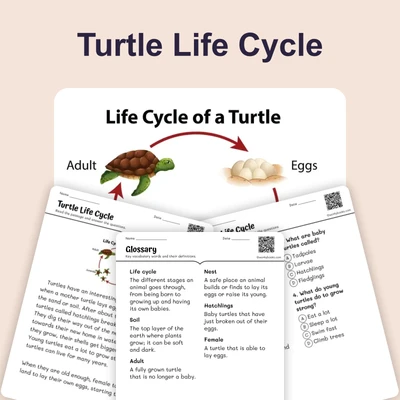
Many turtle species are in danger. Pollution, habitat loss, and hunting threaten turtles worldwide. Conservation efforts help protect turtles and their homes. People create safe nesting beaches and rescue injured turtles. Some laws stop the hunting and selling of rare turtles. Scientists study turtles to learn how to help them better.
Zoos and aquariums teach people about turtles and why they're important. Everyone can help by keeping beaches and waters clean, and being careful not to disturb turtle nests. Protecting turtles helps keep our ecosystems healthy.
What are three main threats to turtles mentioned in the passage?
Pollution, habitat loss, and huntingClimate change, overfishing, and diseasePredators, storms, and lack of foodBoat accidents, oil spills, and plastic waste
How do conservation efforts help turtles?
By building more roads near beachesBy creating safe nesting beachesBy increasing turtle huntingBy removing turtles from the wild
What role do zoos and aquariums play in turtle conservation?
They release all turtles into the wildThey teach people about turtlesThey encourage turtle pet ownershipThey close beaches to the public
How can ordinary people help protect turtles?
By feeding turtles on beachesBy moving turtle eggs to safer locationsBy keeping beaches and waters cleanBy taking turtles home as pets
Perfect For:
👩🏫 Teachers
• Reading comprehension practice
• Auto-graded assessments
• Literacy skill development
👨👩👧👦 Parents
• Reading practice at home
• Comprehension improvement
• Educational reading time
🏠 Homeschoolers
• Reading curriculum support
• Independent reading practice
• Progress monitoring
Reading Features:
📖
Reading Passage
Engaging fiction or nonfiction text
❓
Comprehension Quiz
Auto-graded questions
📊
Instant Feedback
Immediate results and scoring
📄
Printable Version
Download for offline reading
🔊
Read Aloud
Voice-over with word highlighting
Reviews & Ratings
No reviews yet. Be the first to share your experience!
Related Content
Informational Text—Where Do You Live?
This informational text on urban, suburban, rural areas is a great way to practice reading fluency and comprehension whi...
RI.3.10RF.3.4RF.3.4.ARL.3.1
Sharks—Informational Text
This informational text on the sharks will teach your students all about these incredible, ancient animals! Free respons...
RI.3.1RI.3.10RF.3.4RI.3.1
Health Breakfast—Author's Purpose
This informational text on the benefits of a healthy breakfast will ask students to find the main point the author is tr...
RI.2.8RI.2.10RI.2.6RI.2.1
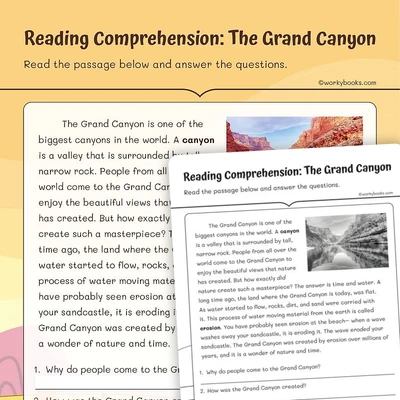
Reading Comprehension: The Grand Canyon
This informational text on the Grand Canyon will teach your students all about this incredible wonder of the world! Free...
RI.3.1RI.3.10RI.3.4RF.3.4
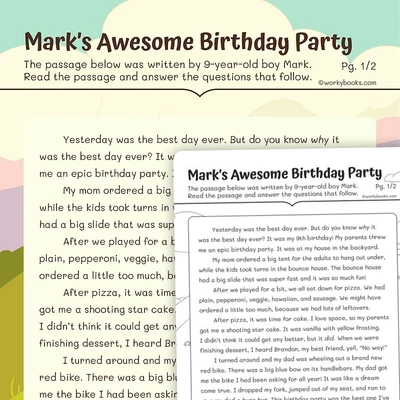
Mark's Awesome Birthday Party
This fiction passage about a child's birthday party with comprehension questions will keep your students engaged. They w...
RL.3.1RL.3.3RF.3.4.CL.3.4.A
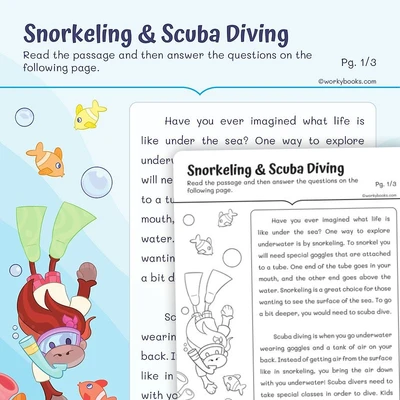
Snorkeling & Scuba Diving
RI.2.2RI.2.6RI.2.10RF.2.4.A
Analyze Visual information—The Arctic Fox
This informational text about arctic foxes is a great opportunity to practice interacting with images in a text. Student...
RI.2.7RI.2.10RI.2.1RF.2.4.A
Reading Comprehension— Storms
Practie summarizing paragraphs with this fun science informational text on storms! Students will give the main idea of t...
RI.2.2RF.2.4.ARF.2.4RI.2.10
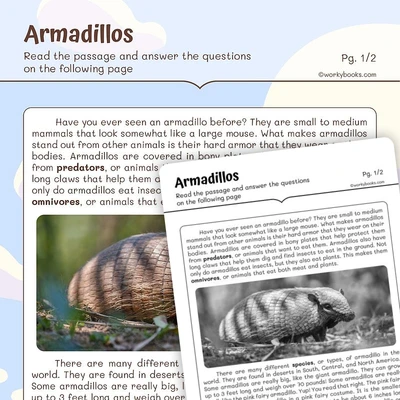
Informational Text — Armadillos
This informational text on armadillos is a great way to practice reading comprehension. Students will read the short pas...
RI.2.1RI.2.10
Informational Text — Penguins
This informational text on penguins is a great way to practice reading comprehension. Students will read the short passa...
RI.2.1RI.2.10
The Rubik's Cube
RI.2.2RI.2.6RI.2.10RF.2.4.A
Informational Text —Elephants Facts
This informational text on elephants with comprehension questions to follow is perfect for teaching main idea. Students ...
RF.2.4.ARI.2.1RI.2.2RI.2.6
Informational Text—Tardigrades
This informational text on tardigrades will teach your students all about this strange animal! Free response comprehensi...
RI.2.1RI.2.10RI.3.1RI.3.10
Mark’s Birthday Party-Short Story
This fiction passage about a child's birthday party with comprehension questions will keep your students engaged. They w...
RL.3.1RL.3.3RF.3.4.CL.3.4.A
Monty the Moose
This short story is a great way for early readers to practice their comprehension skills. Students will read the passage...
RL.3.1RL.3.3RF.3.4.CL.3.4.A
Ants and Pheromones
This quiz is designed for 2nd and 3rd grade students to test their understanding of how ants communicate using pheromone...
RI.3.1RI.2.1
GIla Monster
The Gila Monster is a large, venomous lizard found in desert regions. It has thick, bumpy skin that is orange and black,...
RI.2.1RI.3.1
Rattlesnake
The Rattlesnake is a venomous snake that thrives in desert environments. It is easily recognized by the rattle at the en...
RI.2.1RI.3.1
Desert Scorpion Facts
The Desert Scorpion is a resilient arachnid that inhabits the desert. It has a hard exoskeleton for protection and uses ...
RI.2.1RI.3.2
The Turtle's Shell
The turtle's shell is a remarkable feature that defines these ancient reptiles. This protective structure consists of tw...