This learning resource is available in interactive and printable formats. The interactive worksheet can be played online and assigned to students. The Printable PDF version can be downloaded and printed for completion by hand.
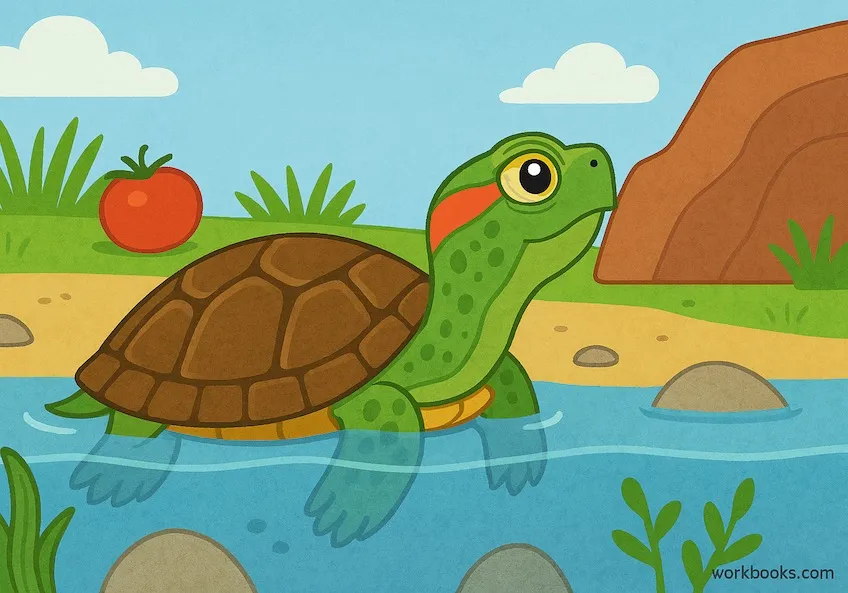
Turtles have evolved sophisticated visual systems that are well-adapted to their diverse habitats and lifestyles. Their eyes are equipped with color-sensitive cones, allowing them to perceive a wide range of colors, which is crucial for finding food, recognizing mates, and detecting predators. Many turtle species, particularly sea turtles, have the remarkable ability to see ultraviolet light, a feature that may aid in navigation and foraging. Turtle eyes are adapted for vision both in air and water, with species-specific modifications. For instance, sea turtles have special tear glands that secrete salt, helping to maintain clear vision in marine environments. Some freshwater turtles, like the red-eared slider, possess a nictitating membrane, a transparent third eyelid that protects the eye while allowing the turtle to see underwater. This adaptation is particularly useful for spotting prey or avoiding threats while submerged. On land, turtles rely heavily on their vision to navigate terrain and locate basking spots. The position of their eyes on the sides of their heads provides a wide field of view, enhancing their ability to detect movement and potential dangers. While turtle visual acuity may not match that of some mammals or birds, their unique adaptations make their sense of sight a vital tool for survival in their respective ecosystems.
CONTENT PREVIEW
Expand content preview
Turtle eyesight helps them survive by spotting food, danger, and navigating their world.
Turtles have good eyesight that helps them survive. They can see colors and shapes both on land and in water. Most turtles can see better than they can smell or hear. Sea turtles have special eyes that help them see well underwater. They can even see some ultraviolet light that humans can't see. On land, turtles use their eyes to find food and spot danger.
Some turtles, like the red-eared slider, have a third eyelid that protects their eyes when swimming. Turtles' good vision helps them navigate their world and stay safe.
What special ability do sea turtles have regarding their vision?
They can see in complete darknessThey can see some ultraviolet lightThey can see through solid objectsThey can see only in black and white
What is the function of the third eyelid in some turtles?
To help them sleepTo enhance their color visionTo protect their eyes when swimmingTo help them see better on land
How does a turtle's eyesight generally compare to its other senses?
It's usually worse than hearing but better than smellIt's usually better than smell or hearingIt's usually the weakest of all their sensesIt's exactly the same as their other senses
Which of the following is NOT mentioned as something turtles use their vision for?
Finding foodSpotting dangerNavigating their environmentCommunicating with other turtles
Perfect For:
👩🏫 Teachers
• Reading comprehension practice
• Auto-graded assessments
• Literacy skill development
👨👩👧👦 Parents
• Reading practice at home
• Comprehension improvement
• Educational reading time
🏠 Homeschoolers
• Reading curriculum support
• Independent reading practice
• Progress monitoring
Reading Features:
📖
Reading Passage
Engaging fiction or nonfiction text
❓
Comprehension Quiz
Auto-graded questions
📊
Instant Feedback
Immediate results and scoring
📄
Printable Version
Download for offline reading
🔊
Read Aloud
Voice-over with word highlighting
Reviews & Ratings
No reviews yet. Be the first to share your experience!
Related Content
Informational Text—Where Do You Live?
This informational text on urban, suburban, rural areas is a great way to practice reading fluency and comprehension whi...
RI.3.10RF.3.4RF.3.4.ARL.3.1
Equivalent Fractions
This equivalent fractions worksheet is great for practicing this skill without the aid of visual representations. Studen...
3.NF.A.3.A3.NF.A.3.B3.NF.A.3RI.3.4
Context Clues: Find the Meaning
This informational text on Ruth Bader Ginsberg is perfect for teaching context clues. Students will read the text and th...
RI.3.4L.3.4.AL.3.4RF.3.4
Informational Text —Volcanoes
This informational text teaches students about the formation and eruptions of volcanoes. Comprehension questions follow ...
RI.3.7RI.3.1RI.3.3RI.3.10
Sharks—Informational Text
This informational text on the sharks will teach your students all about these incredible, ancient animals! Free respons...
RI.3.1RI.3.10RF.3.4RI.3.1
Informational Text —Sea Stars
Use this second grade worksheet on context clues with this informational text on sea stars. Students will read the text ...
RI.2.4RI.2.10RI.3.4RI.3.10
Health Breakfast—Author's Purpose
This informational text on the benefits of a healthy breakfast will ask students to find the main point the author is tr...
RI.2.8RI.2.10RI.2.6RI.2.1
Informational Text —The Sun
This informational text on the sun is perfect for teaching context clues. Students will read the text and then define ce...
RI.2.4RF.2.4RF.2.4.ARF.2.4.C
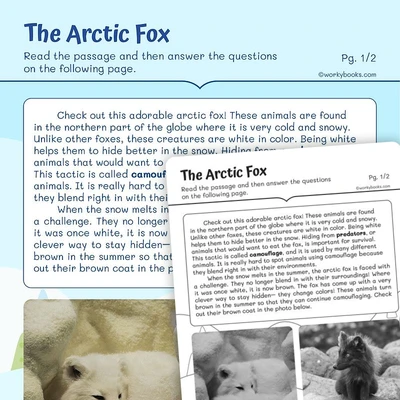
Analyze Visual information—The Arctic Fox
This informational text about arctic foxes is a great opportunity to practice interacting with images in a text. Student...
RI.2.7RI.2.10RI.2.1RF.2.4.A
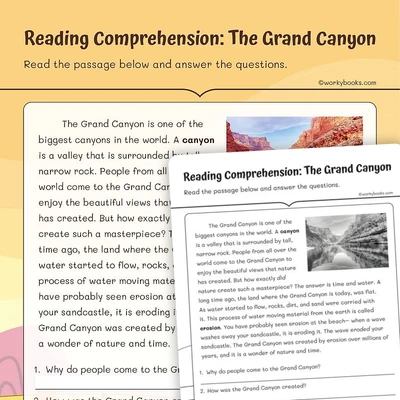
Reading Comprehension: The Grand Canyon
This informational text on the Grand Canyon will teach your students all about this incredible wonder of the world! Free...
RI.3.1RI.3.10RI.3.4RF.3.4
Informational Text —Jellyfish
This informational text on jellyfish is perfect for teaching context clues. Students will read the text and then define ...
RF.2.4.CRF.2.4RF.2.10RI.2.4
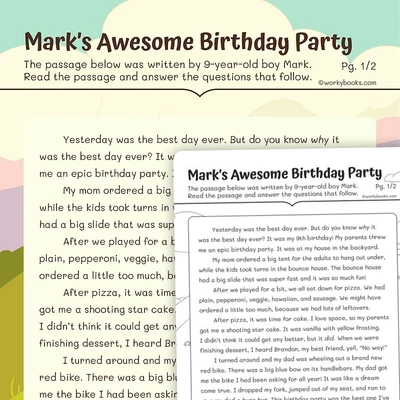
Mark's Awesome Birthday Party
This fiction passage about a child's birthday party with comprehension questions will keep your students engaged. They w...
RL.3.1RL.3.3RF.3.4.CL.3.4.A
Informational Text with Contextual Clues —Pandas
This informational text on pandas is perfect for teaching context clues. Students will read the text and then define cer...
RF.2.4.CRF.2.4RF.2.10RI.2.4
Life Cycles
This informational text on life cycles takes students through two cycles: the frog life cycle, and the bean plant life c...
RI.3.10RF.3.4RF.3.4.ARL.3.1
Informational Text — Astronauts
Practice this second grade context clues worksheet with this informational text on astronauts. Students will read the te...
RI.2.4RI.2.10RI.3.4RI.3.10
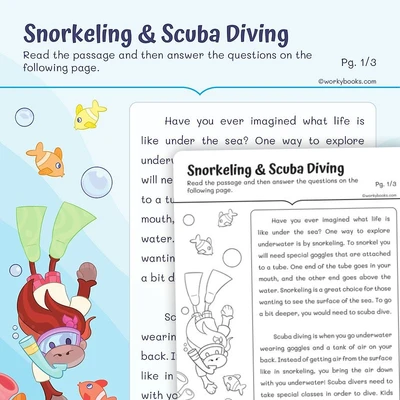
Snorkeling & Scuba Diving
RI.2.2RI.2.6RI.2.10RF.2.4.A
Contextual Clues Getting Elected
Practice context clues with this informational text on U.S. presidential elections. Students will read the text and then...
RI.2.4RI.2.10RI.3.4RI.3.10
Informational Text — Armadillos
This informational text on armadillos is a great way to practice reading comprehension. Students will read the short pas...
RI.2.1RI.2.10
Informational Text — Penguins
This informational text on penguins is a great way to practice reading comprehension. Students will read the short passa...
RI.2.1RI.2.10
Reading Comprehension— Storms
Practie summarizing paragraphs with this fun science informational text on storms! Students will give the main idea of t...