This learning resource is available in interactive and printable formats. The interactive worksheet can be played online and assigned to students. The Printable PDF version can be downloaded and printed for completion by hand.
This science passage introduces students to estuaries, unique ecosystems where freshwater and saltwater meet. Students learn about the structure and function of estuaries, including how tides, sediments, and water flow shape them. The passage highlights their importance as nurseries for fish, feeding grounds for birds, and natural filters that trap pollution. It also explains how estuaries protect coastal communities from floods and storm surges, while providing food resources like oysters and crabs. Fun facts make the passage engaging for learners. This resource aligns with NGSS standards for Life Science: Structure and Function, supporting students in understanding how living things depend on specific environments. Integrated audio features allow learners to listen along, improving accessibility and comprehension. Keywords include estuary, river meets ocean, estuary ecosystem, NGSS Life Science, and structure and function. At around 300-350 words, this resource is ideal for middle-grade science classes studying ecosystems and the connection between structures and functions in nature.
CONTENT PREVIEW
Expand content preview
What is an Estuary?
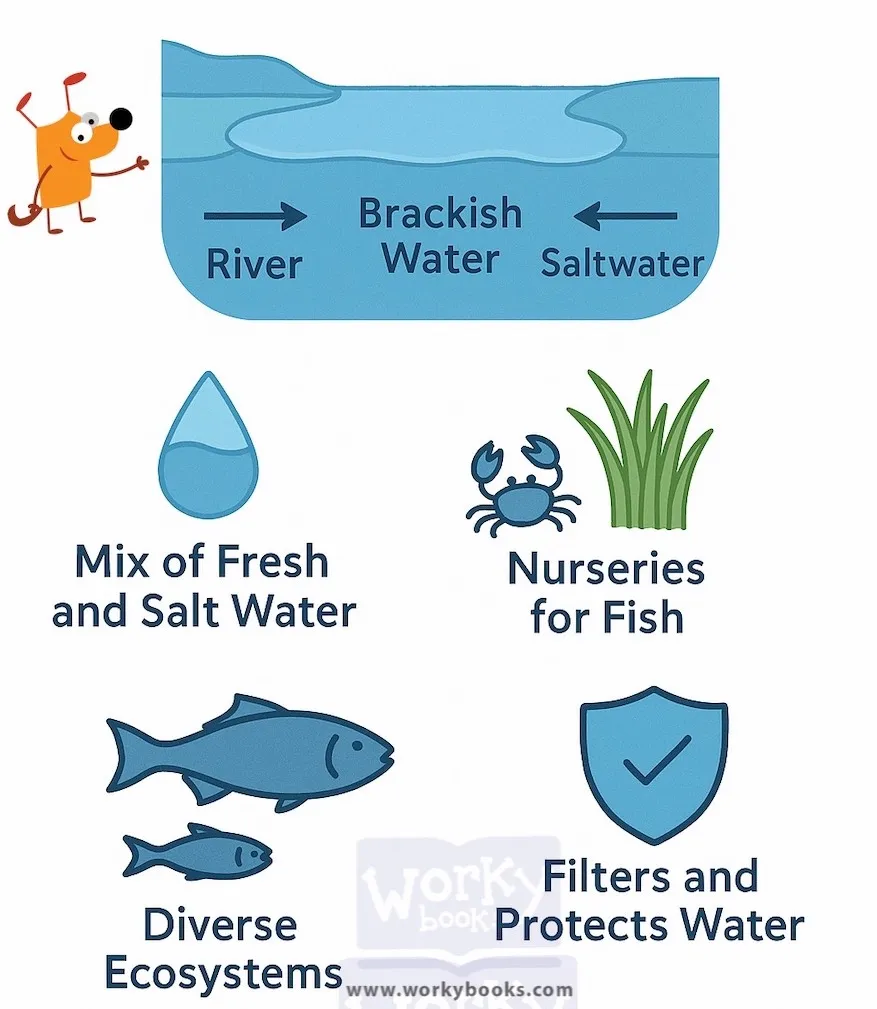
An estuary is a special place on Earth where a river meets the ocean. In an estuary, the fresh water from the river mixes with the salty water from the ocean. This mixing creates brackish water. Brackish water is not as salty as ocean water, but not as fresh as river water. Estuaries often look muddy, with tall green grasses and plants growing on the shores. The air usually smells salty, and you might hear squawking birds or see small crabs scurrying along the mud.
Estuaries are sometimes called nature’s nursery or the ocean’s kindergarten. This is because many animals start their lives here. Baby fish, shrimp, and crabs all grow up safely in estuaries before swimming out to the open sea. The muddy bottom and tall plants give them places to hide from bigger animals that might want to eat them.
Estuaries are also important for birds. Migrating birds, like herons and egrets, stop in estuaries to rest and find food. The rich mud is full of worms and tiny creatures for birds to eat. Other animals you might find in an estuary include oysters, dolphins, and even otters. Many of these animals can only live in estuaries or wetlands.
Estuaries are a type of wetland. Wetlands are areas that are wet for all or part of the year. Wetlands like estuaries help keep our planet healthy. They filter dirt and pollution from water before it reaches the ocean. Estuaries also protect the land from big storms by soaking up extra water so towns and cities don’t flood easily.
Sadly, people sometimes harm estuaries by polluting them or building on them. Protecting estuaries is important because they are home to many animals and help keep our water and land healthy.
Interesting Fact: Some of the world’s biggest cities, like New York and San Francisco, are built next to estuaries!
What is an estuary?
Where river meets oceanA mountain topA desert lakeA rain forest
What kind of water is in estuaries?
Brackish waterOnly salt waterOnly fresh waterDirty water
Why are estuaries called nature’s nursery?
Many baby animals grow thereIt smells nicePeople swim thereIt has big mountains
How do estuaries help during storms?
Soak up extra waterMake storms strongerBring more rainBlock the sun
Which animal might you see in an estuary?
HeronCamelPenguinPolar bear
What happens if estuaries are polluted?
Animals may lose their homesMore animals move inWater turns to iceIt gets bigger
Estuaries only have salty water.
TrueFalse
What does 'brackish' mean?
Mix of fresh and saltyOnly saltyOnly freshDry land
Perfect For:
👩🏫 Teachers
• Reading comprehension practice
• Auto-graded assessments
• Literacy skill development
👨👩👧👦 Parents
• Reading practice at home
• Comprehension improvement
• Educational reading time
🏠 Homeschoolers
• Reading curriculum support
• Independent reading practice
• Progress monitoring
Reading Features:
📖
Reading Passage
Engaging fiction or nonfiction text
❓
Comprehension Quiz
Auto-graded questions
📊
Instant Feedback
Immediate results and scoring
📄
Printable Version
Download for offline reading
🔊
Read Aloud
Voice-over with word highlighting
Reviews & Ratings
No reviews yet. Be the first to share your experience!
Related Content
Informational Text — Penguins
This informational text on penguins is a great way to practice reading comprehension. Students will read the short passa...
RI.2.1RI.2.10
Informational Text — Armadillos
This informational text on armadillos is a great way to practice reading comprehension. Students will read the short pas...
RI.2.1RI.2.10
Reading for Main Details—Birds
This informational text on birds is a great way to practice main idea. Students will read the passage, then give the mai...
RI.2.6RI.2.8
Informational Text — Habitats
This short informational text on habitats will teach your students what a habitat is, as well as provide some examples o...
RF.3.4.A
Reading for Main Details—Beavers Teeth
This informational text on beavers is a great way to practice main idea. Students will read the passage, then give the m...
RI.2.6RI.2.10
Informational Text — Astronauts
Practice this second grade context clues worksheet with this informational text on astronauts. Students will read the te...
RI.2.4RI.2.10RI.3.4RI.3.10
Reading for Main Details—Veternarians
Practie summarizing paragraphs with this fun informational text on veternarians! Students will give the main idea of eac...
RI.2.2RI.2.10
Informational Text —Importance of Sound
This Reading Informational Text Common Core standards calls for 4th graders to be able to effectively describe and analy...
RI.4.5
Key Details in Text
RI.1.1RI.1.2RI.1.10
Informational Text —Bioluminescence
This informational text on bioluminescence will teach your students about this phenomenon. Examples in nature are provid...
RI.3.10RF.3.4RF.3.4.ARI.3.1
Informational Text —Sea Stars
Use this second grade worksheet on context clues with this informational text on sea stars. Students will read the text ...
RI.2.4RI.2.10RI.3.4RI.3.10
The Nature of Life Science
This passage, aligned with NGSS MS-LS1-1, introduces students in grades 6-8 to the foundational concepts of life science...
MS-LS1-1
Using Dichotomous Keys to Identify Organisms
This audio-integrated passage, 'Using Dichotomous Keys to Identify Organisms,' introduces 6th-grade students to a fundam...
Informational Text —Snowflakes
This informational text on snowflakes will teach your students how snowflakes are formed. Images of several different fl...
RI.3.10RF.3.4RF.3.4.ARI.3.1
Informational Text—Tardigrades
This informational text on tardigrades will teach your students all about this strange animal! Free response comprehensi...
RI.2.1RI.2.10RI.3.1RI.3.10
The Pumpkin Life Cycle
This informational worksheet explores the pumpkin lifecycle, guiding students through procedural steps in a scientific t...
RI.2.3RI.2.10
Informational Text —Migratory Birds
Engage young minds with this worksheet that delves into the wonders of migratory birds. Learn about their extraordinary ...
RI.4.10RI.4.3RF.4.4RF.4.4.A
Informational Text — Cloud Gazing
This informational text teaches students how different types of clouds are formed. A page with pictures of the different...
RI.3.10RF.3.4RF.3.4.ARI.3.1
Informational Text on Butterflies
This resource is a great way to practice differntiating between information gained from illustrations and words in a tex...
RI.1.6RI.10RF.1.4.ARF.1.4
Informational Text on Parts of a Tree
This informational text on the parts of a tree is a great way to practice using images during reading. Students will rea...