What is Direction
Interactive passage with audio narration, comprehension questions, and printable PDF.
By completing this purchase you agree to our Terms of Use and Privacy Policy. Your subscription renews automatically until you cancel. You can cancel anytime from your account settings. All sales are final and non-refundable. Digital content is available for download in your account immediately upon purchase.
What's included
What is Direction preview and details
About this printable What is Direction science reading passage, NGSS-aligned (Grades 3-6)
Sample passage and quiz from What is Direction
Reading passage and comprehension quiz preview
What is Direction?
What is Direction?
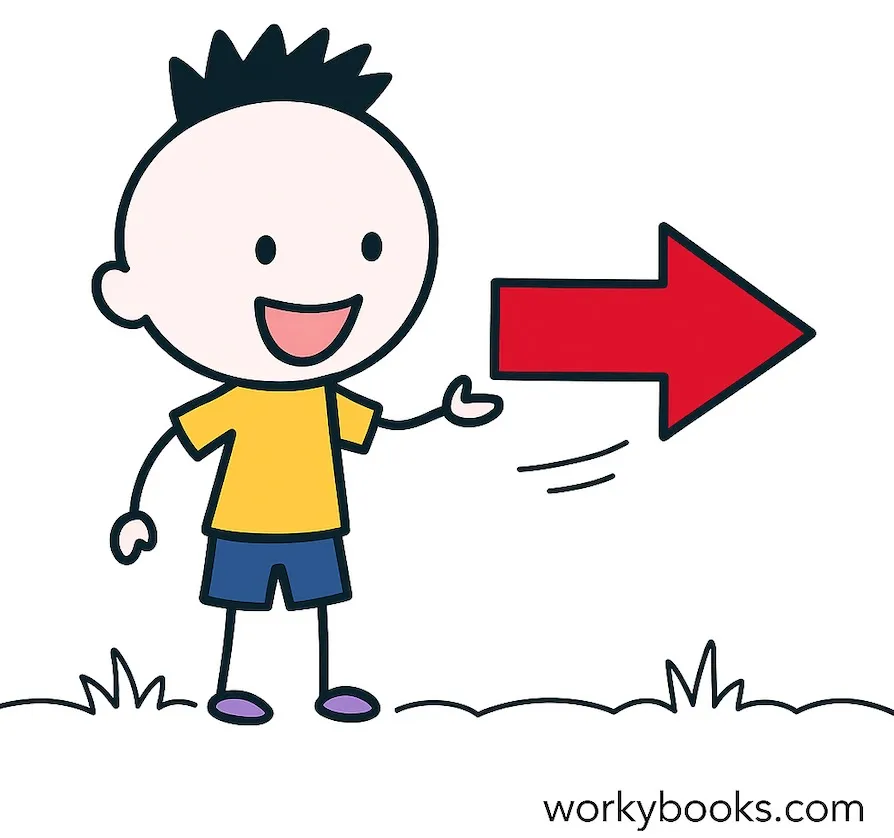
Direction is the path or way something moves or faces. It tells us which way to go or where something is pointing. Knowing direction helps people find places, give instructions, and travel without getting lost.
Cardinal Directions
The four main directions are called cardinal directions: North, South, East, and West. North is toward the North Pole, and South is toward the South Pole. East is where the sun rises each morning, and West is where the sun sets. There are also in-between directions, like northeast and southwest.
Relative Directions
We also use relative directions to explain where things are. These include left, right, up, down, forward, and backward. For example, you might tell a friend to "turn left at the playground" or "walk forward to the tree."
Tools for Finding Direction
There are many tools for finding direction. A compass uses a special needle that always points north. People can also use the sun’s position: the sun rises in the east and sets in the west. At night, some people use stars to find direction. Today, many people use GPS on phones or devices to see where they are and where to go.
Why Direction Matters
Knowing direction is important for reading maps and following instructions. Arrows on maps show you which way to go. Direction is like being a pilot—you need to know which way to point your airplane!
Animals and Direction
Many animals use direction too. Birds fly south for the winter, and bees do special dances to show other bees where to find flowers.
Fun Activities
Try using a compass outside, give someone directions to walk a path, or play ‘Simon Says’ with directions. Practicing these skills can help you become an expert at finding your way!
Interesting Fact: Some birds can sense the Earth’s magnetic field to help them know which direction to fly during migration!
Comprehension quiz (8 questions)
1. What does a compass do?
2. Which direction is the sun rising?
3. Cardinal directions do NOT include:
4. Why do people use GPS?
5. What is a relative direction?
6. How do birds use direction?
7. A compass needle always points south. True or false?
8. Which word means 'main directions'?
Perfect for the way you teach
- Build comprehension skills
- Auto-graded quiz
- Differentiated reading
- Read together at home
- Improve fluency
- Quiet reading time
- Reading curriculum support
- Independent practice
- Track Lexile growth