Wind: A Key Weather Variable — Reading Comprehension
Rate this
Present
Present in classroom. No work saved
Assign
Classroom with student accounts, Track progress
Quick Play
No student accounts, assign with a link
Grades
5
6
7
8
Standards
7.RI.7.2
PRINT+DIGITAL RESOURCE
This learning resource is available in interactive and printable formats. The interactive worksheet can be played online and assigned to students. The Printable PDF version can be downloaded and printed for completion by hand.
Wind is the movement of air caused by differences in air pressure. It is measured using anemometers and wind vanes and plays a key role in weather systems, storm movement, and generating electricity through wind turbines.
CONTENT PREVIEW
Expand content preview
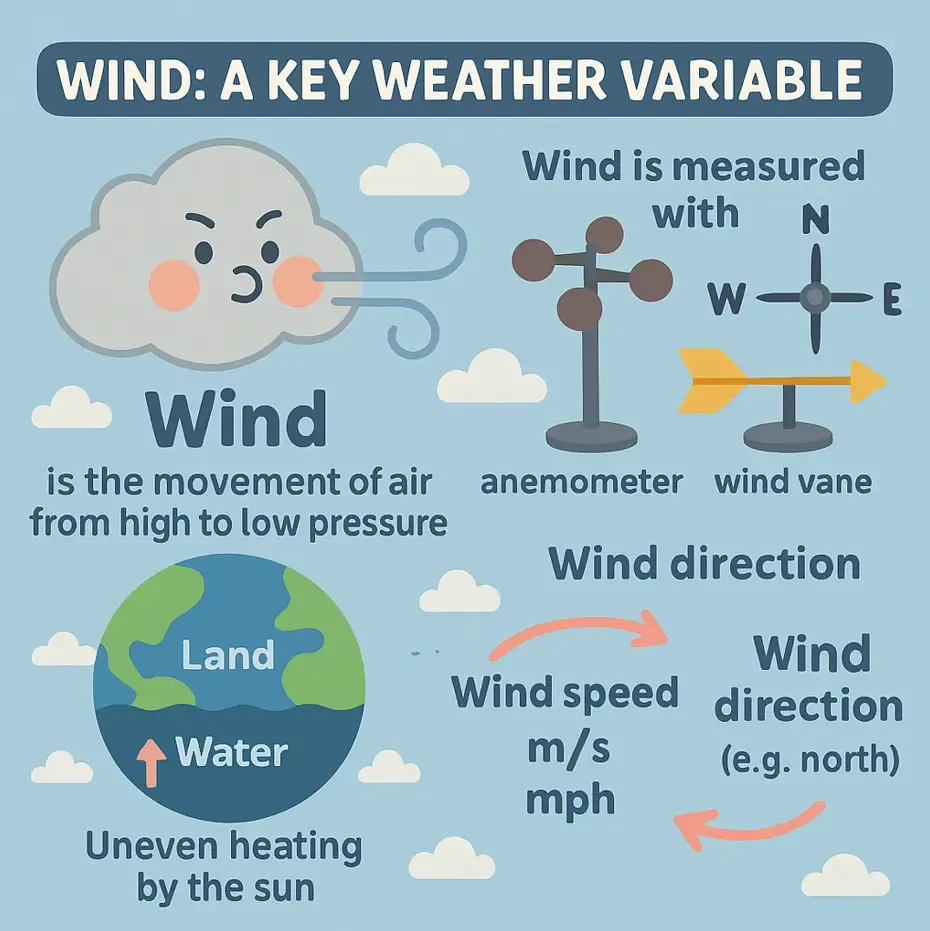
Wind is the movement of air from areas of high pressure to areas of low pressure. It is a key weather variable that influences temperature, precipitation, and weather patterns.
Wind is caused by differences in air pressure, which are created by uneven heating of the Earth’s surface by the sun. For example, land heats up faster than water, creating pressure differences that cause wind.
Wind is measured using an anemometer, which calculates wind speed, and a wind vane, which determines wind direction. Wind speed is typically measured in meters per second (m/s) or miles per hour (mph), while wind direction is described using compass points (e.g., north, south).
Wind plays a crucial role in weather systems. For example, it drives the movement of storms and helps distribute heat and moisture around the planet. Wind also has practical uses, such as generating electricity through wind turbines.
However, strong winds can also cause damage, like uprooting trees or damaging buildings. Understanding wind patterns is essential for weather forecasting and disaster preparedness.
Fun fact: The fastest wind speed ever recorded on Earth was 253 mph during a tornado in Oklahoma in 1999.
What is wind?
The movement of air from high to low pressureThe amount of water vapor in the airThe temperature of the airThe force of gravity
What causes wind?
Differences in air pressureThe Earth’s rotationThe moon’s gravityOcean currents
What instrument measures wind speed?
ThermometerBarometerAnemometerHygrometer
What is wind direction measured with?
AnemometerWind vaneHygrometerBarometer
What is one role of wind in weather systems?
It drives the movement of stormsIt increases air pressureIt reduces humidityIt stops precipitation
What is the fun fact mentioned in the passage?
The fastest wind speed was 253 mph in OklahomaWind is not affected by air pressureWind turbines cannot generate electricityWind has no impact on weather
What is one practical use of wind?
Generating electricity through wind turbinesIncreasing air pressureReducing humidityStopping storms
What is one effect of strong winds?
They reduce air pressureThey cause damage like uprooting treesThey increase humidityThey stop precipitation
Perfect For:
👩🏫 Teachers
• Reading comprehension practice
• Auto-graded assessments
• Literacy skill development
👨👩👧👦 Parents
• Reading practice at home
• Comprehension improvement
• Educational reading time
🏠 Homeschoolers
• Reading curriculum support
• Independent reading practice
• Progress monitoring
Reading Features:
📖
Reading Passage
Engaging fiction or nonfiction text
❓
Comprehension Quiz
Auto-graded questions
📊
Instant Feedback
Immediate results and scoring
📄
Printable Version
Download for offline reading
🔊
Read Aloud
Voice-over with word highlighting
Reviews & Ratings
No reviews yet. Be the first to share your experience!
Related Content
The U.S. Wilderness Act of 1964
The U.S. Wilderness Act of 1964 protects over 100 million acres of wilderness, preserving biodiversity and providing rec...
7.RI.7.2
Silviculture: The Science of Forest Management
Silviculture is the science of growing and managing forests to meet goals like timber production, biodiversity, and carb...
7.RI.7.2
Clouds: Formation and Types
Clouds form when warm, moist air rises and cools, reaching the dew point. They come in types like cirrus, cumulus, and s...