
The Turkey Who Stayed for Pie: A Funny Thanksgiving Read-Aloud for Kids (Video, Book and Activities)
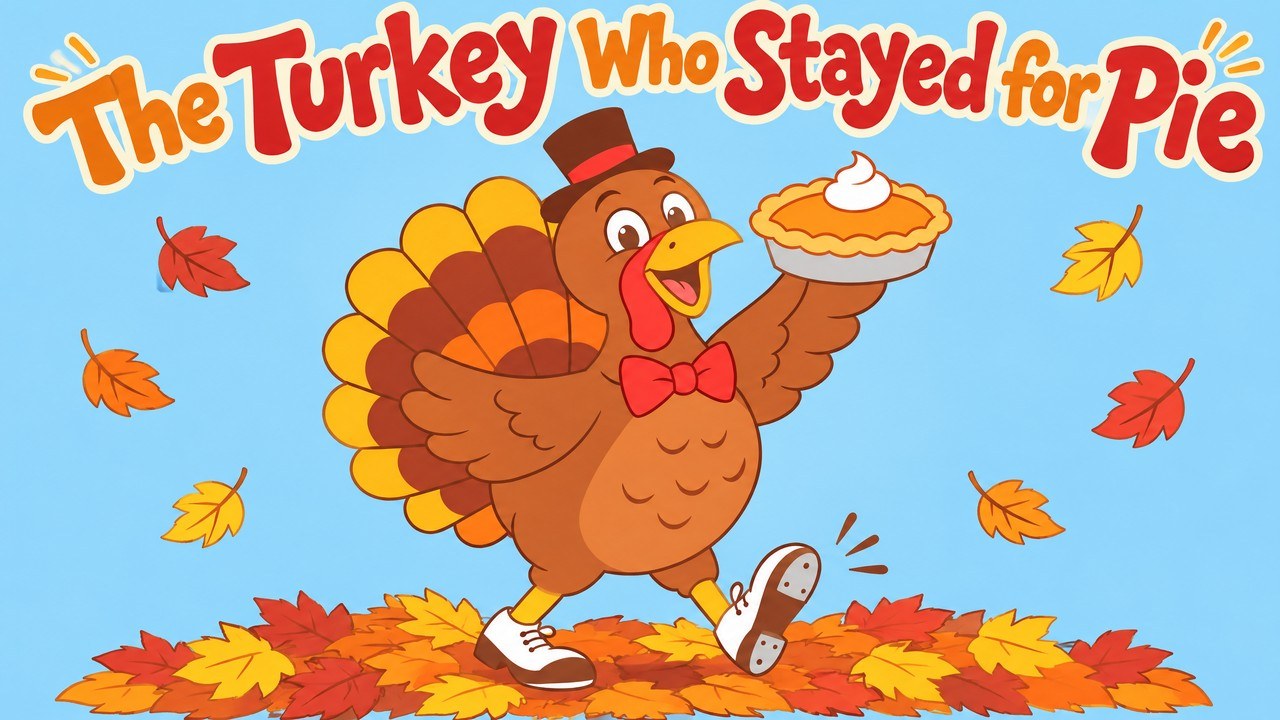
Are you looking for a funny Thanksgiving read-aloud that gets the whole class giggling? Better yet, one that still opens a real talk about gratitude? Meet Gus, a turkey with big dreams and shiny tap shoes. Sadly, he has no idea what Thanksgiving means for turkeys.
The Turkey Who Stayed for Pie is a free, rhyming Thanksgiving story for kids from Workybooks. You can watch it as a read-aloud video. Students can also read it as an interactive picture book with word-by-word highlighting. Finally, there’s a printable PDF to hand out or project.
Below, you’ll find the full video and a look inside the book. After that comes a big set of Thanksgiving classroom activities to go with it. These include discussion questions, vocabulary, a rhyming hunt and writing prompts. Each idea works for kindergarten through third grade.
Watch the Thanksgiving Read-Aloud Video
The video runs about three and a half minutes. That makes it a great fit for morning meeting or carpet time. It also works well in a sub plan or right before Thanksgiving break. Every page is animated, and the story is read aloud. Meanwhile, the words appear on screen so early readers can follow along.
Short on time? Try the one-minute Thanksgiving story teaser instead. It stops right at the cliffhanger. As a result, it makes a fun hook before you read the full book.
What Is The Turkey Who Stayed for Pie About?
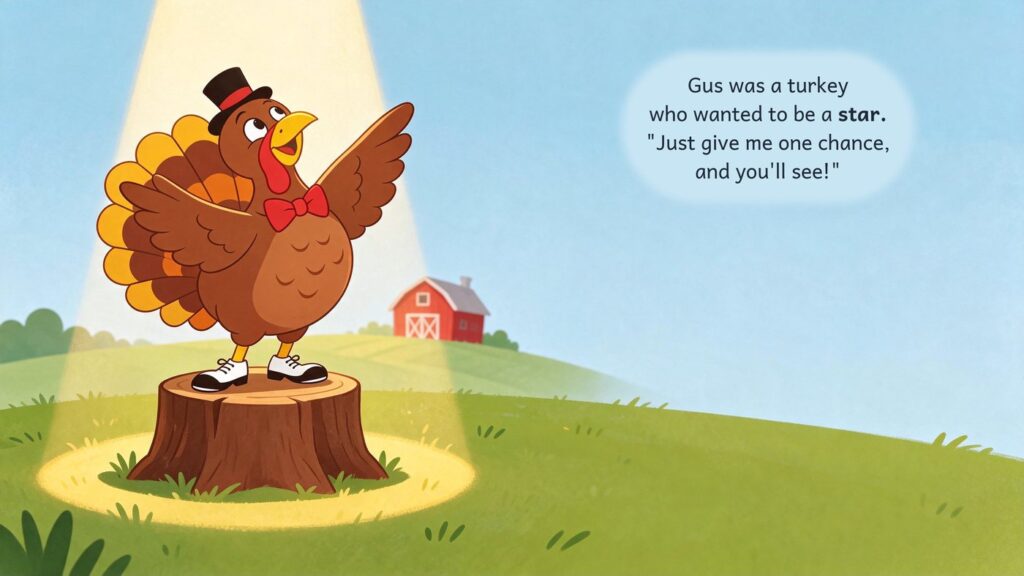
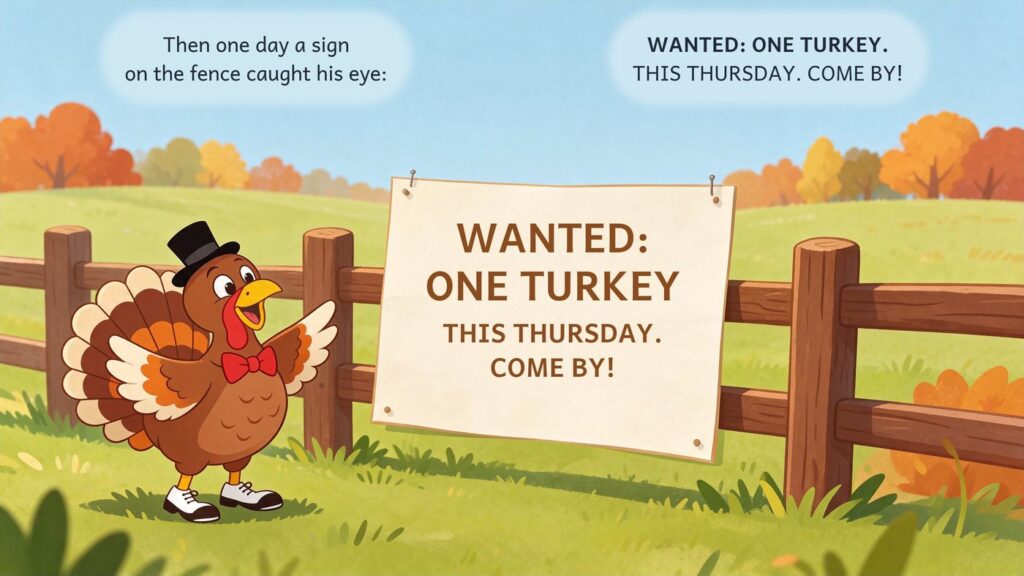
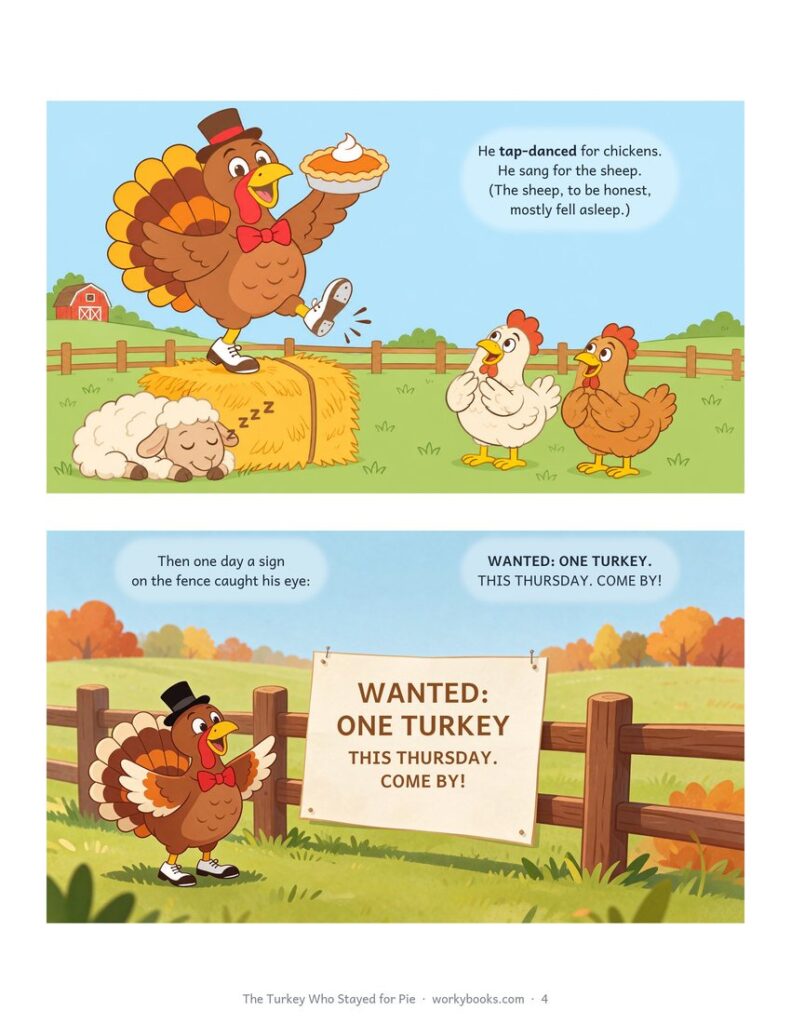
Gus is a turkey who wants to be a star. First, he tap-dances for the chickens. Next, he sings for the sheep, who mostly fall asleep. Then one day, he spots a sign on the fence: WANTED: ONE TURKEY. THIS THURSDAY. COME BY!
Naturally, Gus is sure it’s an audition. So he practices all week long. He juggles, twirls and sings scales in the shed. On top of that, he tap-dances with a bucket on his head. Before the big day, he polishes his beak and irons his tie. For luck, he even bakes a pumpkin pie.
Most kids figure out what the sign really means long before Gus does. That’s exactly what makes the story so fun to read aloud. In short, the whole room is in on the joke.
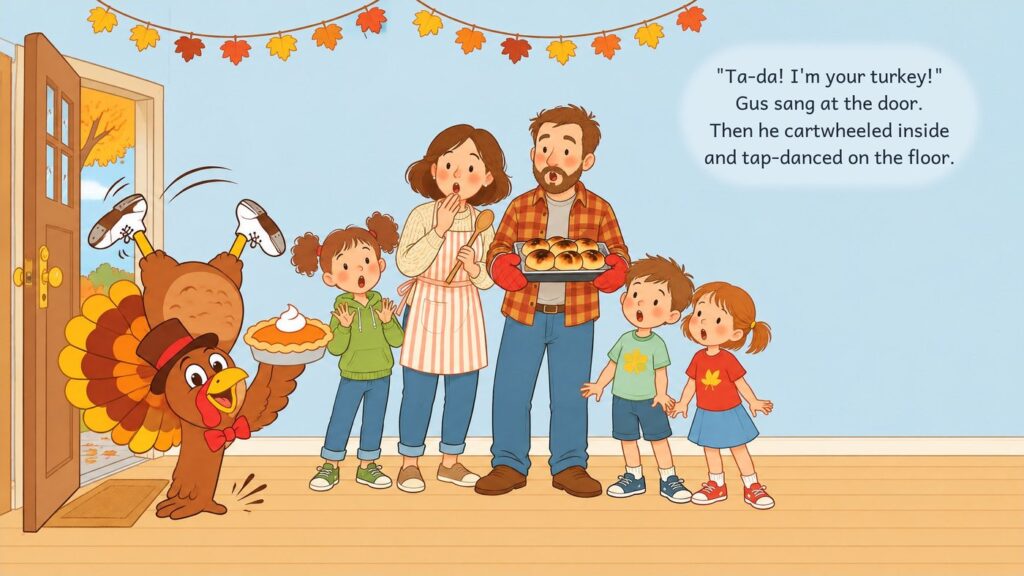
On Thanksgiving Day, Gus cartwheels through the front door. Then he puts on the show of his life. He juggles the cranberries and sings to the peas. After that, he tap-dances across the table and slides through the cheese.
Soon the gravy goes flying. Grandpa’s false teeth fly too. With a kersplat, they land in Grandma’s left shoe.
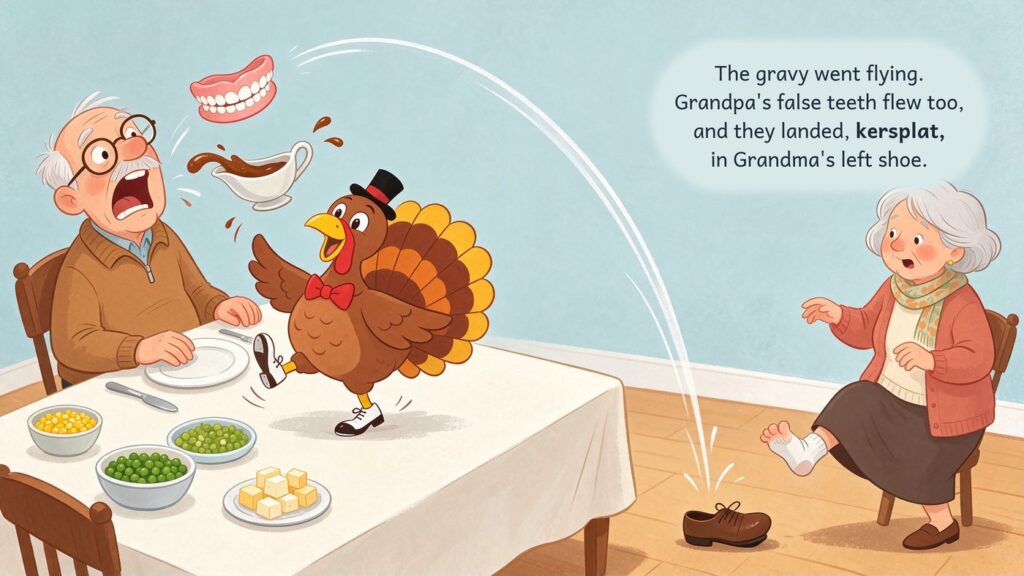
Surprisingly, the family cheers. “Best Thanksgiving ever!” says Dad. However, young Rose then tugs on Gus’s wing. She gently explains that the Thanksgiving turkey is not there for a show. Gus gulps, and his knees go wobbly. A moment later, he faints face-first into the gravy.
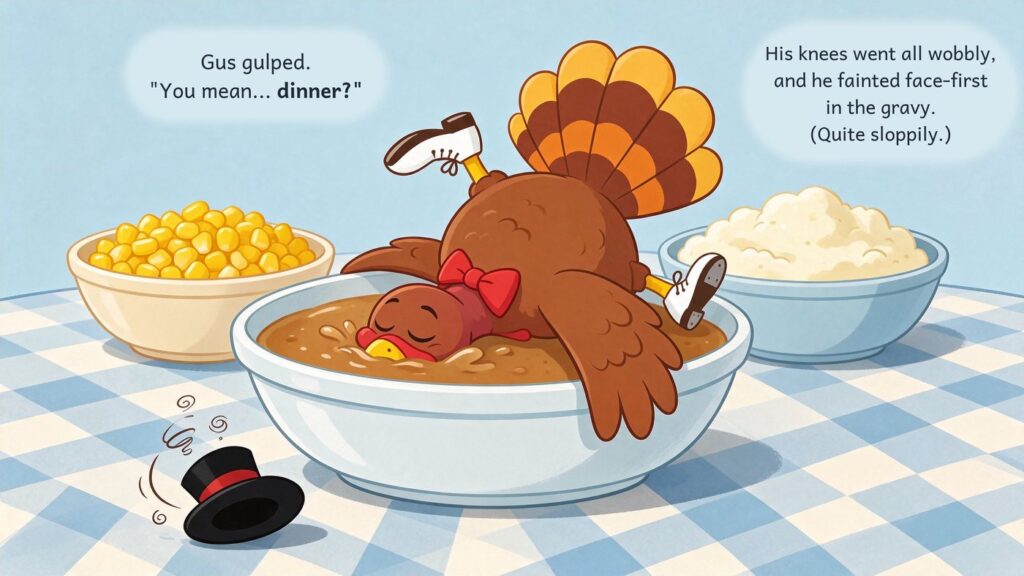
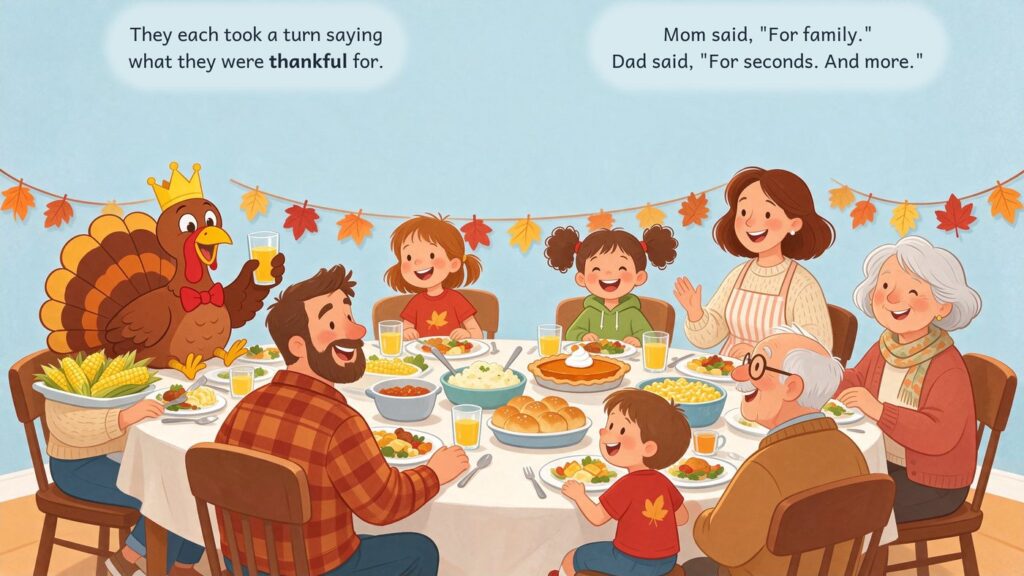
We won’t spoil the whole ending. Still, here’s a hint: Grandpa, with his teeth back in, has other plans. Luckily, there’s plenty of corn, mac and cheese and pumpkin pie to share. In the end, everyone takes a turn saying what they’re thankful for. That includes one very relieved turkey.
Why Funny Thanksgiving Books Work So Well in the Classroom
Thanksgiving week is busy, exciting and a little wiggly. A funny Thanksgiving picture book gives kids a reason to settle in and listen. Better still, humor does real teaching work:
- Dramatic irony builds comprehension. Kids know what the sign means before Gus does. So ask, “What does Gus think? What do you think?” This simple question practices point of view and predictions.
- Rhyme builds phonological awareness. The whole story rhymes, like peas and cheese or too and shoe. That’s why it’s great for rhyme work in kindergarten and first grade.
- A happy twist opens a gratitude talk. In the end, Gus is thankful for friends, and for not being dinner. From there, it’s easy to ask what your students are thankful for.
- It’s short. The story is about 300 words long. Even on a busy pre-break day, it fits in under four minutes.
Read It as an Interactive Picture Book
Besides the video, the story is also an interactive read-aloud book on Workybooks. Students turn the pages and tap play themselves. As each word is read, it lights up on the page. Because of this, it works well for:
- Listening centers. Add headphones and let students read along on their own.
- Early readers. Word-by-word highlighting links each spoken word to its printed word.
- English language learners. Students can replay any page as often as they like.
- Home reading. Send it home over Thanksgiving break as a family read-aloud.
Free Printable Thanksgiving Story PDF
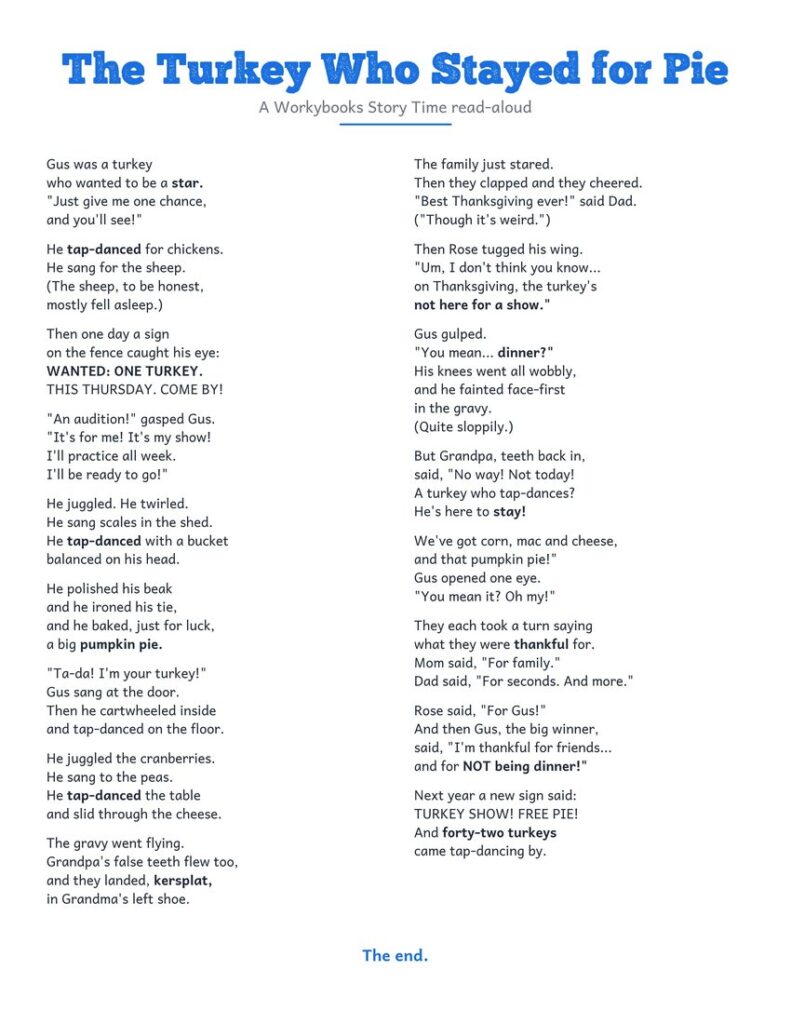
Prefer paper? You can download the printable Thanksgiving story PDF from the book page. Page one shows the whole story as easy-to-read text. This page is handy for guided reading and fluency practice. It also works for highlighting rhymes or sending home.
Next come the full-color cover and the illustrated pages. Each sheet holds two spreads. Altogether, the whole book prints on just 12 pages.
Thanksgiving Discussion Questions for K-3
Use these questions before, during and after reading. For younger listeners, pick two or three. In second or third grade, try all of them.
Before reading
- Look at the cover. Who is the main character? What do you think he wants?
- The title says the turkey stayed for pie. Why might that be surprising?
During reading
- What does Gus think the WANTED sign means? Now, what do you think it really means?
- How does Gus get ready for his “audition”? Which idea is your favorite?
- Imagine a turkey cartwheels through your door. How would your family feel?
After reading
- Why did Gus faint? How did Rose help him understand?
- What did Grandpa decide? Was that a kind choice?
- Each family member says what they’re thankful for. What would you say?
- Why do you think forty-two turkeys came the next year?
- What lesson can we learn from this story? Think about kindness, friendship and gratitude.
8 Thanksgiving Activities to Go With the Book
1. Rhyming word hunt
Print the story text page for each student. Then have them highlight rhyming pairs in two colors. For example, look for sheep/asleep, eye/by, shed/head and tie/pie. Other pairs include door/floor, peas/cheese, today/stay and winner/dinner. Meanwhile, younger students can clap each rhyme as you reread.
2. Thankful turkey feathers
This classic Thanksgiving gratitude activity fits Gus perfectly. Give each student a paper turkey body and five feather cutouts. On each feather, they write or draw one thing they’re thankful for. Afterward, display the turkeys together as a “Thankful Flock.”
3. Design your own WANTED poster
Invite students to make their own sign for a Thanksgiving “audition.” What would it say if it really wanted a performer? Maybe WANTED: ONE JUGGLING PUMPKIN! This mix of writing and drawing leaves lots of room for creativity.
4. Story sequencing
Choose five or six key moments from the story. For instance, Gus dreams, sees the sign, practices, arrives and faints. Students put the moments in order and then retell the story. This builds their sense of beginning, middle and end.
5. Character feelings chart
Gus feels many things in one short book. He starts out excited and proud. Later, he turns confused, then terrified, and finally thankful. Make a feelings chart with these five words. Next, ask students to find the page that shows each feeling. Finally, have them point to the word or picture clues that prove it.
6. Reader’s theater
Assign parts for Gus, Rose, Mom, Dad, Grandpa and a narrator. Since the story rhymes, it’s easy to read with expression. Plus, students love acting out the cartwheel entrance. The faint into the gravy is always a hit, too (carefully, of course).
7. “What happens next?” writing prompt
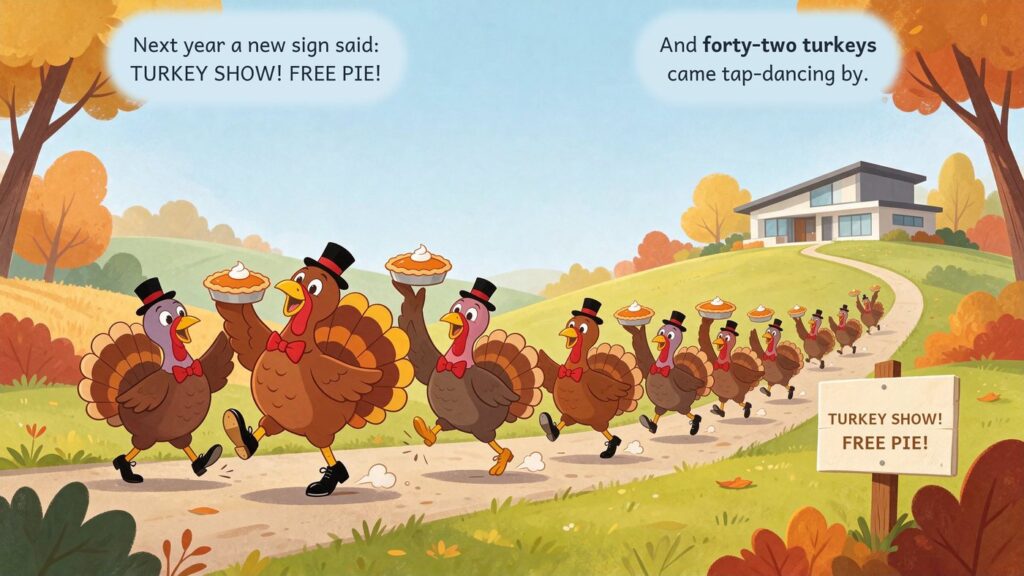
The book ends with a new sign and forty-two tap-dancing turkeys. So ask students to write or draw next year’s Turkey Show. Older students can even try writing it in rhyming couplets.
8. Gratitude circle
To wrap up, end your read-aloud the way the family does. Go around the circle, one student at a time. Each child finishes the sentence, “I’m thankful for…” Some kids will give silly answers, like “for NOT being dinner!” Honestly, that’s half the fun.
Thanksgiving Vocabulary Words From the Story
Preview a few of these words before reading. You can also add them to your word wall:
- audition: a short performance to try out for a part in a show
- juggled: kept several things in the air by tossing and catching them
- scales: notes sung or played in order, going up or down
- polished: rubbed something until it was clean and shiny
- cartwheeled: turned sideways over hands and feet, like a wheel
- wobbly: shaky and not steady
- fainted: suddenly passed out for a moment
- thankful: glad and grateful for something or someone
Which Standards Does It Support?
This read-aloud and its activities line up with Common Core reading standards for K-3. Here are a few examples:
- Story elements (RL.K.3, RL.1.3): describe the characters, setting and major events.
- Retelling (RL.1.2, RL.2.2): retell key details and find the central lesson.
- Rhythm and rhyme (RL.2.4): explain how rhymes and beats add rhythm and meaning.
- Character actions (RL.3.3): describe characters and how their actions shape events.
More Thanksgiving Resources for Your Classroom
Are you building a full Thanksgiving unit? If so, these Workybooks resources pair nicely with Gus’s story:
- The First Thanksgiving Celebration: a nonfiction passage about Thanksgiving history.
- The Science of Pumpkin Pie: a perfect follow-up to Gus’s lucky pie.
- Thanksgiving Reading Comprehension Task Cards: fiction and nonfiction practice for the holiday week.
- American Holidays Reading Comprehension: holiday reading practice all year long.
Frequently Asked Questions
What age is The Turkey Who Stayed for Pie for?
It’s written for kindergarten through third grade, or about ages 5 to 9. Preschoolers enjoy the video too. Meanwhile, older students can use it for rhyme and story-structure lessons.
How long is the Thanksgiving read-aloud video?
It’s about three and a half minutes long. The story itself has around 300 words.
Is the book free?
Yes, it is. The video is free on YouTube. Likewise, the interactive book and printable PDF are free on Workybooks.
Is the story scary for young kids?
Not at all. Gus has a funny moment of panic about Thanksgiving dinner. However, the family welcomes him to stay. In the end, the story closes with gratitude, pie and a happy turkey parade.
Can I use it for distance learning or send it home?
Absolutely. Share the YouTube video or the interactive book link with families. Alternatively, send home the printable PDF for a family read-aloud over the break.
A Thanksgiving Story Your Class Will Ask for Again
Some Thanksgiving books teach history, and others teach manners. A few simply make kids laugh until they snort. The Turkey Who Stayed for Pie does the last one. Along the way, it also sneaks in kindness and gratitude.
So play the read-aloud video or open the interactive book. Then print the PDF and let Gus tap-dance into your Thanksgiving week. Happy Thanksgiving from all of us at Workybooks!