Plant and Animal Structures 4th Grade | 4-LS1-1 Worksheets
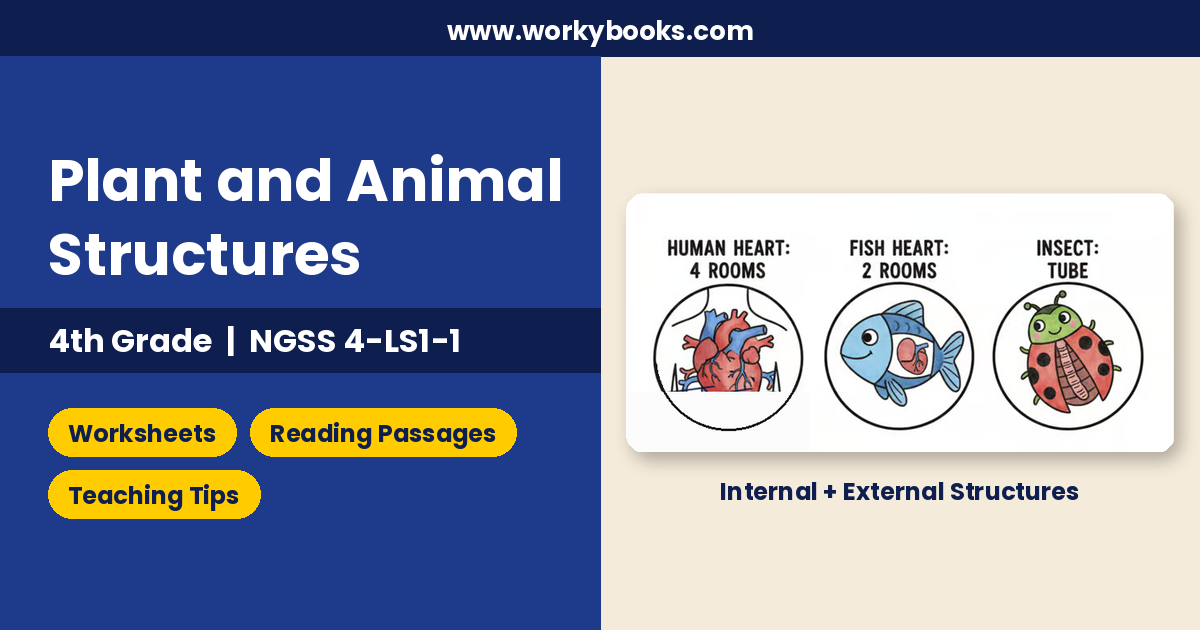
Why does a fennec fox have giant ears? Why does an octopus need three hearts? Questions like these are the heart of plant and animal structures in 4th grade. Every living thing has parts that help it survive, grow, behave and make more of its kind. This guide covers what the NGSS 4-LS1-1 standard asks, simple ways to teach it, and free 4-LS1-1 worksheets for the classroom or homeschool.
What Does 4-LS1-1 Ask Kids to Do?
The standard asks 4th graders to build an argument that plants and animals have internal and external structures that help them survive, grow, behave and reproduce.
In plain words, kids learn about plant and animal structures:
- Claim: “A turtle’s shell helps it survive.”
- Evidence: “The shell is hard and covers its body.”
- Reasoning: “Predators can’t easily bite through it.”
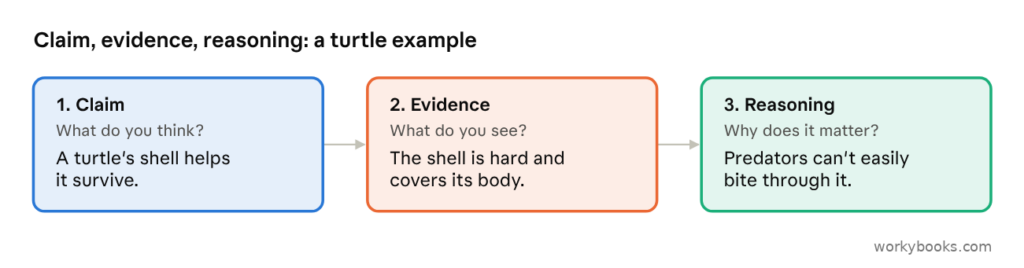
That is claim, evidence, reasoning in 4th grade science. It sounds big, but kids do it every time they explain why something works.
What Are Internal and External Structures?
A structure is a body part. A function is the job that part does.
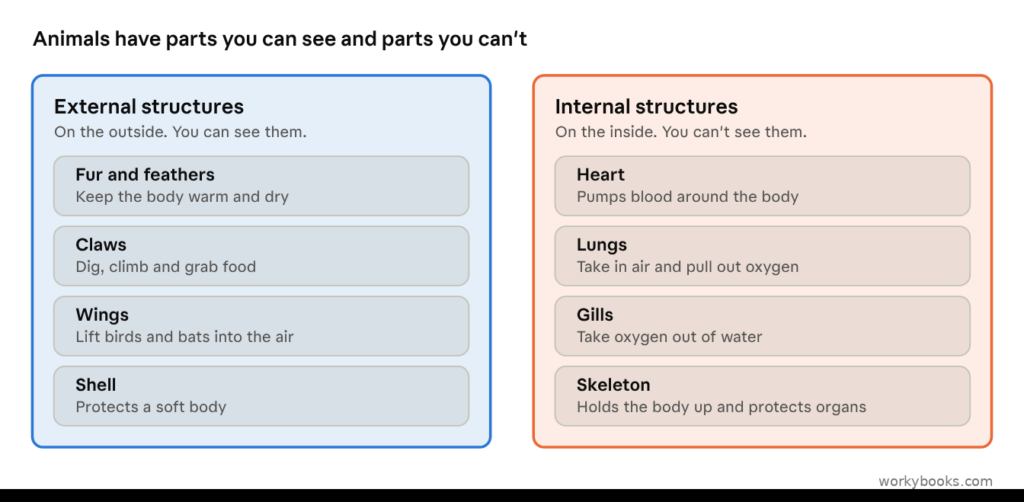
- External structures are on the outside. You can see them. Think fur, claws, wings, shells, leaves and thorns.
- Internal structures are on the inside. You can’t see them. Think the heart, lungs, gills, stomach and skeleton.
A quick way to explain structure and function to kids: the structure is the tool, and the function is what the tool does. A bird’s beak is the tool. Cracking seeds is the job. plant and animal structures
External Animal Structures and What They Do
Animals use outside parts to stay safe, find food, move around and handle the weather.
- Fur and feathers keep animals warm and dry.
- Claws help animals dig, climb and grab food.
- Legs help animals run, jump, swim and hop.
- Tails help with balance, steering and even sending signals.
- Wings let birds, bats and insects fly.
- Skin and shells protect soft bodies inside.
- Big ears help some animals hear well and cool down.
Desert animals are great examples
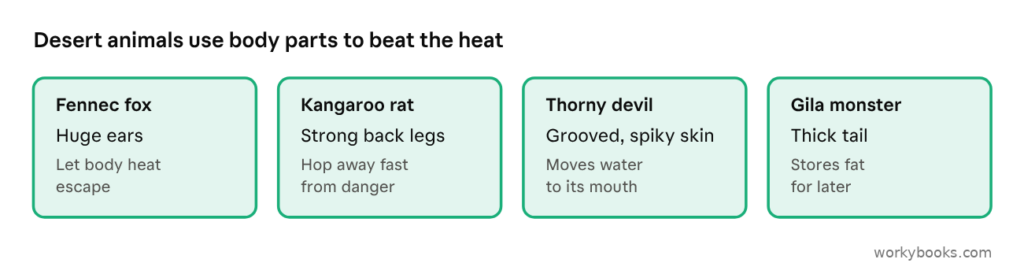
The desert is hot and dry, so animals there have clever parts.
- The fennec fox and kit fox have huge ears that let body heat escape.
- The kangaroo rat has strong back legs for hopping away from danger.
- The thorny devil has grooved, spiky skin that moves water toward its mouth.
- The Gila monster stores fat in its thick tail, so it can go a long time without eating.
External animal structures worksheets (Bundle 1)
External Animal Structures and Their Functions (Grade 4, 4-LS1-1) includes:
- Animal Body Structures
- Animal Claws
- Animal External Structures
- Animal Structures at Work
- Fennec Fox
- Gila Monster
- How Do Turtles Move?
- How Fur and Feathers Help
- How Legs Help Animals Move
- How Skin Protects Animals
- How Tails Help Animals
- How Wings Help Animals Fly
- Kangaroo Rat
- Kit Fox
- The Thorny Devil
- The Turtle’s Shell
- Why Do Elephants Have Big Ears?
Internal Animal Structures: The Parts You Can’t See
Inside every animal, organs work together to keep it alive.
- The heart pumps blood around the body.
- Lungs take in air and pull out oxygen.
- Gills let fish take oxygen from water.
- The stomach and gut break down food for energy.
- The skeleton holds the body up and protects soft organs.
Some fun facts kids love:
- An octopus has three hearts. Two pump blood to the gills, and one pumps it to the rest of the body.
- Frogs have lungs, but they can also take in oxygen through their skin.
- Insects and crabs have an exoskeleton. Their skeleton is on the outside, like a suit of armor.
- A turtle’s shell is part of its skeleton. A turtle can’t climb out of its shell.
Internal animal structures worksheets (Bundle 2)
Internal Animal Structures: Heart, Lungs, Gills, Skeleton (Grade 4, 4-LS1-1) includes:
- Animal Internal Structure
- Animal Skeleton Structure
- Do Frogs Have Lungs?
- How Animal Hearts Work
- How Animal Lungs Work
- How Animals Digest Food
- How Fish Breathe
- How Fish Gills Work
- How Internal Structures Keep Animals Alive
- How Many Hearts Does an Octopus Have?
- Lungs vs Gills
- What Are Exoskeletons?
What About Plant Structures?
Plants have structures too, and they work just as hard.
- Roots hold the plant in the ground and take in water.
- Stems hold the plant up and carry water to the leaves.
- Leaves use sunlight to make food.
- Flowers make seeds so new plants can grow.
- Thorns keep hungry animals away.
Plants also have internal structures. Tiny tubes inside the stem move water up from the roots and food down from the leaves.
An Easy Activity: Be a Structure Detective
This takes about 10 minutes and works at home or in class.
- Pick one animal picture.
- Circle one external structure.
- Ask: “What job does this part do?”
- Ask: “What would happen if the animal didn’t have it?”
Want to go further? Try biomimicry. People copy animal parts to build new things. Velcro was inspired by burrs that stick to dog fur. Kids can pick an animal part and sketch a tool based on it.
Common Mix-Ups Kids Have
- “Structures are only outside parts.” Inside parts like the heart count too.
- “Fish breathe water.” Fish don’t breathe water. Their gills pull oxygen out of the water.
- “Animals grow a part because they need it.” An animal can’t decide to grow new parts. Parts change slowly over many, many generations.
- “Plants don’t have structures.” Roots, stems and leaves are all structures with jobs.
Tips for Homeschool Families
- Go on a backyard or park walk and spot five external structures.
- Look at a chicken drumstick to see bone, muscle and skin.
- Compare a pet’s body parts with a wild animal’s.
- Use one short reading passage a day. Ten minutes is plenty.
Frequently Asked Questions
External structures are body parts on the outside, like fur or leaves. Internal structures are on the inside, like the heart or roots inside the soil.
The heart, lungs, gills, stomach, brain and skeleton.
Leaves, stems, flowers, thorns and the parts of the roots you can see.
Roots get water, leaves make food, flowers make seeds and thorns protect the plant from animals.
A structure is a body part. A function is the job that part does.
Get the 4-LS1-1 Worksheets
Ready to teach plant and animal structures in 4th grade? Grab the External Animal Structures bundle and the Internal Animal Structures bundle on Workybooks. Each one has short, kid-friendly reading passages with simple questions, ready to print for class or homeschool.
Related Posts
Weather Quiz: Introduction to Heat Domes
Importance of Köppen Climate Classification System