Air Temperature: A Key Weather Variable
Interactive passage with audio narration, comprehension questions, and printable PDF.
By completing this purchase you agree to our Terms of Use and Privacy Policy. Your subscription renews automatically until you cancel. You can cancel anytime from your account settings. All sales are final and non-refundable. Digital content is available for download in your account immediately upon purchase.
What's included
Air Temperature: A Key Weather Variable preview and details
About this printable Air Temperature: A Key Weather Variable science reading passage, NGSS-aligned (Grades 5-8)
Sample passage and quiz from Air Temperature: A Key Weather Variable
Reading passage and comprehension quiz preview
Air Temperature: A Key Weather Variable
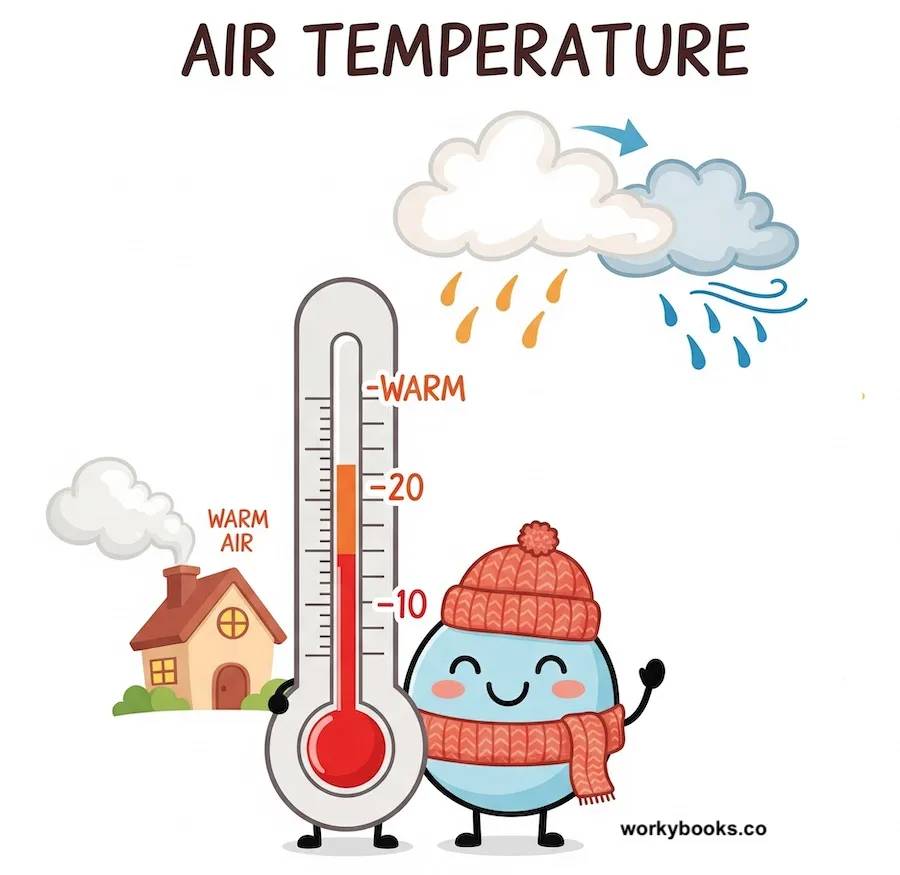
Air temperature is a measure of how hot or cold the air is. It is one of the most important weather variables because it affects everything from daily weather patterns to long-term climate trends.
Air temperature is caused by the kinetic energy of air molecules. When molecules move faster, the temperature rises, and when they slow down, the temperature drops. This energy comes from the sun, which heats the Earth’s surface and, in turn, the air above it.
Air temperature is measured using a thermometer. Traditional thermometers use a liquid, like mercury or alcohol, that expands when heated and contracts when cooled. Modern digital thermometers use electronic sensors to measure temperature more accurately.
The most common units for air temperature are Celsius (°C) and Fahrenheit (°F). Scientists often use Celsius, while Fahrenheit is more common in the United States. In scientific contexts, the Kelvin (K) scale is also used, where 0 K represents absolute zero, the coldest possible temperature.
Air temperature varies depending on factors like time of day, season, and location. For example, temperatures are usually higher during the day and lower at night, and they tend to be warmer near the equator and colder near the poles.
Fun fact: The highest air temperature ever recorded on Earth was 56.7°C (134°F) in Death Valley, California, in 1913.
Comprehension quiz (8 questions)
1. What is air temperature?
2. What causes air temperature?
3. What instrument is used to measure air temperature?
4. What are the most common units for air temperature?
5. What is absolute zero on the Kelvin scale?
6. What is one factor that affects air temperature?
7. What is the fun fact mentioned in the passage?
8. Why is air temperature important?
Perfect for the way you teach
- Build comprehension skills
- Auto-graded quiz
- Differentiated reading
- Read together at home
- Improve fluency
- Quiet reading time
- Reading curriculum support
- Independent practice
- Track Lexile growth