American Federation of Labor
Interactive passage with audio narration, comprehension questions, and printable PDF.
By completing this purchase you agree to our Terms of Use and Privacy Policy. Your subscription renews automatically until you cancel. You can cancel anytime from your account settings. All sales are final and non-refundable. Digital content is available for download in your account immediately upon purchase.
What's included
American Federation of Labor preview and details
About this printable American Federation of Labor reading passage (Grades 6-8)
Sample passage and quiz from American Federation of Labor
Reading passage and comprehension quiz preview
American Federation of Labor
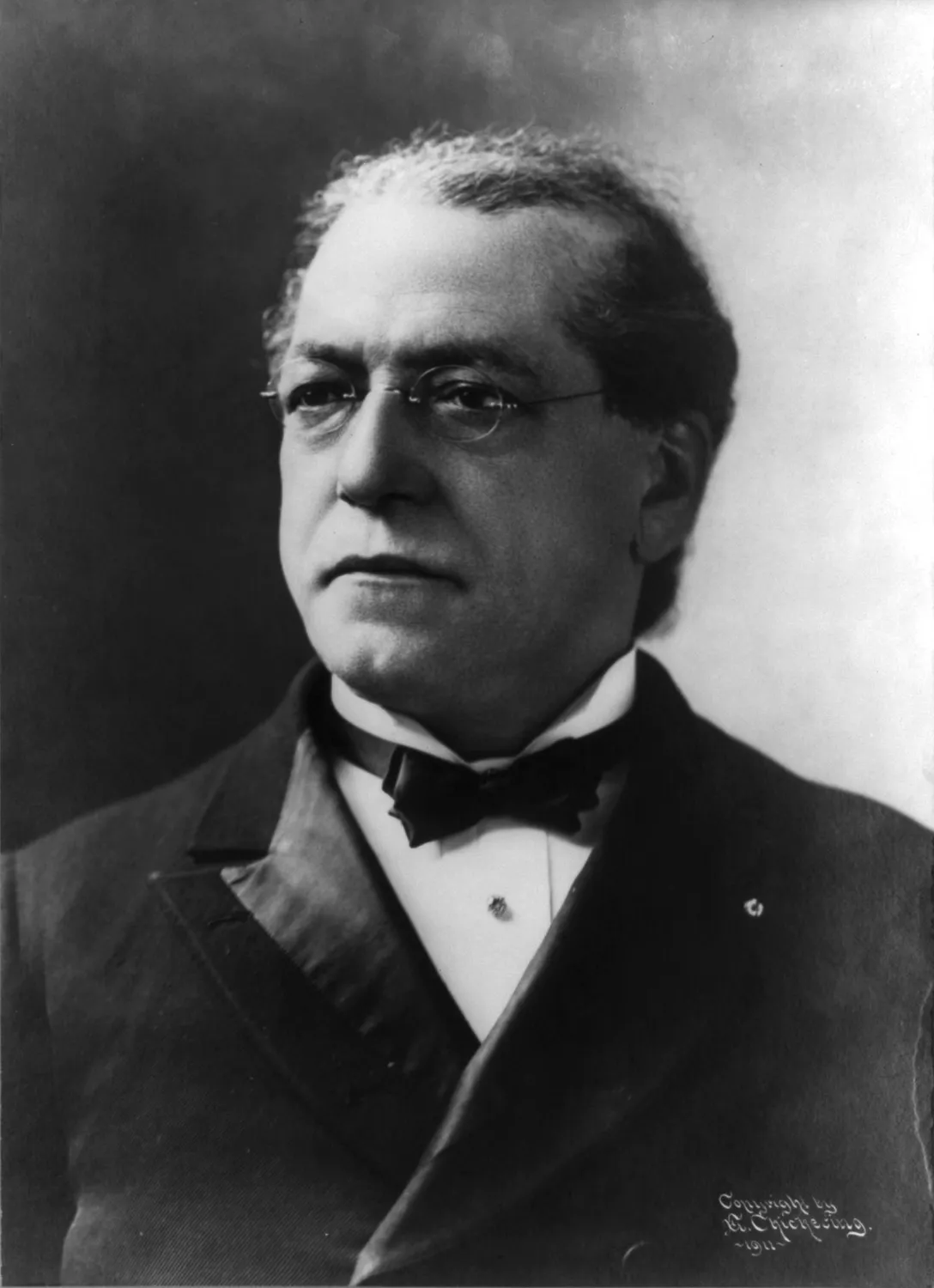
"Gompers-Samuel-LOC" by Elmer Chickering.
Source: Wikimedia Commons (Public domain).
The American Federation of Labor (AFL) was one of the most influential labor organizations in United States history. Founded in 1886, the AFL was led by Samuel Gompers, a cigar maker and experienced union leader. Unlike earlier unions, which often united workers of all skill levels, the AFL focused on skilled labor. These were workers who had special training or expertise, such as carpenters, printers, and electricians.
During the late nineteenth and early twentieth centuries, American workers faced many challenges. Factory jobs were often dangerous, pay was low, and the workday was long. Efforts to improve these conditions sometimes resulted in conflict between workers and employers. Many unions at the time called for broad social reforms, such as ending child labor or changing the entire economic system. However, the AFL chose a different path. Under Gompers' leadership, the AFL concentrated on practical goals for workers. Their demands included higher wages, safer working conditions, and shorter hours.
The AFL organized workers by trade union. Each trade union represented a particular job or craft, like bricklaying or metalworking. This organizational structure formed a federation, meaning a group of individual unions joined together for a common purpose while keeping their own independence. The AFL's strategy was to negotiate directly with employers through a process known as collective bargaining. In collective bargaining, union leaders and employers met to agree on contracts that set pay, hours, and conditions for all members.
This approach contrasted with more radical labor movements of the era, such as the Knights of Labor, which included both skilled and unskilled workers and pushed for sweeping social changes. The AFL avoided political issues that could divide its members and instead focused on concrete improvements that could be achieved through negotiation. This pragmatic strategy helped the AFL grow quickly and gain power. By 1904, the organization represented over 1.6 million workers, becoming a major force in the labor movement.
Despite its successes, the AFL was not without controversy. Critics argued that by focusing on skilled workers, it excluded unskilled laborers, women, and many immigrants who held the lowest-paying and most dangerous jobs. Supporters believed that concentrating on achievable goals made the AFL effective. Over time, the AFL's model of collective bargaining became the standard for many labor unions in the United States, influencing labor laws and workplace rights well into the twentieth century.
The legacy of the American Federation of Labor remains significant. Its focus on negotiation, craft unionism, and immediate workplace improvements shaped the direction of American labor for decades. The AFL eventually merged with the Congress of Industrial Organizations (CIO) in 1955, further strengthening the voice of American workers.
Interesting Fact: Samuel Gompers served as president of the AFL for nearly four decades, making him one of the longest-serving labor leaders in American history.
Comprehension quiz (8 questions)
1. Who founded the AFL?
2. What year was the AFL founded?
3. What kind of workers did AFL focus on?
4. What was the AFL's main strategy?
5. Why did critics object to the AFL?
6. How did the AFL differ from Knights of Labor?
7. The AFL merged with the CIO in 1955. True or false?
8. What does 'collective bargaining' mean?
Perfect for the way you teach
- Build comprehension skills
- Auto-graded quiz
- Differentiated reading
- Read together at home
- Improve fluency
- Quiet reading time
- Reading curriculum support
- Independent practice
- Track Lexile growth