This learning resource is available in interactive and printable formats. The interactive worksheet can be played online and assigned to students. The Printable PDF version can be downloaded and printed for completion by hand.
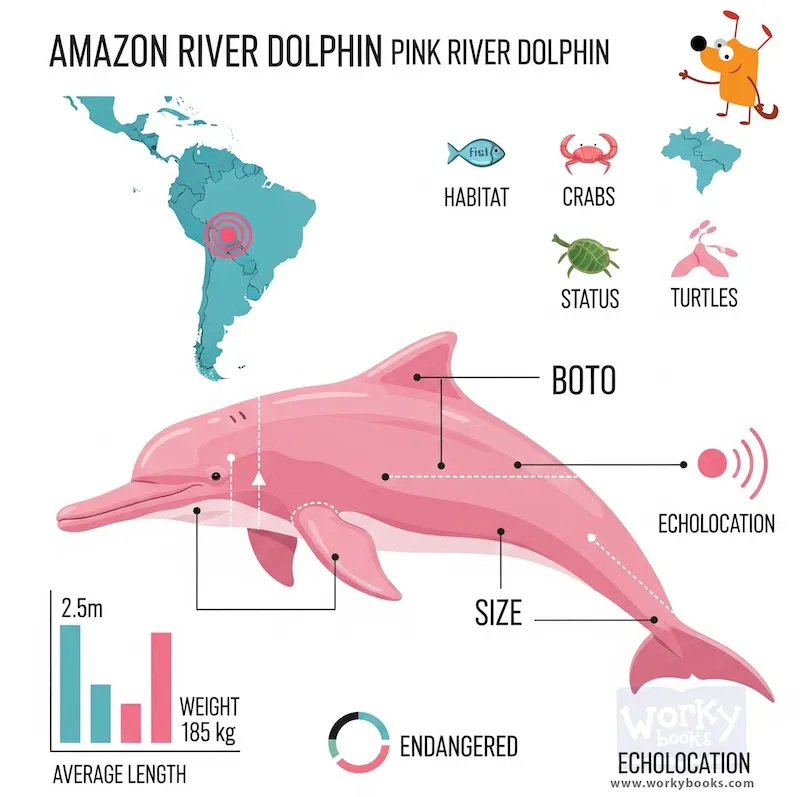
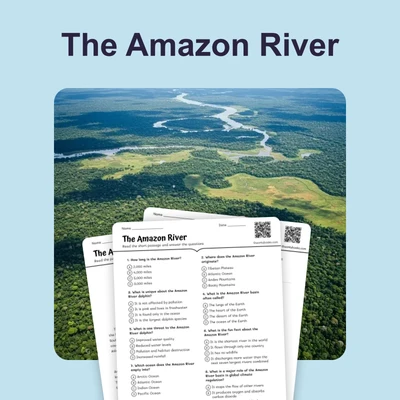
The Amazon River dolphin, also known as the pink river dolphin or boto, is a unique freshwater species found in the Amazon and Orinoco river basins. These dolphins are known for their pink coloration and play a vital role in their ecosystem. While not currently endangered, they face threats like habitat destruction and pollution. Their diet includes fish, crustaceans, and small mammals, and they are celebrated in local folklore for their intelligence and magical qualities.
CONTENT PREVIEW
Expand content preview
The Amazon River dolphin, also known as the pink river dolphin or boto, is one of the most unique and fascinating creatures in the world. These dolphins are found in the freshwater habitats of the Amazon and Orinoco river basins in South America, including rivers, lakes, and flooded forests. They are known for their distinctive pink coloration, which becomes more vibrant as they age.
Amazon River dolphins are not currently classified as endangered, but they are considered vulnerable due to threats like habitat destruction, pollution, and fishing activities. Their populations are declining in some areas, making conservation efforts crucial for their survival.
These dolphins are highly adaptable and have a varied diet. They primarily eat fish, but they also consume crustaceans, turtles, and even small river mammals. Their flexible necks and long snouts help them hunt in shallow waters and navigate through dense vegetation.
The Amazon River dolphin plays a vital role in its ecosystem by maintaining the balance of aquatic species. However, their habitats are increasingly threatened by deforestation, dam construction, and climate change. Protecting these habitats is essential not only for the dolphins but also for the countless other species that depend on the Amazon’s rivers and forests.
Fun fact: Amazon River dolphins are known for their intelligence and are often featured in local folklore, where they are believed to have magical powers!
What is another name for the Amazon River dolphin?
Blue dolphinPink river dolphinOcean dolphinGray dolphin
Where do Amazon River dolphins live?
Atlantic OceanAmazon and Orinoco river basinsPacific OceanMediterranean Sea
What is the primary diet of Amazon River dolphins?
SeaweedFishPlanktonSharks
Are Amazon River dolphins endangered?
Yes, they are critically endangeredNo, they are not endangeredThey are vulnerable but not endangeredThey are extinct
What is one threat to Amazon River dolphins?
Increased rainfallHabitat destructionReduced pollutionImproved water quality
What unique feature helps Amazon River dolphins hunt in shallow waters?
Their large finsTheir flexible necks and long snoutsTheir ability to flyTheir sharp teeth
What role do Amazon River dolphins play in their ecosystem?
They increase pollutionThey maintain the balance of aquatic speciesThey destroy habitatsThey reduce biodiversity
What is the fun fact about Amazon River dolphins?
They are the smallest dolphins in the worldThey are featured in local folklore and believed to have magical powersThey can live in saltwater onlyThey are not intelligent
Perfect For:
👩🏫 Teachers
• Reading comprehension practice
• Auto-graded assessments
• Literacy skill development
👨👩👧👦 Parents
• Reading practice at home
• Comprehension improvement
• Educational reading time
🏠 Homeschoolers
• Reading curriculum support
• Independent reading practice
• Progress monitoring
Reading Features:
📖
Reading Passage
Engaging fiction or nonfiction text
❓
Comprehension Quiz
Auto-graded questions
📊
Instant Feedback
Immediate results and scoring
📄
Printable Version
Download for offline reading
🔊
Read Aloud
Voice-over with word highlighting
Reviews & Ratings
No reviews yet. Be the first to share your experience!
Related Content
The Life and Legacy of Mahatma Gandhi
RF.5.4.ARF.5.4.BW.5.2L.5.6
Mesopotamia—Informatonal Text
This informational text on Mesopotamia is a great way to practice reading comprehension. Students will read the text the...
RI.5.3RI.5.10
The Role of Pollinators in Nature
Learn about the fascinating world of pollinators and discover their crucial role in the reproductive process of flowerin...
RI.4.2RI.4.3RI.4.4RI.5.1
Pollination: A Crucial Ecosystem Service
Explore the vital role of pollination beyond plant reproduction, as it sustains ecosystems by ensuring food security, pr...
RI.4.2RI.4.3RI.4.4RI.5.1
Seed Dispersal: How Plants Travel
Plants may seem stationary, but their seeds have amazing ways to travel! Explore the fascinating world of seed dispersal...
RI.4.2RI.4.3RI.4.4RI.5.1
The States of Matter: Solid
Discover the differences between solids, liquids and gases by exploring how their particles are arranged and move. This ...
RI.4.2RI.4.3RI.4.4RI.5.1
What is a Simple Machine
Discover the power of simple machines! This informational text explores how basic tools like levers, pulleys and incline...
RI.4.2RI.4.3RI.4.4RI.5.1
Elevation: A Key Factor Affecting Climate
Elevation influences climate by causing temperatures to drop as altitude increases. High-elevation areas receive more so...
RI.5.3
Composition of the Ocean
The ocean is made up of water, dissolved salts, gases, and organic matter. Its composition varies with depth and influen...
RI.5.3
What is Deforestation?
Deforestation is the large-scale removal of forests, primarily caused by human activities like agriculture, logging, and...
RI.5.3RI.6.3RI.7.3
Cold Fronts and Warm Fronts: A Comparison
Cold fronts bring thunderstorms and cooler temperatures, while warm fronts bring light rain and warmer temperatures. Bot...
7.RI.7.3RI.5.3RI.5.5RI.6.9
Vegetation: A Key Factor Affecting Climate
Vegetation influences climate by cooling temperatures, increasing humidity, and supporting rainfall. Forests also preven...
RI.5.3
The Great Pacific Garbage Patch
The Great Pacific Garbage Patch is a massive collection of plastic waste in the North Pacific Ocean. It harms marine lif...
RI.5.3RI.6.3RI.7.3
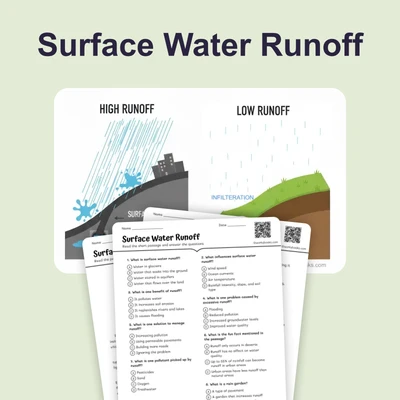
Surface Water Runoff
Surface water runoff replenishes rivers and lakes but can cause flooding and pollution. Solutions like rain gardens and ...
RI.5.3RI.6.3RI.7.3
The Mississippi River
The Mississippi River is one of the longest rivers in North America, stretching 2,340 miles from Lake Itasca to the Gulf...
RI.5.3RI.6.3RI.7.3
The Mekong River
The Mekong River flows 2,700 miles through six countries in Southeast Asia, ending in the fertile Mekong Delta. It suppo...
RI.5.3RI.6.3RI.7.3
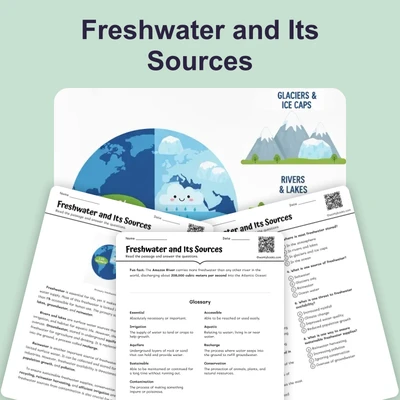
Freshwater and Its Sources
Freshwater is a limited resource, with most stored in glaciers and aquifers. Rivers, lakes, and groundwater are key sour...
RI.5.3RI.6.3RI.7.3
Difference Between a Rock and a Mineral
Rocks are mixtures of minerals, while minerals are naturally occurring, inorganic solids with a specific composition and...
RI.5.3RI.6.3RI.7.3
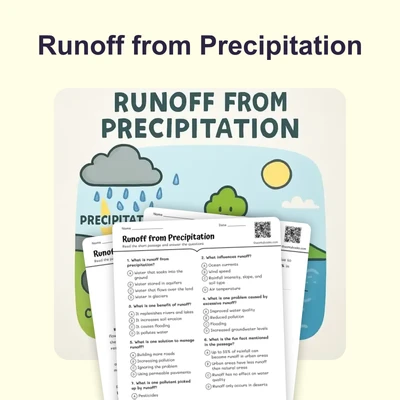
Runoff from Precipitation
Runoff from precipitation replenishes rivers and lakes but can cause flooding and pollution. Solutions like rain gardens...
RI.5.3RI.6.3RI.7.3
Large Streams of Moving Water
Large streams of moving water, like rivers and creeks, shape landscapes, support ecosystems, and provide freshwater for ...