This learning resource is available in interactive and printable formats. The interactive worksheet can be played online and assigned to students. The Printable PDF version can be downloaded and printed for completion by hand.
Vertical farming is an innovative method of growing crops in vertically stacked layers, often in controlled environments like skyscrapers or warehouses. It uses technologies such as hydroponics and aeroponics to optimize plant growth while using less water and reducing carbon emissions. Vertical farming allows for year-round crop production and eliminates the need for pesticides. Despite challenges like high initial costs, it is a promising solution for sustainable agriculture and food security in urban areas.
CONTENT PREVIEW
Expand content preview
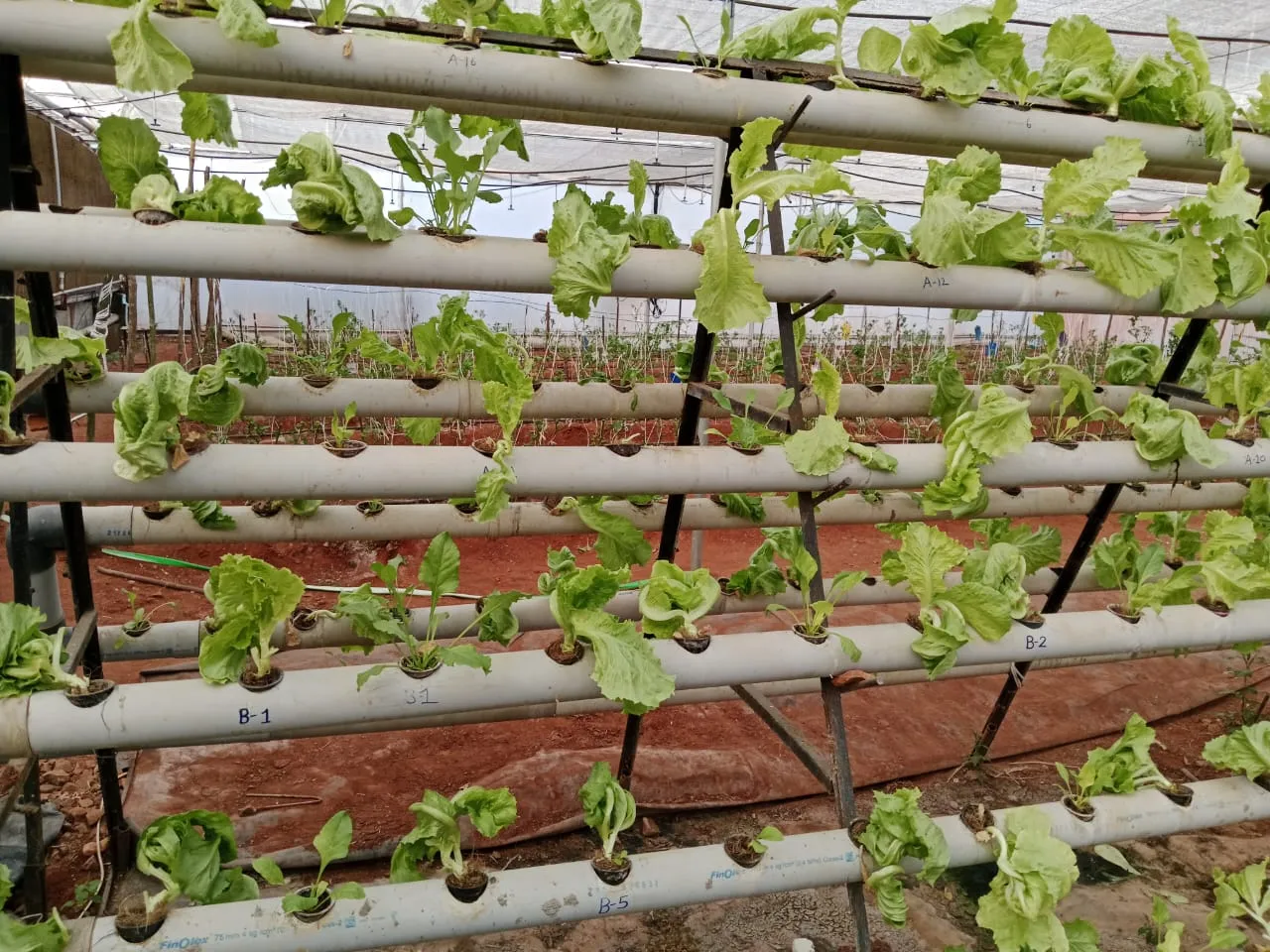
"HYDROPONICS (vertical farming )" by Radhika Harugade / Wikimedia Commons.
Vertical farming is an innovative method of growing crops in vertically stacked layers, often in controlled environments like skyscrapers, warehouses, or shipping containers. This approach uses technologies such as hydroponics, aeroponics, and artificial lighting to optimize plant growth.
One of the main benefits of vertical farming is its sustainability. It uses significantly less water than traditional farming, as water is recycled within the system. Additionally, vertical farms can be located in urban areas, reducing the need for transportation and lowering carbon emissions.
Vertical farming also allows for year-round crop production, regardless of weather conditions. This makes it an ideal solution for addressing food security in regions with limited arable land or harsh climates. Furthermore, vertical farms eliminate the need for pesticides, as the controlled environment reduces the risk of pests and diseases.
However, vertical farming faces challenges, such as high initial costs and energy consumption. Despite these challenges, it is seen as a promising solution for sustainable agriculture in the future.
Fun fact: A single vertical farm can produce the same amount of food as 10 acres of traditional farmland!
What is vertical farming?
Growing crops in horizontal fieldsGrowing crops in vertically stacked layersRaising livestock in tall buildingsFishing in deep ocean waters
What technology is commonly used in vertical farming?
Traditional soil farmingHydroponics and aeroponicsRainwater harvestingSolar panels only
What is one benefit of vertical farming?
It uses more water than traditional farmingIt reduces the need for transportationIt requires more pesticidesIt depends on weather conditions
Where are vertical farms often located?
Rural areasUrban areasDesertsMountains
What is one challenge of vertical farming?
Low energy consumptionHigh initial costsLimited crop varietyExcessive water usage
What does vertical farming eliminate the need for?
Artificial lightingPesticidesSoilCrops
What is the fun fact about vertical farming?
It produces less food than traditional farmingA single vertical farm can produce the same amount of food as 10 acres of traditional farmlandIt is only used for growing flowersIt requires no energy
Why is vertical farming considered sustainable?
It uses more water and energyIt reduces carbon emissions and recycles waterIt depends on weather conditionsIt increases the need for transportation
Perfect For:
👩🏫 Teachers
• Reading comprehension practice
• Auto-graded assessments
• Literacy skill development
👨👩👧👦 Parents
• Reading practice at home
• Comprehension improvement
• Educational reading time
🏠 Homeschoolers
• Reading curriculum support
• Independent reading practice
• Progress monitoring
Reading Features:
📖
Reading Passage
Engaging fiction or nonfiction text
❓
Comprehension Quiz
Auto-graded questions
📊
Instant Feedback
Immediate results and scoring
📄
Printable Version
Download for offline reading
🔊
Read Aloud
Voice-over with word highlighting
Reviews & Ratings
No reviews yet. Be the first to share your experience!
Related Content
The Life and Legacy of Mahatma Gandhi
RF.5.4.ARF.5.4.BW.5.2L.5.6
Mesopotamia—Informatonal Text
This informational text on Mesopotamia is a great way to practice reading comprehension. Students will read the text the...
RI.5.3RI.5.10
The Role of Pollinators in Nature
Learn about the fascinating world of pollinators and discover their crucial role in the reproductive process of flowerin...
RI.4.2RI.4.3RI.4.4RI.5.1
Pollination: A Crucial Ecosystem Service
Explore the vital role of pollination beyond plant reproduction, as it sustains ecosystems by ensuring food security, pr...
RI.4.2RI.4.3RI.4.4RI.5.1
Seed Dispersal: How Plants Travel
Plants may seem stationary, but their seeds have amazing ways to travel! Explore the fascinating world of seed dispersal...
RI.4.2RI.4.3RI.4.4RI.5.1
The States of Matter: Solid
Discover the differences between solids, liquids and gases by exploring how their particles are arranged and move. This ...
RI.4.2RI.4.3RI.4.4RI.5.1
What is a Simple Machine
Discover the power of simple machines! This informational text explores how basic tools like levers, pulleys and incline...
RI.4.2RI.4.3RI.4.4RI.5.1
Elevation: A Key Factor Affecting Climate
Elevation influences climate by causing temperatures to drop as altitude increases. High-elevation areas receive more so...
RI.5.3
Composition of the Ocean
The ocean is made up of water, dissolved salts, gases, and organic matter. Its composition varies with depth and influen...
RI.5.3
What is Deforestation?
Deforestation is the large-scale removal of forests, primarily caused by human activities like agriculture, logging, and...
RI.5.3RI.6.3RI.7.3
Cold Fronts and Warm Fronts: A Comparison
Cold fronts bring thunderstorms and cooler temperatures, while warm fronts bring light rain and warmer temperatures. Bot...
7.RI.7.3RI.5.3RI.5.5RI.6.9
Vegetation: A Key Factor Affecting Climate
Vegetation influences climate by cooling temperatures, increasing humidity, and supporting rainfall. Forests also preven...
RI.5.3
The Great Pacific Garbage Patch
The Great Pacific Garbage Patch is a massive collection of plastic waste in the North Pacific Ocean. It harms marine lif...
RI.5.3RI.6.3RI.7.3
Surface Water Runoff
Surface water runoff replenishes rivers and lakes but can cause flooding and pollution. Solutions like rain gardens and ...
RI.5.3RI.6.3RI.7.3
The Mississippi River
The Mississippi River is one of the longest rivers in North America, stretching 2,340 miles from Lake Itasca to the Gulf...
RI.5.3RI.6.3RI.7.3
The Mekong River
The Mekong River flows 2,700 miles through six countries in Southeast Asia, ending in the fertile Mekong Delta. It suppo...
RI.5.3RI.6.3RI.7.3
Freshwater and Its Sources
Freshwater is a limited resource, with most stored in glaciers and aquifers. Rivers, lakes, and groundwater are key sour...
RI.5.3RI.6.3RI.7.3
Difference Between a Rock and a Mineral
Rocks are mixtures of minerals, while minerals are naturally occurring, inorganic solids with a specific composition and...
RI.5.3RI.6.3RI.7.3
Runoff from Precipitation
Runoff from precipitation replenishes rivers and lakes but can cause flooding and pollution. Solutions like rain gardens...
RI.5.3RI.6.3RI.7.3
Large Streams of Moving Water
Large streams of moving water, like rivers and creeks, shape landscapes, support ecosystems, and provide freshwater for ...