Premium
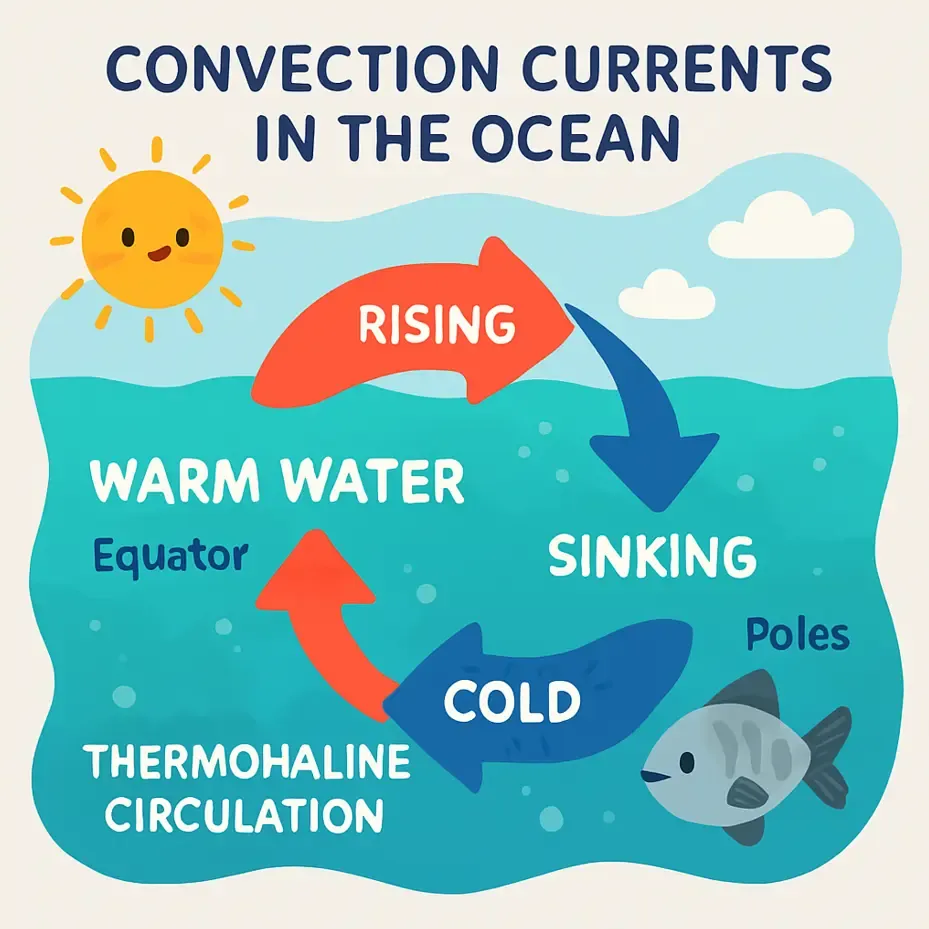
Convection Currents in the Ocean
Interactive passage with audio narration, comprehension questions, and printable PDF.
Just this resource
$1.50
One-time purchase
Best value
Unlock everything
$49.99$29.99/yr
40% off until Aug 1 — 6,000+ resources
Unlock above to use these actions
- Format
- Interactive (Online), Printable (PDF)
- Grades
- 5678
- Subjects
- elareadingscience
- Standards
- RI.5.5
- Languages
- English, Spanish
What's included
Reading passage
Reading comprehension
Audio narration
With word word highlighting
Comprehension quiz
Auto-graded
Writing activity
Open-ended response
Glossary & flashcards
Vocabulary practice
Differentiated version
Adapted for varied levels
Spanish translation
Bilingual support
About this reader
Convection currents in the ocean are driven by temperature and density differences. They play a key role in the thermohaline circulation, distributing heat and nutrients and supporting marine life.
Written by Workybooks TeamPublished by Workybooks
Preview
Sample passage and quiz content
Curriculum
Common Core standards covered
RI.5.5
Compare and contrast the overall structure (e.g., chronology, comparison, cause/effect, problem/solution) of events, ideas, concepts, or information in two or more texts.
Who it's for
Perfect for the way you teach
Teachers
- Build comprehension skills
- Auto-graded quiz
- Differentiated reading
Parents
- Read together at home
- Improve fluency
- Quiet reading time
Homeschoolers
- Reading curriculum support
- Independent practice
- Track Lexile growth
Topics
convection currentsthermohaline circulationupwellingreading passagesreading comprehension