Desert Rain Frog Adaptations
Interactive passage with audio narration, comprehension questions, and printable PDF.
By completing this purchase you agree to our Terms of Use and Privacy Policy. Your subscription renews automatically until you cancel. You can cancel anytime from your account settings. All sales are final and non-refundable. Digital content is available for download in your account immediately upon purchase.
What's included
Desert Rain Frog Adaptations preview and details
About this printable Desert Rain Frog Adaptations science reading passage, NGSS-aligned (Grade 6)
Sample passage and quiz from Desert Rain Frog Adaptations
Reading passage and comprehension quiz preview
Desert Rain Frog Adaptations
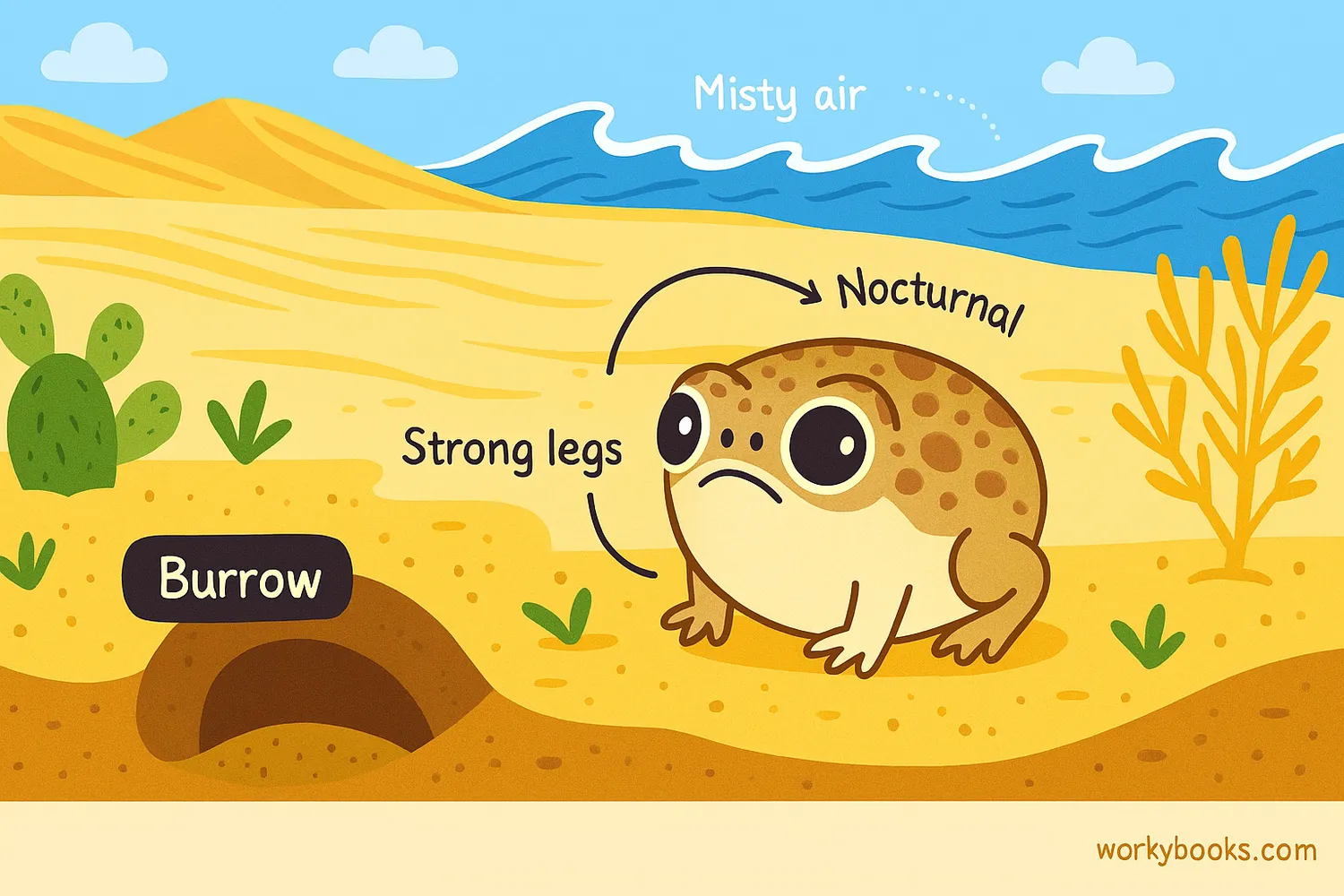
Desert Rain Frog Habitat
The desert rain frog is a tiny, round frog found only in the sandy coastal dunes of Namibia and South Africa. This frog lives in a very unusual habitat: hot, dry land that is close to the ocean. Even though deserts usually have little water, this frog survives because of a special type of weather called fog.
Fog is made of tiny drops of water that roll in from the ocean onto the sand dunes. The desert rain frog does not need ponds or rivers to live. Instead, it gets water by absorbing moisture from the fog and from the humid sand. In this way, the frog uses fog like people use faucets for water!
To survive the heat, the desert rain frog is nocturnal. This means it comes out at night when it is cooler and the fog is thickest. During the hot day, the frog burrows deep into the sand. Burrowing keeps its body cool and moist. The round shape of the frog helps it store water, kind of like a camel’s hump stores fat and water.
The frog is only about 2 inches long, but it has a loud, squeaky 'war cry' that sounds just like a squeaky toy! It uses this noise to scare away predators like birds or snakes. Even though it is small, its voice can be surprising.
The desert rain frog eats insects and small bugs it finds in the sand. Its special adaptations help it find food and survive in a harsh environment.
But this tiny frog faces danger. Climate change and people building on the foggy coastline are destroying its habitat. Without fog and sand dunes, the desert rain frog cannot survive.
Interesting Fact: The desert rain frog’s squeaky call is so famous that videos of it have been watched by millions of people all over the world!
Comprehension quiz (8 questions)
1. Where does the desert rain frog live?
2. How does the frog get water?
3. What does the frog eat?
4. Why is the frog nocturnal?
5. What does the squeaky sound do?
6. What would happen if the fog disappeared?
7. The desert rain frog is only 2 inches long.
8. What does 'nocturnal' mean?
Common Core standards for Desert Rain Frog Adaptations
Ask and answer questions to demonstrate understanding of a text, referring explicitly to the text as the basis for the answers.
Determine the meaning of general academic and domain-specific words and phrases in a text relevant to a grade 3 topic or subject area.
Refer to details and examples in a text when explaining what the text says explicitly and when drawing inferences from the text.
Perfect for the way you teach
- Build comprehension skills
- Auto-graded quiz
- Differentiated reading
- Read together at home
- Improve fluency
- Quiet reading time
- Reading curriculum support
- Independent practice
- Track Lexile growth