Animal Colors Help Them Survive
Interactive passage with audio narration, comprehension questions, and printable PDF.
By completing this purchase you agree to our Terms of Use and Privacy Policy. Your subscription renews automatically until you cancel. You can cancel anytime from your account settings. All sales are final and non-refundable. Digital content is available for download in your account immediately upon purchase.
What's included
Animal Colors Help Them Survive preview and details
About this printable Animal Colors Help Them Survive science reading passage, NGSS-aligned (Grades 3-6)
Sample passage and quiz from Animal Colors Help Them Survive
Reading passage and comprehension quiz preview
Animal Colors and Patterns for Survival
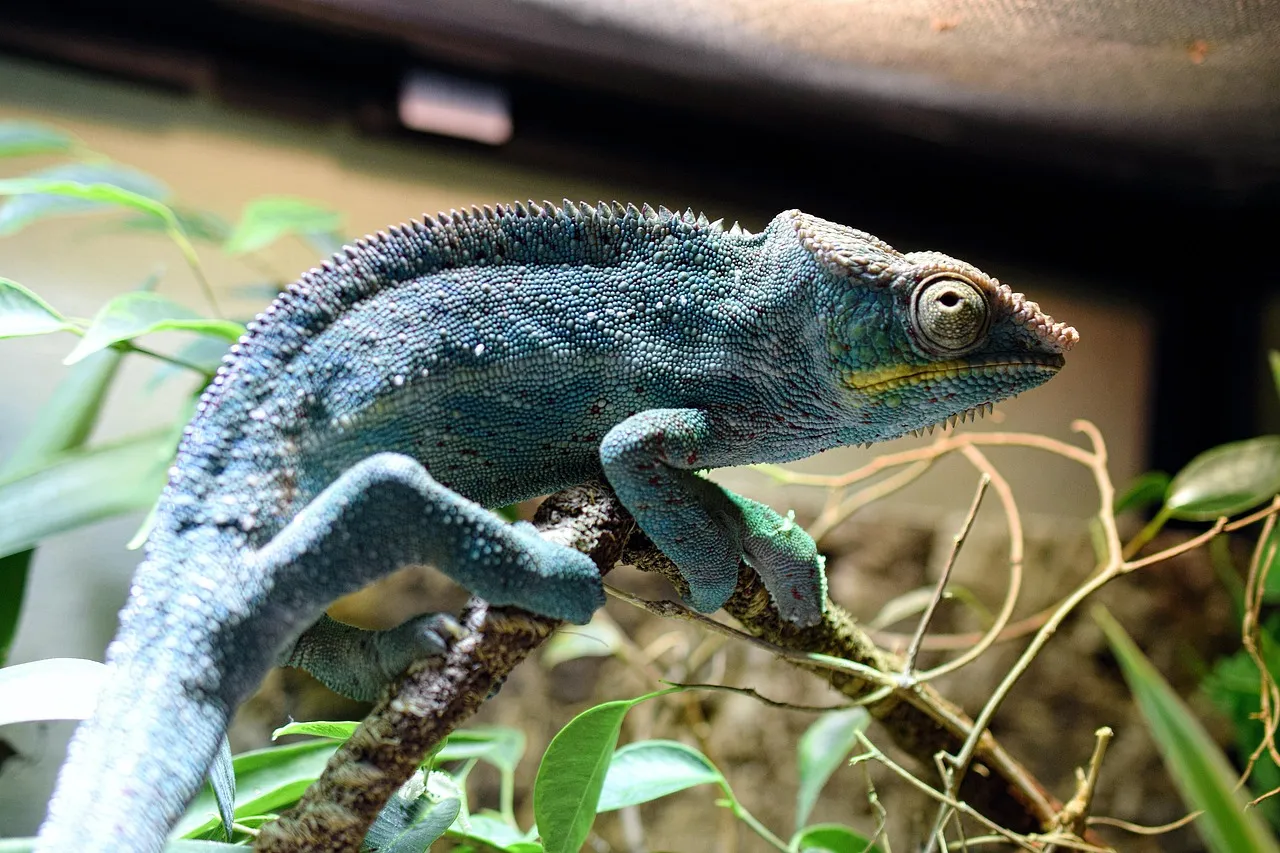
"Chameleon change its color to match leaves and branches" by WikiImages / Pixabay.
Animals have different colors and patterns on their bodies that help them survive in nature. These colors and patterns are not just for looks; they help animals find food, stay safe, and attract mates.
One important survival method is camouflage. Camouflage means blending into the surroundings so that predators or prey cannot see the animal easily. For example, a chameleon can change its color to match leaves and branches. Arctic foxes have white fur to blend in with snow, while deer have brown coats that help them hide in the forest.
Some animals have bright colors to warn others that they are dangerous. This is called warning coloration. For example, poison dart frogs have bright blue or yellow skin, telling predators to stay away because they are poisonous. The bright red and black colors of ladybugs also warn birds that they taste bad.
Another survival trick is mimicry. Mimicry happens when one animal looks like another to avoid danger. The viceroy butterfly looks almost exactly like the monarch butterfly, which is poisonous to birds. Because birds think the viceroy is also poisonous, they do not eat it.
Stripes and spots can also help animals survive. Zebras have stripes that confuse predators when they run in a herd. Leopards have spots that help them hide in the shadows of trees and bushes.
Animal colors and patterns are examples of adaptations. An adaptation is a special trait that helps a living thing survive in its environment. These adaptations can help animals hide, scare away predators, or find a mate.
Interesting Fact: Some animals, like the octopus, can quickly change both their color and texture to hide from predators or sneak up on prey.
Comprehension quiz (8 questions)
1. What is camouflage?
2. Why do poison dart frogs have bright colors?
3. Which animal uses mimicry?
4. How do zebra stripes help them?
5. What might happen if a chameleon can't change color?
6. Why are adaptations important?
7. All animals use warning coloration. True or false?
8. What does "mimicry" mean?
Common Core standards for Animal Colors Help Them Survive
Ask and answer questions to demonstrate understanding of a text, referring explicitly to the text as the basis for the answers.
Determine the meaning of general academic and domain-specific words and phrases in a text relevant to a grade 3 topic or subject area.
Compare and contrast a firsthand and secondhand account of the same event or topic; describe the differences in focus and the information provided.
Perfect for the way you teach
- Build comprehension skills
- Auto-graded quiz
- Differentiated reading
- Read together at home
- Improve fluency
- Quiet reading time
- Reading curriculum support
- Independent practice
- Track Lexile growth