Forms of Energy
Interactive passage with audio narration, comprehension questions, and printable PDF.
By completing this purchase you agree to our Terms of Use and Privacy Policy. Your subscription renews automatically until you cancel. You can cancel anytime from your account settings. All sales are final and non-refundable. Digital content is available for download in your account immediately upon purchase.
What's included
Forms of Energy preview and details
About this printable Forms of Energy science reading passage, NGSS-aligned (Grades 3-5)
Sample passage and quiz from Forms of Energy
Reading passage and comprehension quiz preview
Forms of Energy
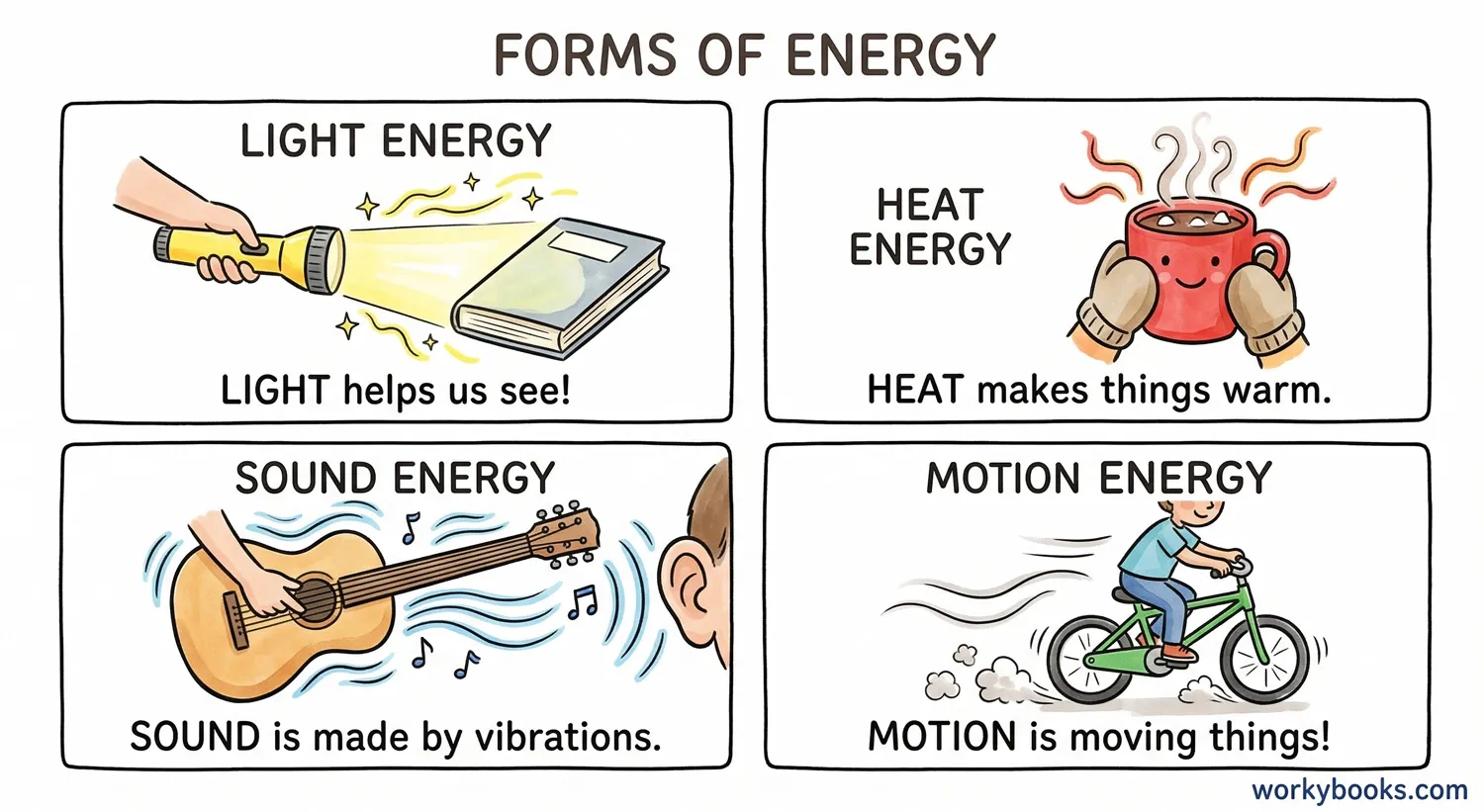
Energy is the ability to make things happen or cause change. Energy exists all around us in different forms that we can observe every day.
One form of energy is light energy. Light energy allows us to see the world around us. When you turn on a flashlight, it produces light energy that travels through the air and helps you see in the dark. The sun is our biggest source of light energy on Earth.
Heat energy is another form that makes things warmer. When you hold a warm mug of hot chocolate, you feel heat energy moving from the mug to your hands. Heat energy can come from many sources, including the sun, fire, and even your own body.
Sound energy is created when objects vibrate, or move back and forth quickly. When you pluck a guitar string, it vibrates and creates sound energy that travels through the air to your ears. You experience sound energy every time you hear music, voices, or even a door closing.
Finally, motion energy, also called kinetic energy, is the energy of moving objects. A rolling ball, a flying bird, and a moving bicycle all have motion energy. The faster something moves, the more motion energy it has.
These four forms of energy—light, heat, sound, and motion—help us understand how energy works in our everyday lives. Energy cannot be created or destroyed, but it can change from one form to another.
Interesting Fact: A lightning bolt contains all four forms of energy at once! It produces bright light, intense heat (hotter than the sun's surface), a loud thunder sound, and travels through the air at incredible speed.
Comprehension quiz (8 questions)
1. What is energy?
2. Which form of energy helps us see?
3. What happens when a guitar string vibrates?
4. A rolling ball has motion energy.
5. What does vibrate mean?
6. What happens when you hold warm chocolate?
7. Which has more motion energy?
8. Energy can change from one form to another.
Perfect for the way you teach
- Build comprehension skills
- Auto-graded quiz
- Differentiated reading
- Read together at home
- Improve fluency
- Quiet reading time
- Reading curriculum support
- Independent practice
- Track Lexile growth