This learning resource is available in interactive and printable formats. The interactive worksheet can be played online and assigned to students. The Printable PDF version can be downloaded and printed for completion by hand.
This engaging 250-word reading passage introduces fourth and fifth grade students to the concept of potential energy as stored energy based on an object's position or condition. Students explore how objects held high, stretched rubber bands, and compressed springs all contain potential energy waiting to be released as kinetic energy. The passage aligns with NGSS science standard 4-PS3-1, helping students understand energy and its relationship to motion. Through concrete examples like balls held high, stretched rubber bands, and roller coasters, students discover how potential energy transforms into kinetic energy during movement. The audio-integrated passage includes bolded vocabulary terms, a simplified differentiated version, Spanish translations, comprehension quizzes, writing activities, and graphic organizers. Students learn to identify potential energy in everyday situations and understand the cause-and-effect relationship between position and stored energy. This standards-aligned resource provides multiple learning modalities to help elementary students grasp this fundamental physics concept through relatable examples and age-appropriate explanations.
CONTENT PREVIEW
Expand content preview
"Experience the exhilarating thrill of a roller coaster ascending the steep peak at an amusement park." Image by Angie / Pexels.
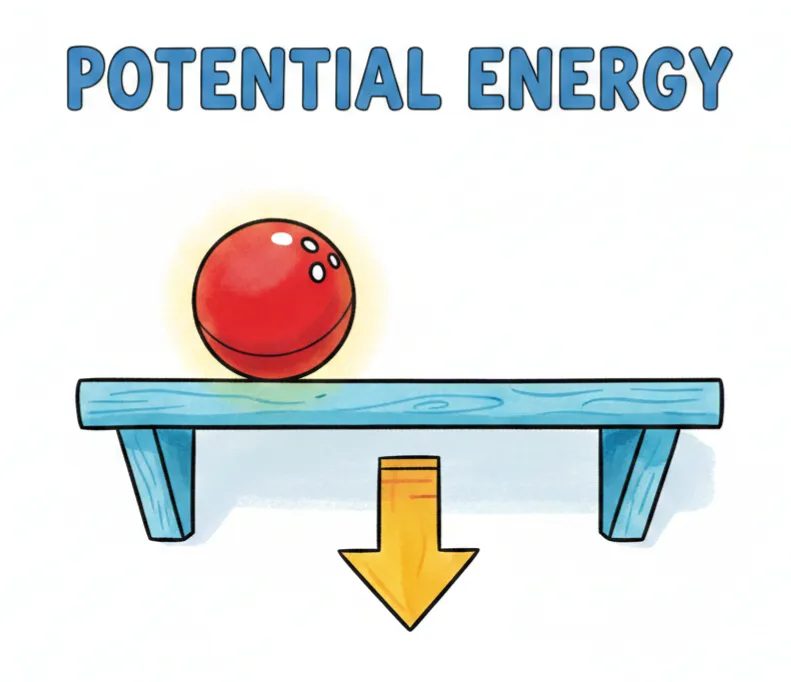
Potential energy is stored energy that an object has because of its position or condition. This energy is important because it is ready to make things move and do work. When an object has potential energy, it is waiting to release that energy and change into motion.
Objects that are high up have potential energy because of their position. The higher an object is above the ground, the more potential energy it has. If you hold a ball high above your head, that ball has potential energy. The ball is not moving yet, but it has energy stored inside it because of where it is. When you let go of the ball, the potential energy changes into kinetic energy, which is the energy of motion, and the ball falls down.
Objects can also have potential energy when they are stretched or compressed. When you pull back a rubber band, you are stretching it. The stretched rubber band now has potential energy stored in it. If you let go, that stored energy is released and the rubber band snaps back. The same thing happens when you press down on a spring. The compressed spring has potential energy that gets released when you stop pushing.
Think about a roller coaster at the top of a tall hill. The roller coaster car has lots of potential energy because it is so high up. As the car rolls down the hill, the potential energy changes into kinetic energy and the car speeds up. The potential energy that was stored because of the car's position becomes the energy that makes it move fast.
You can see potential energy all around you. A book on a high shelf has potential energy. A stretched bow and arrow has potential energy. Even water at the top of a waterfall has potential energy before it drops down. All of these objects have energy that is ready to be used.
Potential energy is an important type of energy because it helps us understand how things move and change. When we know that objects have stored energy because of their position or condition, we can predict what will happen when that energy is released. Potential energy is always ready to become kinetic energy and make things move.
What is potential energy?
Energy of moving objectsStored energy from position or conditionEnergy from the sunEnergy used to make light
What happens to a ball's energy when dropped?
Potential energy becomes kinetic energyKinetic energy becomes potential energyThe energy disappears completelyThe energy stays the same
Which object has potential energy?
A ball rolling on the groundA book on a high shelfA car driving down the roadA person running fast
Why does a stretched rubber band have energy?
Because it is moving very fastBecause it is very heavyBecause it is in a changed conditionBecause it is on the ground
What happens to a roller coaster's potential energy?
It stays the same going downhillIt changes to kinetic energy downhillIt disappears at the topIt increases going down the hill
Higher objects have more potential energy than lower ones.
TrueFalse
Which shows potential energy becoming kinetic energy?
Water falling down a waterfallA book sitting on a shelfA compressed spring not movingA rubber band being stretched
What does kinetic energy mean?
Energy stored in an objectEnergy from position or heightEnergy of motion or movementEnergy that never changes
Perfect For:
👩🏫 Teachers
• Reading comprehension practice
• Auto-graded assessments
• Literacy skill development
👨👩👧👦 Parents
• Reading practice at home
• Comprehension improvement
• Educational reading time
🏠 Homeschoolers
• Reading curriculum support
• Independent reading practice
• Progress monitoring
Reading Features:
📖
Reading Passage
Engaging fiction or nonfiction text
❓
Comprehension Quiz
Auto-graded questions
📊
Instant Feedback
Immediate results and scoring
📄
Printable Version
Download for offline reading
🔊
Read Aloud
Voice-over with word highlighting
Reviews & Ratings
No reviews yet. Be the first to share your experience!
Related Content
Forms of Energy
Energy Is Everywhere is an engaging science reading passage aligned with NGSS standard 4-PS3-1, designed for Grade 4-5 s...
NGSS 4-PS3-1
Height Affects Speed
This engaging science passage aligns with NGSS standard 4-PS3-1 and helps Grade 4-5 students understand how starting hei...
NGSS 4-PS3-1
Faster Objects Have More Energy
This engaging 350-word passage explores the fundamental relationship between speed and kinetic energy, perfectly aligned...
NGSS 4-PS3-1
How to Measure Speed
This engaging 350-word science passage teaches Grade 4-5 students how to measure speed by calculating distance divided b...