This learning resource is available in interactive and printable formats. The interactive worksheet can be played online and assigned to students. The Printable PDF version can be downloaded and printed for completion by hand.
This NGSS-aligned science reading passage explains how snow forms in the atmosphere. Students will learn about the process of deposition, where water vapor turns directly into ice around dust or pollen particles. The passage explores how snowflakes grow, why each one is unique, and what conditions are needed for snow to reach the ground. It also connects snow to the water cycle and explains how melting snow helps provide water to the environment. The passage supports NGSS standard MS-ESS2-5 and builds science literacy through real-world examples of frozen precipitation.
CONTENT PREVIEW
Expand content preview
Snow is a form of frozen precipitation that falls from clouds when the air is cold enough. It may look soft and fluffy, but snow starts high up in the sky through a process that involves temperature, moisture, and tiny particles in the air.
Snow begins to form inside cold clouds when water vapor in the air changes directly into ice. This process is called deposition. Instead of turning into liquid water first, the vapor skips that step and turns into tiny ice crystals. These crystals form around dust or pollen particles, which act like seeds for the snowflakes.
As more water vapor sticks to the crystals, they grow into snowflakes. Snowflakes have six sides and form different shapes depending on the temperature and humidity in the cloud. No two snowflakes are exactly alike because of the millions of ways the ice can grow and branch out.
When the snowflakes get heavy enough, they fall to the ground. But for snow to reach the surface without melting, the air all the way down must be at or below 0°C (32°F). If the air is warmer near the ground, the snow may melt and turn into rain or sleet before it hits the earth.
Snow plays an important role in the water cycle. When it melts in the spring, it feeds rivers, lakes, and soil. Snow also helps reflect sunlight, keeping Earth cool.
Fun Fact: The largest snowflake ever recorded was 15 inches wide and 8 inches thick—it fell in Montana in 1887!
What is snow?
Melted ice from cloudsFrozen rainFrozen water vapor that turns into ice crystalsHail that gets soft
Where does snow begin to form?
On the groundInside cold cloudsIn warm airIn oceans
What is deposition?
Water freezing on the groundWater vapor turning into rainWater vapor turning directly into iceIce melting into water
What do snowflakes form around?
SunlightAir pressureDust or pollen particlesDrops of oil
What happens if the air near the ground is too warm?
It snows harderSnowflakes fall fasterSnow melts into rain or sleetClouds disappear
Why are no two snowflakes exactly alike?
They all melt quicklyThey grow in different shapes depending on conditionsThey’re made of different materialsThey spin too fast
What is the main idea of the passage?
Snow is only found in mountainsSnow helps keep Earth warmSnow forms in cold clouds when water vapor becomes iceSnow comes from lakes and rivers
How does snow help the water cycle?
It turns into icebergsIt blocks sunlightIt melts and adds water to rivers and lakesIt evaporates before hitting the ground
Perfect For:
👩🏫 Teachers
• Reading comprehension practice
• Auto-graded assessments
• Literacy skill development
👨👩👧👦 Parents
• Reading practice at home
• Comprehension improvement
• Educational reading time
🏠 Homeschoolers
• Reading curriculum support
• Independent reading practice
• Progress monitoring
Reading Features:
📖
Reading Passage
Engaging fiction or nonfiction text
❓
Comprehension Quiz
Auto-graded questions
📊
Instant Feedback
Immediate results and scoring
📄
Printable Version
Download for offline reading
🔊
Read Aloud
Voice-over with word highlighting
Reviews & Ratings
No reviews yet. Be the first to share your experience!
Related Content
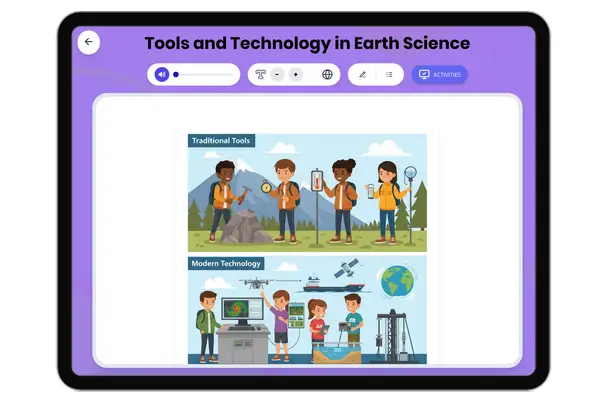
Tools and Technology in Earth Science
This middle school science reading passage explores the wide range of tools and technologies used in Earth science, from...
MS-ESS2-2MS-ESS3-2MS-ETS1-1MS-PS4-3
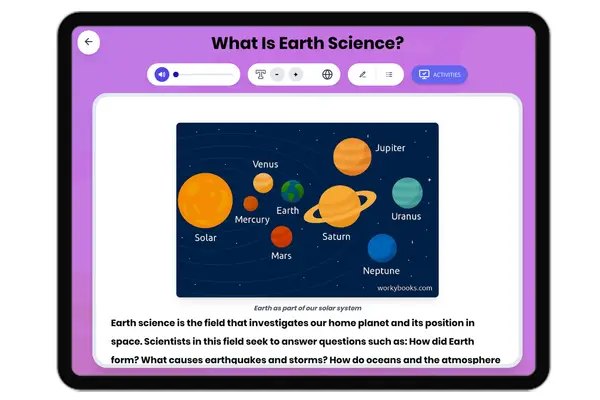
What Is Earth Science?
This engaging middle school science passage introduces students to the field of Earth science, aligning with NGSS standa...
MS-ESS1MS-ESS2MS-ESS3SEP
Interpreting visual information on Layers of the Earth
This informational text on the layers of the earth is a great way to practice using images during reading. Students will...
RI.1.7RI.10RF.1.4.ARF.1.4
What's The Main Idea?
These short science texts are a great way to practice main idea. Students will read the paragraphs and then choose the m...
RI.2.6
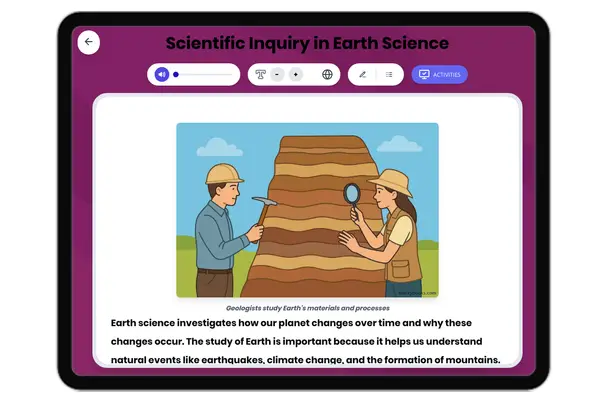
Scientific Inquiry in Earth Science
This passage explores scientific inquiry in Earth science for grades 6-8, aligned with NGSS standards MS-ESS1-4, MS-ESS2...
MS-ESS1-4MS-ESS2-1MS-ESS3-5SEP
Reading for Main Details—Birds
This informational text on birds is a great way to practice main idea. Students will read the passage, then give the mai...
RI.2.6RI.2.8
Koi Fish—What’s the Main Idea?
This informational text on koi fish is a great introduction to teaching main idea. Students will be asked, in multiple c...
RI.3.2RF.3.4RI.3.1
Spider—Main Idea
This informational text on spiders is a great introduction to teaching main idea. Students will be asked, in multiple ch...
RI.3.2RF.3.4RI.3.1RI.2.6
Reading for Main Details—Beavers Teeth
This informational text on beavers is a great way to practice main idea. Students will read the passage, then give the m...
RI.2.6RI.2.10
Reading for Main Details—Veternarians
Practie summarizing paragraphs with this fun informational text on veternarians! Students will give the main idea of eac...
RI.2.2RI.2.10
The Solar System—Informational Text
This informational text is a great way for early readers to practice their comprehension skills. Students will read the ...
RI.K.7
Earth's Spheres
This middle school science passage introduces students to Earth's four major spheres: the geosphere, hydrosphere, atmosp...
MS-ESS2-4MS-ESS2-6
Penguins— Main Purpose
This informational text on penguins with comprehension questions is a great way to practice reading fluency and main ide...
RI.1.2RI.1.10RF.1.4.ARF.1.4.B
Reading for Main Details—Orcas
Practie summarizing paragraphs with this fun science informational text on orcas! Students will give the main idea of ea...
RI.2.2RI.2.10
Informational Text —Learn About Dinosaurs
This informational text on dinosaurs with comprehension questions to follow is perfect for teaching main idea. Students ...
RF.3.4RF.3.4.ARF.3.4.CRI.3.2
Informational Text — Habitats
This short informational text on habitats will teach your students what a habitat is, as well as provide some examples o...
RF.3.4.A
Informational Text —Elephants Facts
This informational text on elephants with comprehension questions to follow is perfect for teaching main idea. Students ...
RF.2.4.ARI.2.1RI.2.2RI.2.6
Main Idea and Supporting Details in Informational Text
RI.3.1RI.3.2RI.3.8
Informational Text — Astronauts
Practice this second grade context clues worksheet with this informational text on astronauts. Students will read the te...
RI.2.4RI.2.10RI.3.4RI.3.10
Informational Text —Importance of Sound
This Reading Informational Text Common Core standards calls for 4th graders to be able to effectively describe and analy...