Earth's Spheres
Interactive passage with audio narration, comprehension questions, and printable PDF.
By completing this purchase you agree to our Terms of Use and Privacy Policy. Your subscription renews automatically until you cancel. You can cancel anytime from your account settings. All sales are final and non-refundable. Digital content is available for download in your account immediately upon purchase.
What's included
Earth's Spheres preview and details
About this printable Earth's Spheres science reading passage, NGSS-aligned (Grades 5-8)
Sample passage and quiz from Earth's Spheres
Reading passage and comprehension quiz preview
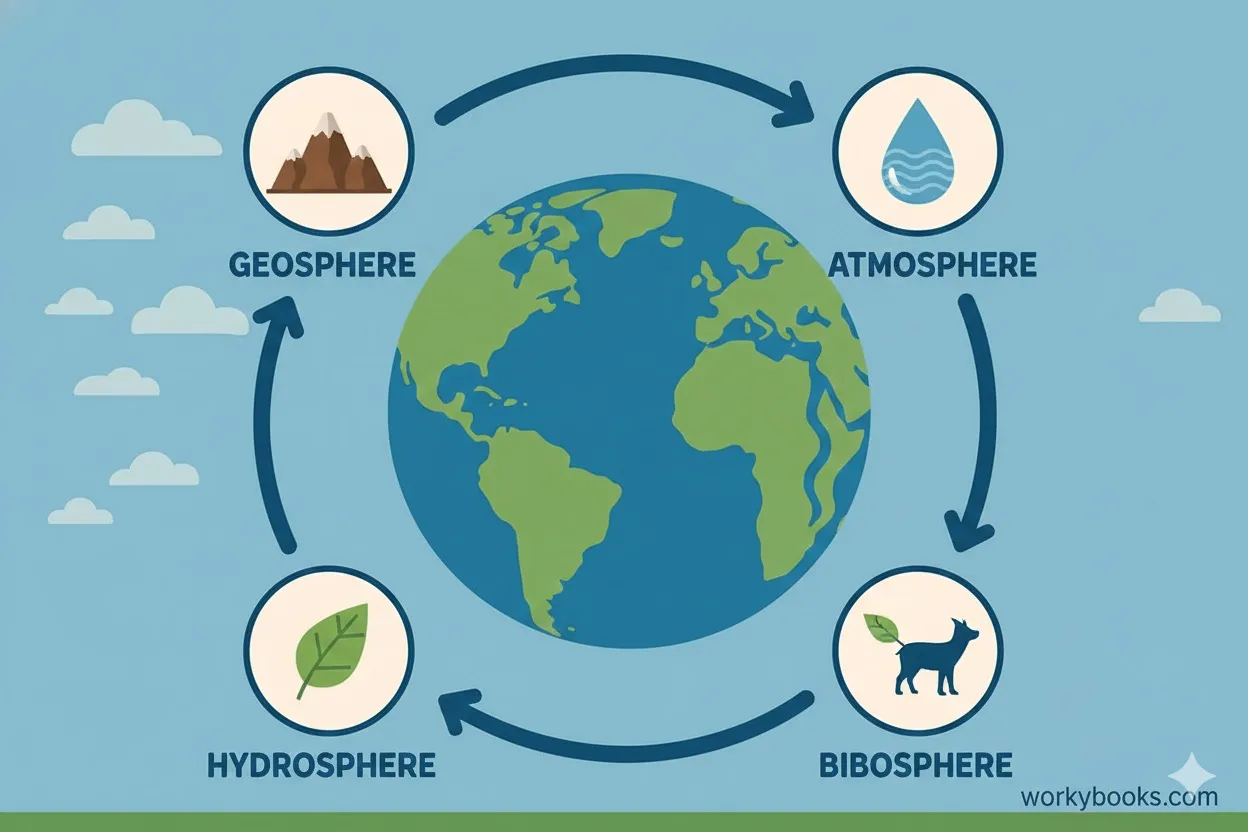
Earth is a planet made up of several closely connected systems, known as spheres. Scientists observe that events like volcanic eruptions, floods, and changes in plant life can shape the land, air, and water all at once. This interconnectedness is important for understanding how the planet functions as a whole. Earth’s four main spheres—the geosphere, hydrosphere, atmosphere, and biosphere—constantly interact, making Earth a dynamic system.
Earth's Four Major Spheres
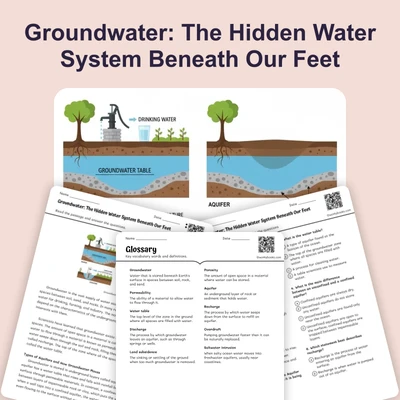
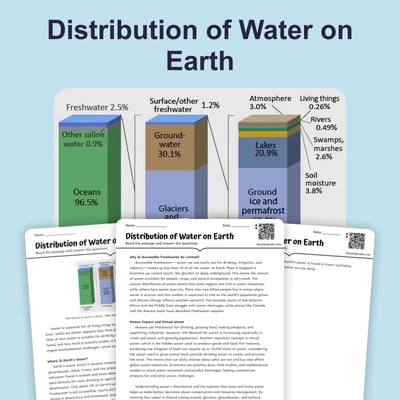
The geosphere consists of all the solid parts of Earth, such as rocks, soil, mountains, and even the deep interior layers. The hydrosphere includes all the water on the planet—oceans, lakes, rivers, groundwater, and ice. The atmosphere is the layer of gases, mostly nitrogen (about 78%) and oxygen (about 21%), that surrounds Earth. The biosphere contains all living things, including plants, animals, fungi, and bacteria, and the regions where they live. Each sphere has unique characteristics, but none can exist in complete isolation from the others.
How the Spheres Interact
Many natural events show how the spheres are linked. For example, when a volcano erupts from the geosphere, it releases ash and gases into the atmosphere. This can change air quality and even affect weather patterns. The ash may fall into lakes or rivers (hydrosphere), impacting water quality and aquatic life (biosphere). Plants, part of the biosphere, absorb carbon dioxide from the air and release oxygen, altering the atmosphere. Water from rainfall (hydrosphere) shapes the land by eroding rocks and soil (geosphere). These examples demonstrate cause-and-effect relationships across the spheres.
Systems Thinking and Real-World Implications
Understanding Earth's spheres helps scientists predict and solve environmental problems. For instance, deforestation in the biosphere decreases the amount of carbon dioxide absorbed, leading to higher greenhouse gas levels in the atmosphere and contributing to climate change. Pollution in the hydrosphere can harm living organisms in the biosphere and contaminate soil in the geosphere. By using systems thinking, scientists recognize that a change in one sphere often causes changes in others. This approach is vital for managing resources, protecting ecosystems, and preparing for natural disasters.
Earth’s spheres are not separate—they form a complex web of interactions. By studying these connections, we gain a deeper understanding of Earth as a system and how human activities can impact the environment.
Interesting Fact: The deepest part of the hydrosphere, the Mariana Trench, reaches about 11,000 meters below sea level—deeper than Mount Everest is tall!
Comprehension quiz (10 questions)
1. Which sphere includes all the solid parts of Earth, like rocks and soil?
2. What is the main gas in Earth's atmosphere?
3. Which sphere contains all living things?
4. What do scientists call the way Earth's spheres connect and affect each other?
5. Which event shows how spheres interact when ash from a volcano changes water quality?
6. Which of these best describes how the hydrosphere and geosphere interact?
7. How can deforestation in the biosphere affect the atmosphere?
8. Why is it important to understand how Earth's spheres interact?
9. True or False: The biosphere is only made up of animals.
10. True or False: A change in one sphere can cause changes in other spheres.
Perfect for the way you teach
- Build comprehension skills
- Auto-graded quiz
- Differentiated reading
- Read together at home
- Improve fluency
- Quiet reading time
- Reading curriculum support
- Independent practice
- Track Lexile growth