How Rocks Are Different
Interactive passage with audio narration, comprehension questions, and printable PDF.
By completing this purchase you agree to our Terms of Use and Privacy Policy. Your subscription renews automatically until you cancel. You can cancel anytime from your account settings. All sales are final and non-refundable. Digital content is available for download in your account immediately upon purchase.
What's included
How Rocks Are Different preview and details
About this printable How Rocks Are Different science reading passage, NGSS-aligned (Grades 3-5)
Sample passage and quiz from How Rocks Are Different
Reading passage and comprehension quiz preview
How Rocks Are Different
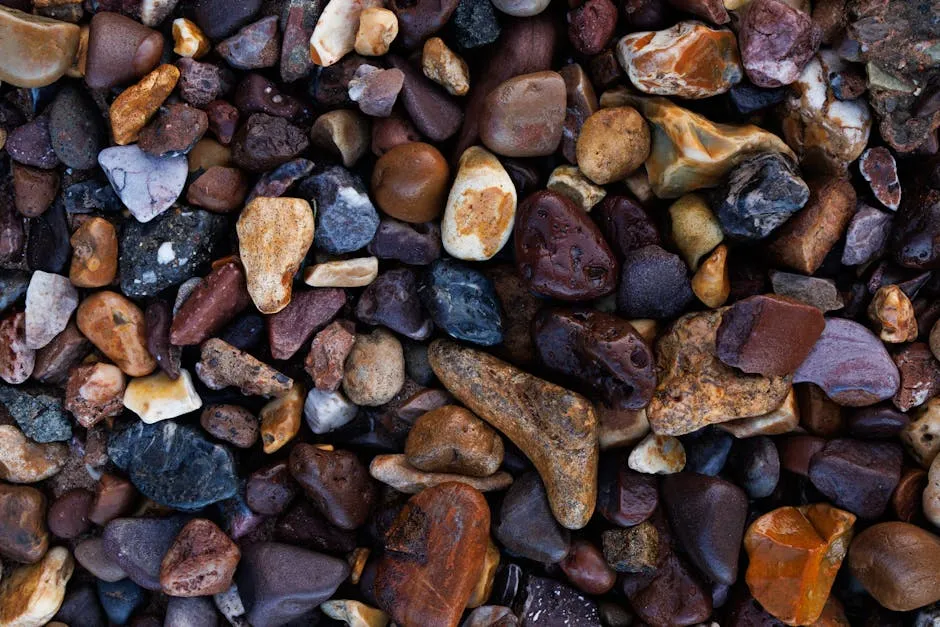
"River rocks showcasing various textures and colors." by Ellie Burgin / Pexels.
Rocks are solid materials that make up Earth's surface. Rocks come in many different forms, and scientists describe them by looking at their properties—the characteristics that make each rock special.
One important property is hardness, which means how difficult it is to scratch or break a rock. Some rocks are very hard and cannot be scratched easily. Other rocks are soft enough to scratch with your fingernail. Scientists test hardness by trying to scratch rocks with different tools.
Another property is texture, which describes how a rock feels and looks on its surface. Some rocks feel rough and gritty, like sandpaper. Others feel smooth, like a polished stone. When you look closely at rocks, you might see different structures. Some rocks have visible layers, like stripes of different colors stacked on top of each other. Some rocks have shiny crystals that sparkle in the light. Other rocks look like tiny pebbles cemented or glued together.
Rocks also come in many colors. You can find gray rocks, red rocks, white rocks, black rocks, and brown rocks. Sometimes one rock has several colors mixed together.
Scientists and students sort and compare rocks by testing their hardness, looking at their texture, and observing their color. These properties help us understand and describe the many different types of rocks we find on Earth.
Interesting Fact: The softest rock is called talc, and you can scratch it with your fingernail. The hardest natural material on Earth is diamond, which is so hard it can scratch any other rock!
Comprehension quiz (8 questions)
1. What are rocks made of?
2. What does hardness measure in rocks?
3. What describes how a rock feels?
4. Why do scientists test rock hardness?
5. Which rock structure looks like stripes?
6. What helps scientists sort and compare rocks?
7. All rocks have the same hardness.
8. What are properties of rocks?
Perfect for the way you teach
- Build comprehension skills
- Auto-graded quiz
- Differentiated reading
- Read together at home
- Improve fluency
- Quiet reading time
- Reading curriculum support
- Independent practice
- Track Lexile growth