This learning resource is available in interactive and printable formats. The interactive worksheet can be played online and assigned to students. The Printable PDF version can be downloaded and printed for completion by hand.
This passage explores the rise and significance of Meroë, once the capital of the Kingdom of Kush in ancient Africa. Located south of Egypt, Meroë became famous for its advanced ironworking, monumental pyramids, and unique culture that blended Egyptian and African influences. Students will learn about the city's economic and geographic strengths, its social hierarchy, and its lasting impact on ancient history. Primary sources and archaeological findings are referenced to encourage historical analysis. The passage is aligned with CA HSS 6.2.6 and CCSS RH.6-8.1, and includes activities such as a reading quiz, writing prompts, graphic organizers, audio read-aloud, and a Spanish translation. This comprehensive resource supports critical thinking and helps students connect the story of Meroë to broader ancient world themes.
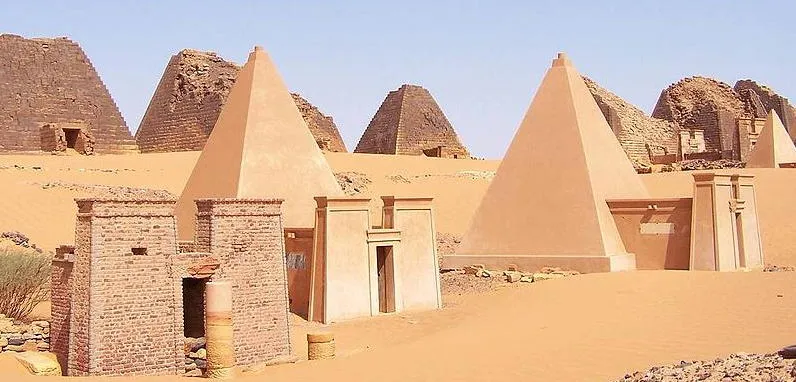
Meroë was once the thriving capital of the Kingdom of Kush, an ancient civilization that developed south of Egypt along the Nile River. From about 590 BCE to 350 CE, Meroë stood as a center of power, trade, and culture in northeastern Africa. Its location near rich deposits of iron ore and plentiful forests made it a leader in iron production. This ironworking skill set Meroë apart from other civilizations of the time, including its neighbors in Egypt.
Meroë's success was deeply connected to its geographic advantages. Situated close to the Nile River, the city could trade goods like gold, ivory, and iron tools with Egypt and other African regions. Archaeological evidence, such as iron smelting furnaces and slag heaps, shows that Meroë produced more iron than any other African city of its era. The Greek historian Herodotus described the people of Kush as skilled metalworkers, a claim supported by modern excavations. Inscriptions and art on the walls of Meroitic pyramids reveal the importance of iron tools in agriculture, warfare, and daily life.
Meroë was also known for its unique social structure and monumental architecture. The ruling class included powerful kings and queens, some of whom were called Kandakes or "Candaces"—female monarchs who sometimes led armies and governed the kingdom. The city is famous for its steep-sided pyramids, which served as royal tombs. Unlike Egyptian pyramids, Meroitic pyramids were smaller and had distinctively sharp angles. The discovery of hundreds of these pyramids at Meroë gives us insight into Kushite beliefs about the afterlife and their connections with Egyptian religion.
Over time, Meroë experienced both change and continuity. The city maintained its independence from Egypt even after centuries of contact and occasional conflict. However, by the 4th century CE, Meroë declined due to changing trade routes and invasions by the kingdom of Aksum. Despite its fall, the cultural and technological achievements of Meroë influenced later African societies. Today, archaeologists continue to uncover artifacts that shed light on the daily life, religious practices, and economic activities of Meroë’s people.
Meroë's legacy demonstrates the diversity and complexity of African civilizations in ancient times. Its story connects to broader themes of technological innovation, cultural exchange, and the rise and fall of empires in world history.
Interesting Fact: Some ancient Greek and Roman writers believed that the queens of Meroë were so powerful that even the Roman emperor Augustus respected them!
Where was Meroë located?
South of Egypt, along the NileIn ancient GreeceWest of MesopotamiaNorthern Europe
What made Meroë famous?
Ironworking and tradeHorse breedingMarble statuesRice farming
Who were the Kandakes?
Queen mothers of KushGreek tradersRoman soldiersEgyptian priests