Seed Dispersal: How Plants Travel
Interactive passage with audio narration, comprehension questions, and printable PDF.
What's included
Seed Dispersal: How Plants Travel preview and details
About this printable Seed Dispersal: How Plants Travel science reading passage, NGSS-aligned (Grades 4-5)
Sample passage and quiz from Seed Dispersal: How Plants Travel
Reading passage and comprehension quiz preview
The Sneaky Secrets of Seed Dispersal
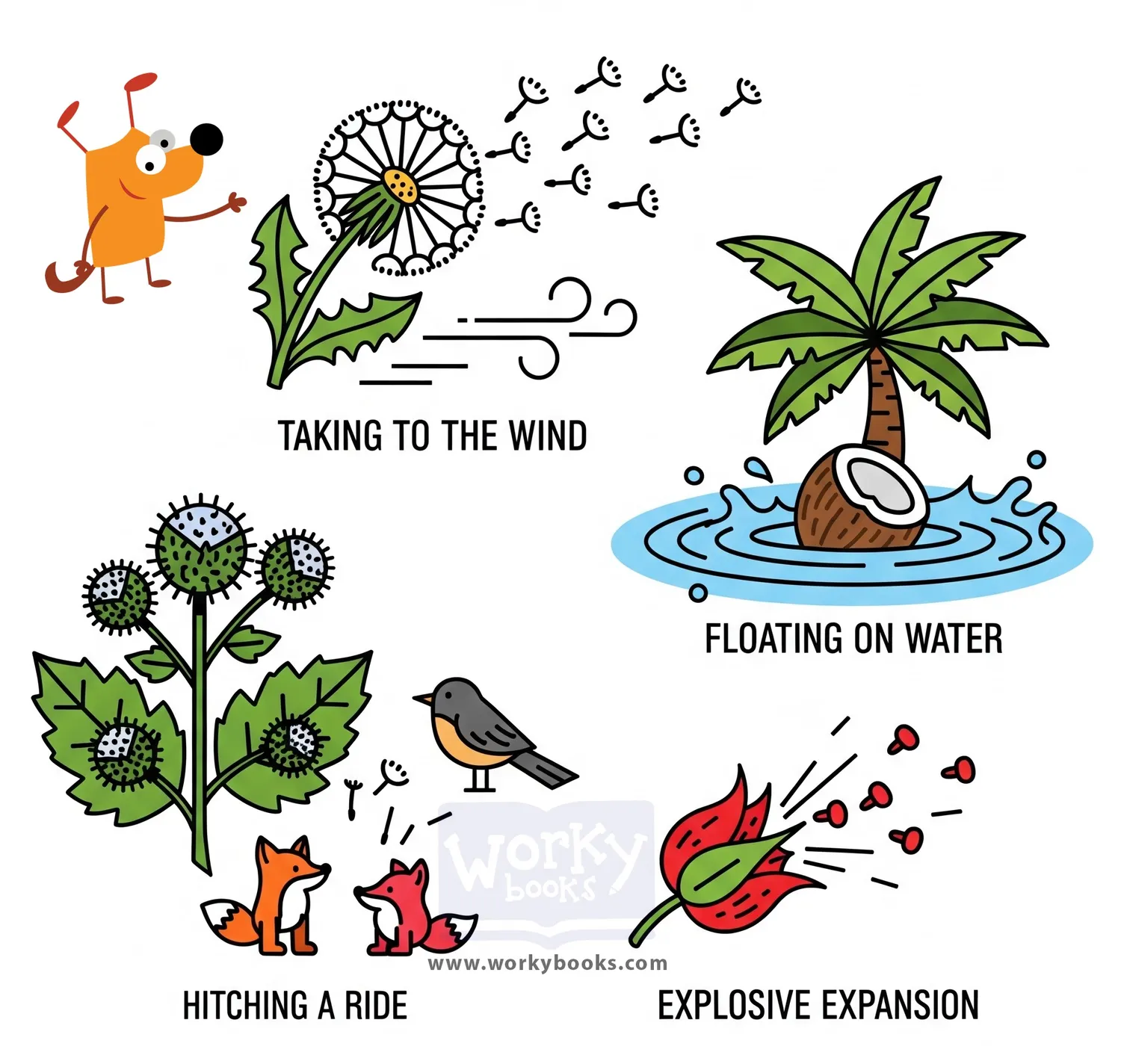
Have you ever wondered how plants travel? Unlike animals, they can't simply pick up and go. But surprisingly, plants have developed clever ways to spread their seeds far and wide, ensuring their survival and diversity. Here are a few of spreading the seeds:
- Hitching a Ride: Many plants have seeds equipped with hooks or barbs that cling to fur, feathers, or clothing. As animals move around, they unknowingly carry these seeds to new locations, allowing the plants to colonize new areas. This method, called zoochory, is used by plants like burdock and cocklebur.
- Wind Dispersal: Some seeds are lightweight and equipped with feathery or papery structures. These wind-dispersed seeds, like dandelion and milkweed, can travel long distances carried by the wind, colonizing vast areas and reaching new habitats.
- Water Dispersal: For plants living near water, hydrochory is the key to dispersal. Seeds with waterproof coats or air pockets can float on water currents, sometimes traveling for weeks or even months before reaching fertile ground to germinate. This method helps plants like coconuts and water lilies spread across oceans and lakes.
- Explosive Expansion: Some plants take a more dramatic approach. When their seed pods ripen, they burst open with a sudden force, propelling the seeds through the air. This ballistic dispersal, used by plants like jewelweed and witch hazel, helps spread seeds over short distances, ensuring they land in new areas close to the parent plant.
Comprehension quiz (5 questions)
1. What type of seeds are best suited for wind dispersal?
2. How does the explosion of seed pods help plants spread their seeds?
3. How do dandelion and milkweed seeds travel?
4. What are the benefits of wind dispersal for plants?
5. How do the seed pods of jewelweed and witch hazel help them spread their seeds?
Common Core standards for Seed Dispersal: How Plants Travel
Determine the main idea of a text and explain how it is supported by key details; summarize the text.
Explain events, procedures, ideas, or concepts in a historical, scientific, or technical text, including what happened and why, based on specific information in the text.
Determine the meaning of general academic and domain-specific words or phrases in a text relevant to a grade 4 topic or subject area.
Quote accurately from a text when explaining what the text says explicitly and when drawing inferences from the text.
Explain the relationships or interactions between two or more individuals, events, ideas, or concepts in a historical, scientific, or technical text based on specific information in the text.
Determine the meaning of general academic and domain-specific words and phrases in a text relevant to a grade 5 topic or subject area.
Perfect for the way you teach
- Build comprehension skills
- Auto-graded quiz
- Differentiated reading
- Read together at home
- Improve fluency
- Quiet reading time
- Reading curriculum support
- Independent practice
- Track Lexile growth