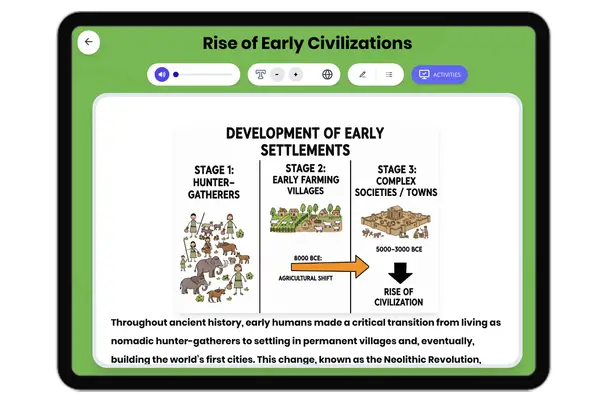
This passage explores how the transition from hunter-gatherer societies to Neolithic villages marked a turning point in human history. Students will learn how early humans built the first permanent settlements using mud and stone, developed agriculture, and formed complex social structures. The passage incorporates archaeological evidence from sites like Çatalhöyük and Jericho, discusses the causes and effects of farming, and highlights the continuity and change over time. Key vocabulary is integrated throughout, and students can deepen their understanding with a glossary, multiple-choice quiz, writing activities, graphic organizers, and a timeline. The resource aligns with CA HSS 6.1.1 and CCSS RI.6.1 standards and includes a Spanish translation and read aloud audio. This is a comprehensive, standards-aligned history reading passage designed to challenge students to think like historians while mastering informational text skills.
Written by Workybooks TeamPublished by Workybooks
Preview
Sample passage and quiz content
CONTENT PREVIEW
Expand content preview
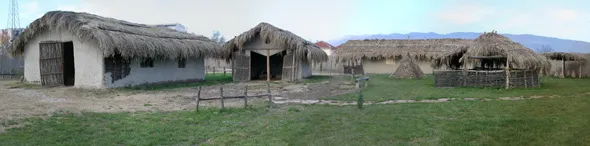
Reconstruction of a neolithic village at the archaeological site at Tumba Madzari by Donco Naumovski / Wikimedia Commons.
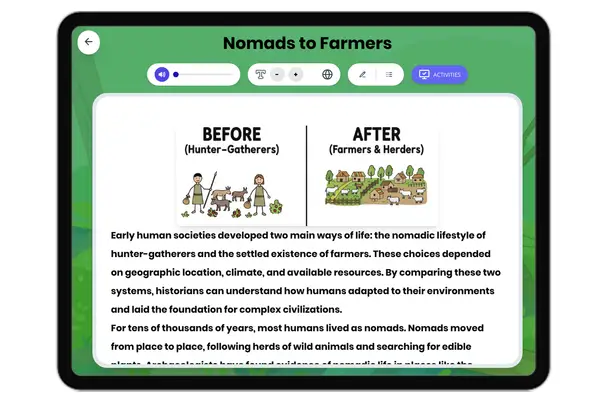
The Neolithic period, also called the New Stone Age, marks a major turning point in human history. During this era, which began around 10,000 BCE, people started to settle in one place rather than moving constantly in search of food. These first permanent settlements allowed humans to create villages, develop new technologies, and build the earliest forms of organized communities.
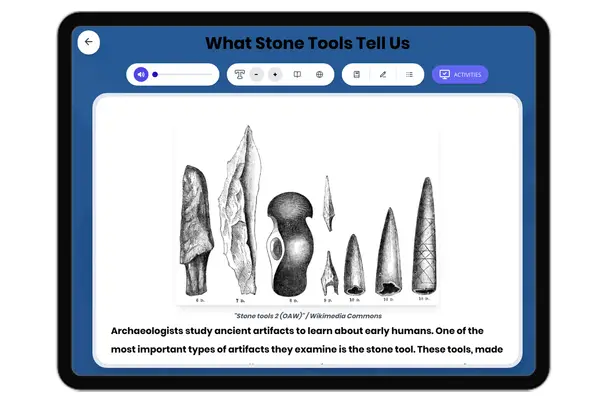
One of the main reasons early humans built permanent homes was the development of agriculture. By learning to grow crops and domesticate animals, people no longer depended solely on hunting and gathering. This change, called the Neolithic Revolution, led to important settlements like Çatalhöyük in present-day Turkey and Jericho in the Middle East. Archaeologists have uncovered evidence of mud-brick houses and stone tools at these sites, demonstrating the new ways people adapted to their environment. For example, at Çatalhöyük (c. 7500–5700 BCE), houses were built close together with shared walls and flat roofs, forming a dense village structure. At Jericho, stone walls protected the settlement, showing the importance of defense.
The use of mud and stone for building was a significant innovation. Instead of temporary shelters, Neolithic people created dwellings that could last for generations. Mud bricks, made by mixing earth and water and forming them in molds, were dried in the sun for strength. Sometimes, people used stone foundations to prevent flooding. Villages often grew near rivers or fertile land to ensure a steady supply of water and crops. These geographic choices shaped daily life, as people worked together to farm, store food, and protect their homes.
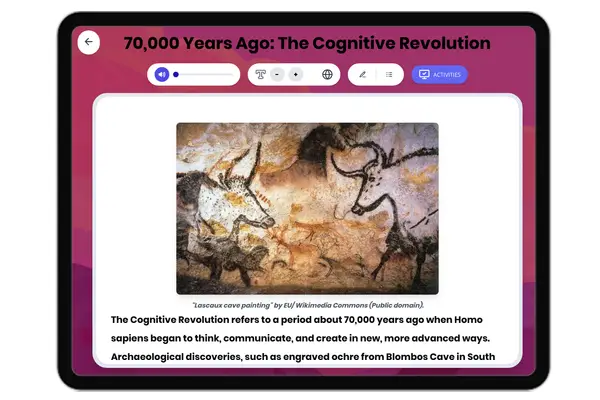
With permanent settlements, social organization became more complex. People developed specialized roles, such as farmers, builders, and toolmakers. Evidence from burial sites suggests the beginnings of social hierarchy, where some individuals had more goods or status than others. Religious shrines and communal spaces found in these villages, like the wall paintings and figurines at Çatalhöyük, show that shared beliefs and rituals were important for community life. Over time, these villages became the foundation for larger towns and early civilizations.
The creation of Neolithic villages had a lasting impact on human history. By learning to build with mud and stone, organize communities, and adapt to their environment, early people set the stage for the rise of cities, trade, and advanced cultures. This shift from a mobile lifestyle to permanent settlement is a key theme in ancient history, connecting the development of technology, society, and geography.
Interesting Fact: Archaeologists have found ancient wall paintings at Çatalhöyük that may be among the world's oldest maps, offering clues about how early people understood their surroundings.
When did the Neolithic period begin?
Around 10,000 BCE500 BCE3000 CE1000 BCE
Which site had protective stone walls?
ÇatalhöyükJerichoBabylonRome
What material was used for Neolithic bricks?
MudIronPlasticWood
Why did people settle near rivers?
To have water and farmFor goldTo avoid animalsTo build boats
How did social hierarchy begin?
Some had more goods/statusEveryone was equalPeople hunted togetherDue to climate
What was one effect of farming?
Villages grewPeople moved dailyHunting increasedTools disappeared
Neolithic people built houses from steel. True or false?
TrueFalse
What does 'agriculture' mean?
Growing crops and raising animalsBuilding housesPainting wallsMaking tools