Waves and Communication
Interactive passage with audio narration, comprehension questions, and printable PDF.
By completing this purchase you agree to our Terms of Use and Privacy Policy. Your subscription renews automatically until you cancel. You can cancel anytime from your account settings. All sales are final and non-refundable. Digital content is available for download in your account immediately upon purchase.
What's included
Waves and Communication preview and details
About this printable Waves and Communication science reading passage, NGSS-aligned (Grades 5-8)
Sample passage and quiz from Waves and Communication
Reading passage and comprehension quiz preview
Waves and Communication
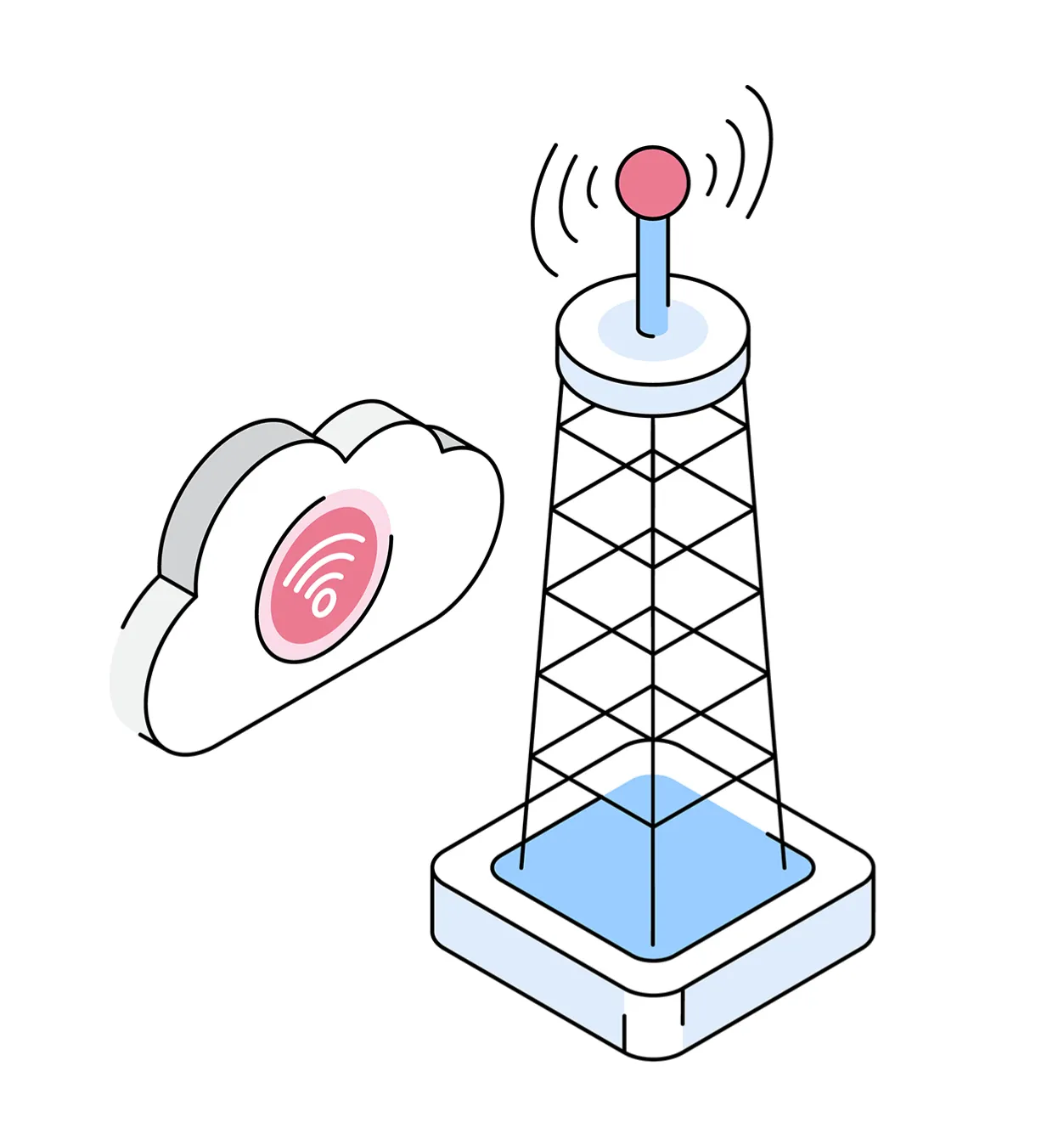
Waves are the backbone of modern communication systems. Every time a person listens to the radio, makes a phone call, or connects to WiFi, they depend on waves to transmit information. The ability to send messages over long distances has changed how societies interact and share knowledge. Understanding how waves carry information helps explain everything from text messages to global satellite TV.
How Do Waves Carry Information?
In science, a wave is a disturbance that transfers energy from one place to another. Communication relies on electromagnetic waves, which can travel through air, space, or cables without needing a physical medium. Information is encoded onto these waves by changing their properties. Two common methods are amplitude modulation (AM) and frequency modulation (FM). In AM, the height (amplitude) of the wave is varied to represent information. In FM, the number of wave cycles per second (frequency) is changed. A radio station, for example, sends sound by encoding it onto radio waves using AM or FM. These waves travel through the air, and a receiver decodes the original message at the listener's end.
Types of Waves in Communication
Different types of electromagnetic waves are used for various communication technologies. Radio waves are the most familiar; they are used in broadcasting, cell phones, and WiFi. Radio waves have relatively long wavelengths and can travel far, passing through buildings and around obstacles. Microwaves have shorter wavelengths and are used for satellite communication and some internet connections. They can carry more information but need a direct line of sight. Light waves, which have much shorter wavelengths, are used in fiber optic cables. In fiber optics, information travels as light pulses through thin glass fibers, allowing rapid data transmission over great distances with minimal loss. Each wave type is chosen for specific uses based on how fast, far, and reliably it can carry information.
History and Impact of Wave-Based Communication
The history of communication technology shows how mastering waves has transformed society. The telegraph in the 1800s used electrical signals sent through wires to transmit coded messages over long distances. The invention of radio in the early 1900s allowed wireless communication, reaching millions instantly. Television added moving images to sound, also using radio waves. Today, the internet relies on a combination of radio, microwave, and fiber optic technology to connect billions of people. Each advance has depended on scientific research to understand wave behavior and to develop new ways to encode, send, and decode information. This progress has enabled global communication, rapid news sharing, and collaborative science.
Mastering the science of waves and communication is essential for understanding the modern world. These technologies demonstrate the power of applying scientific knowledge to solve practical problems and connect people everywhere.
Interesting Fact: The fastest internet connections today use light waves in fiber optic cables, sending data at speeds over 200,000 kilometers per second—close to the speed of light!
Comprehension quiz (10 questions)
1. What is the main function of waves in modern communication?
2. Which of the following is an example of using radio waves?
3. What is amplitude modulation (AM)?
4. What does the passage say about microwaves compared to radio waves?
5. Why are light waves used in fiber optic cables?
6. What does the term 'telegraph' mean in this passage?
7. Which property of a wave is changed in frequency modulation (FM)?
8. True or False: Fiber optic cables use microwaves to send information.
9. True or False: The internet uses a combination of radio, microwave, and fiber optic technology.
10. What is one effect of using waves for communication, according to the passage?
Perfect for the way you teach
- Build comprehension skills
- Auto-graded quiz
- Differentiated reading
- Read together at home
- Improve fluency
- Quiet reading time
- Reading curriculum support
- Independent practice
- Track Lexile growth