What Are Cirrus Clouds Made Of? — Reading Comprehension
Rate this
Premium Resource
Present
Present in classroom. No work saved
Assign
Classroom with student accounts, Track progress
Quick Play
No student accounts, assign with a link
Grades
3
4
5
6
7
PRINT+DIGITAL RESOURCE
This learning resource is available in interactive and printable formats. The interactive worksheet can be played online and assigned to students. The Printable PDF version can be downloaded and printed for completion by hand.
This NGSS-aligned science reading passage explains what cirrus clouds are made of and how they form. Students will learn that cirrus clouds are made of ice crystals because they form at high altitudes where the air is extremely cold. The passage describes their wispy appearance, how winds shape them, and how they can signal upcoming weather changes. It supports NGSS standard MS-ESS2-6 and helps students explore the connection between cloud types and weather prediction in an engaging and informative way.
CONTENT PREVIEW
Expand content preview
Cirrus clouds are the thin, wispy clouds you often see high up in the sky. They look like feathers or delicate brushstrokes stretched across the blue sky. But what are these clouds made of?
Unlike low clouds that are made mostly of water droplets, cirrus clouds are made of ice crystals. That’s because they form very high in the atmosphere, usually above 20,000 feet (6,000 meters), where the air is extremely cold. At these high altitudes, water vapor freezes into tiny ice crystals instead of turning into liquid droplets.
Cirrus clouds form when moist air rises very high into the sky and cools down. As it cools, the water vapor changes into ice crystals, which spread out into thin layers or streaks. Wind at those heights often stretches the clouds into their familiar wispy shapes.
Even though cirrus clouds don’t produce rain or snow at ground level, they can be a sign that a change in the weather is coming. For example, cirrus clouds sometimes appear before a warm front or a storm system, giving people a clue that rain might be on the way in the next day or two.
Because they are so high, cirrus clouds often catch sunlight in special ways—sometimes glowing pink, orange, or gold during sunrise or sunset.
Fun Fact: The name “cirrus” comes from Latin and means “curl of hair,” which describes their thin, curly appearance!
What are cirrus clouds made of?
Water dropletsSmoke and airIce crystalsDust and fog
Where do cirrus clouds form in the sky?
Near the groundIn the middle of the skyVery high in the atmosphereInside thunderstorms
Why are cirrus clouds made of ice crystals instead of water droplets?
Because it rains in themBecause they form in cold, high airBecause sunlight melts the cloudsBecause they are far from Earth
What do cirrus clouds look like?
Thick and darkThin and wispyRound and puffyFlat and grey
What weather sign might cirrus clouds give us?
Clear skies aheadSnowstorm coming in hoursRain or change in weather in a day or twoCold wind arriving now
What helps shape cirrus clouds into streaks?
Falling rainStrong winds at high altitudesLightning strikesPressure from the ground
What is the main idea of the passage?
Cirrus clouds are rainmakersCirrus clouds float at nightCirrus clouds are high, icy, and show weather changesCirrus clouds are warm and fluffy
What does the word “cirrus” mean in Latin?
Cold stormCurl of hairFrozen airBright sky
Perfect For:
👩🏫 Teachers
• Reading comprehension practice
• Auto-graded assessments
• Literacy skill development
👨👩👧👦 Parents
• Reading practice at home
• Comprehension improvement
• Educational reading time
🏠 Homeschoolers
• Reading curriculum support
• Independent reading practice
• Progress monitoring
Reading Features:
📖
Reading Passage
Engaging fiction or nonfiction text
❓
Comprehension Quiz
Auto-graded questions
📊
Instant Feedback
Immediate results and scoring
📄
Printable Version
Download for offline reading
🔊
Read Aloud
Voice-over with word highlighting
Reviews & Ratings
No reviews yet. Be the first to share your experience!
Related Content
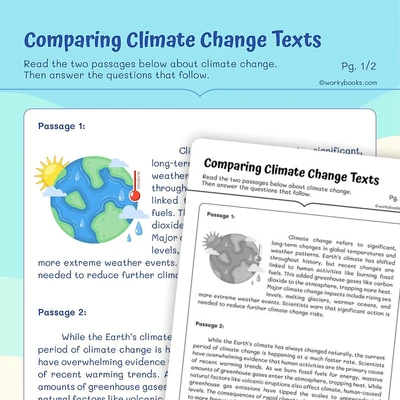
Comparing Weather and Climate Texts
This reading comprehension worksheet has 5th graders read two informational texts about Weather and Climate. Students th...
RI.5.9
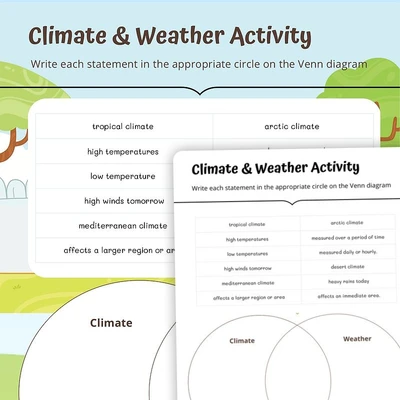
Climate and weather activity
This worksheet is perfect for understanding the differences between climate and weather. Students will read the phrases ...
What Is Space Weather and How Does It Affect the Earth?
This NGSS-aligned science passage for middle school explains what space weather is and how it affects Earth. Students le...
MS-ESS2-2
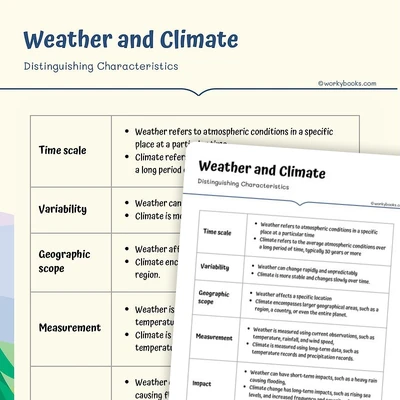
Climate and Weather — Distinguishing Characterstics
This worksheet highlights the differences between climate and weather. The chart format makes comparing and contrasting ...
What's The Main Idea?
These short science texts are a great way to practice main idea. Students will read the paragraphs and then choose the m...
RI.2.6
Reading for Main Details—Birds
This informational text on birds is a great way to practice main idea. Students will read the passage, then give the mai...
RI.2.6RI.2.8
Koi Fish—What’s the Main Idea?
This informational text on koi fish is a great introduction to teaching main idea. Students will be asked, in multiple c...
RI.3.2RF.3.4RI.3.1
Spider—Main Idea
This informational text on spiders is a great introduction to teaching main idea. Students will be asked, in multiple ch...
RI.3.2RF.3.4RI.3.1RI.2.6
Reading for Main Details—Beavers Teeth
This informational text on beavers is a great way to practice main idea. Students will read the passage, then give the m...
RI.2.6RI.2.10
Reading for Main Details—Veternarians
Practie summarizing paragraphs with this fun informational text on veternarians! Students will give the main idea of eac...
RI.2.2RI.2.10
Tools and Technology in Earth Science
This middle school science reading passage explores the wide range of tools and technologies used in Earth science, from...
MS-ESS2-2MS-ESS3-2MS-ETS1-1MS-PS4-3
Main Idea and Supporting Details in Informational Text
RI.3.1RI.3.2RI.3.8
What Is Earth Science?
This engaging middle school science passage introduces students to the field of Earth science, aligning with NGSS standa...
MS-ESS1MS-ESS2MS-ESS3SEP
Polar Bears and Climate
This informational text on polar bears is a great way to practice reading comprehension. Students will read the passage ...
RI.4.1W.4.72-LS4-1RF.4.4
Main Idea and Details Graphic Organizer
This graphic organizer on main idea includes space to write the main idea and three supporting details.
RI.1.2RI.2.2RI.3.2RI.4.2
Main Idea and Suporting Details Graphic Organizer
This graphic organizer on main idea includes space to write the main idea and three supporting details.
RI.1.2RI.2.2RI.3.2RI.4.2
Bats and Butterflies—Informational Text
This informational text on bats and butterflies is a great way to practice spotting similarities between texts. Students...
RI.K.3
Weather and Temperature
RI.4.73-ESS2-13-ESS2-2
Penguins— Main Purpose
This informational text on penguins with comprehension questions is a great way to practice reading fluency and main ide...
RI.1.2RI.1.10RF.1.4.ARF.1.4.B
Informational Text — Astronauts
Practice this second grade context clues worksheet with this informational text on astronauts. Students will read the te...