This learning resource is available in interactive and printable formats. The interactive worksheet can be played online and assigned to students. The Printable PDF version can be downloaded and printed for completion by hand.
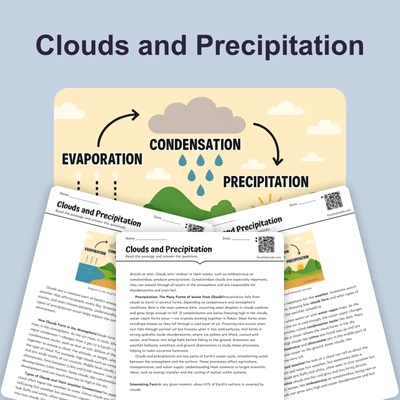
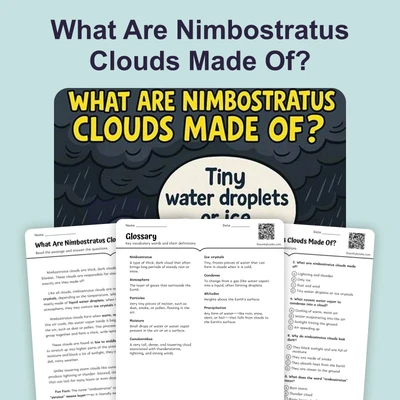
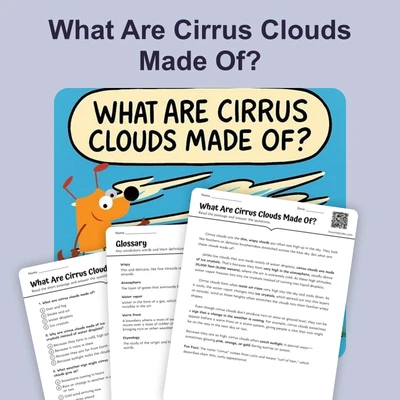
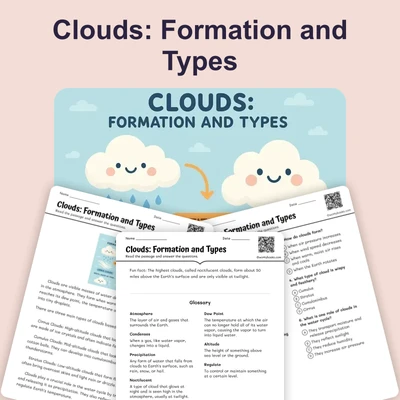
This NGSS-aligned reading passage explains what clouds are made of and how they form in the atmosphere. Students learn that clouds consist of tiny water droplets or ice crystals formed when warm, moist air rises and cools. The passage describes the condensation process, the role of particles in cloud formation, and how droplets grow into precipitation. It supports NGSS standard MS-ESS2-6 and helps students build understanding of Earth's systems and weather through clear, engaging science content.
CONTENT PREVIEW
Expand content preview
Clouds might look like fluffy cotton floating in the sky, but they are actually made of tiny water droplets or ice crystals, depending on how cold it is up in the atmosphere. These droplets are so small and light that they can float in the air, carried by wind.
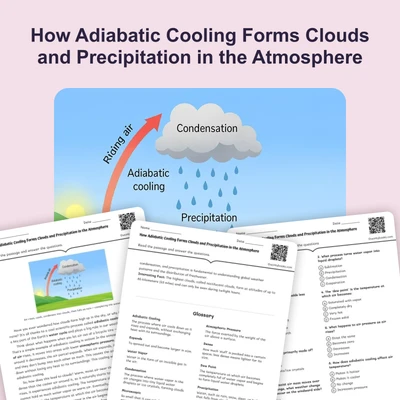
Clouds form when warm, moist air rises into the sky and cools. As the air cools, the water vapor in it begins to condense around tiny particles in the air like dust, pollen, or smoke. These particles give the water something to stick to. When enough of these water droplets come together, we see them as a cloud.
If the temperature high up in the atmosphere is very cold, the water vapor may turn directly into ice crystals instead of liquid droplets. That’s why some clouds look soft and puffy, while others look thin, wispy, or heavy and dark—different types of clouds form in different conditions.
Even though clouds can hold a lot of water, the droplets are so small that they don’t fall right away. But when the droplets combine and grow larger, they become heavy and fall to Earth as rain, snow, or hail, depending on the temperature.
So, clouds are really collections of tiny bits of water or ice, formed by cooling air and condensation high above our heads.
Fun Fact: A single cloud can contain millions of tiny droplets and may weigh as much as a large elephant—but it still floats because the droplets are so small and spread out!
What are clouds made of?
Cotton and airSmoke and steamTiny water droplets or ice crystalsWind and sunlight
How do clouds form in the sky?
When water boilsWhen warm, moist air rises and coolsWhen sunlight hits the groundWhen the moon heats the air
What do water droplets in clouds form around?
RaindropsLightningDust or pollen particlesPieces of snow
What causes droplets to fall from clouds?
When they become too coldWhen they shrinkWhen they grow larger and heavierWhen clouds break apart
What happens when air cools high in the sky?
Water vapor condenses into droplets or iceThe sky gets darkerIt becomes warmerIt turns into wind
Why don’t the water droplets fall right away?
The sun holds them upThey are very light and float in the airThe clouds push them upwardThe ice keeps them stuck
What is the main idea of the passage?
Clouds are heavy balls of waterClouds are made of tiny droplets or ice formed from cooling airClouds are only found in winterClouds are made from smoke and dust
What can clouds turn into when conditions are right?
FogWindstormsRain, snow, or hailSunlight
Perfect For:
👩🏫 Teachers
• Reading comprehension practice
• Auto-graded assessments
• Literacy skill development
👨👩👧👦 Parents
• Reading practice at home
• Comprehension improvement
• Educational reading time
🏠 Homeschoolers
• Reading curriculum support
• Independent reading practice
• Progress monitoring
Reading Features:
📖
Reading Passage
Engaging fiction or nonfiction text
❓
Comprehension Quiz
Auto-graded questions
📊
Instant Feedback
Immediate results and scoring
📄
Printable Version
Download for offline reading
🔊
Read Aloud
Voice-over with word highlighting
Reviews & Ratings
No reviews yet. Be the first to share your experience!
Related Content
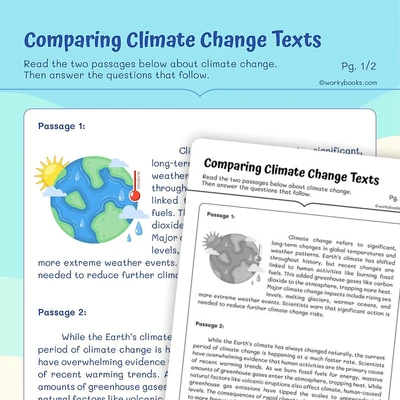
Comparing Weather and Climate Texts
This reading comprehension worksheet has 5th graders read two informational texts about Weather and Climate. Students th...
RI.5.9
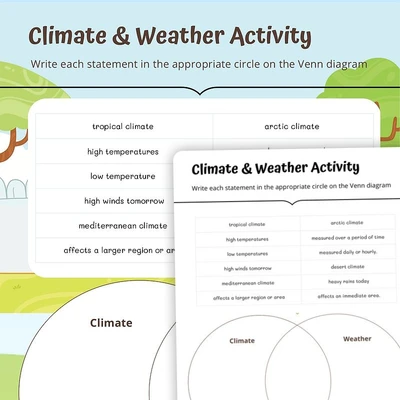
Climate and weather activity
This worksheet is perfect for understanding the differences between climate and weather. Students will read the phrases ...
What Is Space Weather and How Does It Affect the Earth?
This NGSS-aligned science passage for middle school explains what space weather is and how it affects Earth. Students le...
MS-ESS2-2
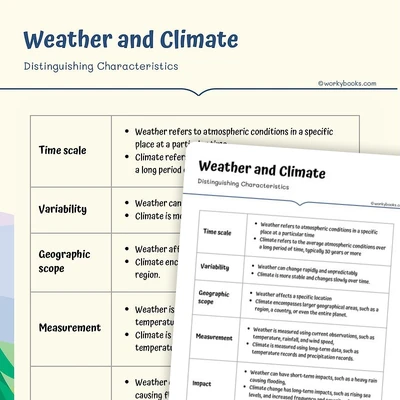
Climate and Weather — Distinguishing Characterstics
This worksheet highlights the differences between climate and weather. The chart format makes comparing and contrasting ...
What's The Main Idea?
These short science texts are a great way to practice main idea. Students will read the paragraphs and then choose the m...
RI.2.6
Reading for Main Details—Birds
This informational text on birds is a great way to practice main idea. Students will read the passage, then give the mai...
RI.2.6RI.2.8
Koi Fish—What’s the Main Idea?
This informational text on koi fish is a great introduction to teaching main idea. Students will be asked, in multiple c...
RI.3.2RF.3.4RI.3.1
Spider—Main Idea
This informational text on spiders is a great introduction to teaching main idea. Students will be asked, in multiple ch...
RI.3.2RF.3.4RI.3.1RI.2.6
Reading for Main Details—Beavers Teeth
This informational text on beavers is a great way to practice main idea. Students will read the passage, then give the m...
RI.2.6RI.2.10
Reading for Main Details—Veternarians
Practie summarizing paragraphs with this fun informational text on veternarians! Students will give the main idea of eac...
RI.2.2RI.2.10
Main Idea and Supporting Details in Informational Text
RI.3.1RI.3.2RI.3.8
Tools and Technology in Earth Science
This middle school science reading passage explores the wide range of tools and technologies used in Earth science, from...
MS-ESS2-2MS-ESS3-2MS-ETS1-1MS-PS4-3
What Is Earth Science?
This engaging middle school science passage introduces students to the field of Earth science, aligning with NGSS standa...
MS-ESS1MS-ESS2MS-ESS3SEP
Polar Bears and Climate
This informational text on polar bears is a great way to practice reading comprehension. Students will read the passage ...
RI.4.1W.4.72-LS4-1RF.4.4
Main Idea and Details Graphic Organizer
This graphic organizer on main idea includes space to write the main idea and three supporting details.
RI.1.2RI.2.2RI.3.2RI.4.2
Main Idea and Suporting Details Graphic Organizer
This graphic organizer on main idea includes space to write the main idea and three supporting details.
RI.1.2RI.2.2RI.3.2RI.4.2
Bats and Butterflies—Informational Text
This informational text on bats and butterflies is a great way to practice spotting similarities between texts. Students...
RI.K.3
Penguins— Main Purpose
This informational text on penguins with comprehension questions is a great way to practice reading fluency and main ide...
RI.1.2RI.1.10RF.1.4.ARF.1.4.B
Weather and Temperature
RI.4.73-ESS2-13-ESS2-2
Informational Text — Astronauts
Practice this second grade context clues worksheet with this informational text on astronauts. Students will read the te...