What Causes Thunderstorms? — Reading Comprehension
Rate this
Premium Resource
Present
Present in classroom. No work saved
Assign
Classroom with student accounts, Track progress
Quick Play
No student accounts, assign with a link
Grades
3
4
5
6
7
PRINT+DIGITAL RESOURCE
This learning resource is available in interactive and printable formats. The interactive worksheet can be played online and assigned to students. The Printable PDF version can be downloaded and printed for completion by hand.
This NGSS-aligned reading passage explains how thunderstorms form from warm, moist air rising into the atmosphere. Students will learn about condensation, cumulonimbus clouds, electric charge buildup, lightning, and thunder. The passage highlights the role of energy and motion in the atmosphere and how weather scientists predict and track storms. It supports NGSS standard MS-ESS2-6 and builds science literacy with real-world weather events students can observe and understand.
CONTENT PREVIEW
Expand content preview
Thunderstorms are powerful and sometimes dangerous weather events that bring rain, thunder, lightning, and sometimes hail or strong winds. But what causes a thunderstorm to form?
It all begins with warm, moist air near the ground. When the sun heats up the land, the air above it warms and starts to rise. As this warm air rises, it carries water vapor with it. When the rising air cools down high in the atmosphere, the water vapor condenses into clouds. If the air keeps rising and there’s enough moisture, the clouds grow into large, tall cumulonimbus clouds—the kind that produce thunderstorms.
Inside these tall clouds, water droplets and ice particles bump into each other, creating electric charges. The top of the cloud becomes positively charged, and the bottom becomes negatively charged. When the difference between these charges grows strong enough, lightning is released.
The sudden flash of lightning heats the air around it so quickly that it expands and makes a loud sound—this is thunder. You always see lightning before you hear thunder because light travels faster than sound.
Thunderstorms are more common in the spring and summer, especially in warm, humid areas. They can happen alone or as part of larger weather systems. Some thunderstorms are brief, while others can last for hours and grow into severe storms.
Meteorologists watch for signs of building storms so they can warn people in time. Knowing how thunderstorms form helps us stay safe during extreme weather.
Fun Fact: A bolt of lightning can heat the air to over 30,000°C (54,000°F)—hotter than the surface of the sun!
Wind from the oceanThe sun heating the groundCold clouds aboveRain falling from clouds
What happens when water vapor cools in the air?
It turns to iceIt disappearsIt condenses into cloudsIt creates thunder
How is lightning formed?
From cold air moving fastFrom the sun’s reflectionFrom electric charges inside cloudsFrom water droplets bouncing off leaves
Why do you see lightning before you hear thunder?
Thunder takes longer to formLight travels faster than soundLightning is biggerSound gets lost in clouds
What does a thunderstorm need to form?
Cold, dry airWarm, moist air and rising motionFog and windStrong snowfall
What is the main idea of the passage?
Thunderstorms are dangerous because of snowThunderstorms only happen in winterThunderstorms form when warm, moist air rises and creates clouds and lightningThunderstorms happen because of strong sunshine
How do meteorologists help during thunderstorms?
They stop the storm from formingThey create cloudsThey warn people when a storm is comingThey heat the ground
Perfect For:
👩🏫 Teachers
• Reading comprehension practice
• Auto-graded assessments
• Literacy skill development
👨👩👧👦 Parents
• Reading practice at home
• Comprehension improvement
• Educational reading time
🏠 Homeschoolers
• Reading curriculum support
• Independent reading practice
• Progress monitoring
Reading Features:
📖
Reading Passage
Engaging fiction or nonfiction text
❓
Comprehension Quiz
Auto-graded questions
📊
Instant Feedback
Immediate results and scoring
📄
Printable Version
Download for offline reading
🔊
Read Aloud
Voice-over with word highlighting
Reviews & Ratings
No reviews yet. Be the first to share your experience!
Related Content
Comparing Weather and Climate Texts
This reading comprehension worksheet has 5th graders read two informational texts about Weather and Climate. Students th...
RI.5.9
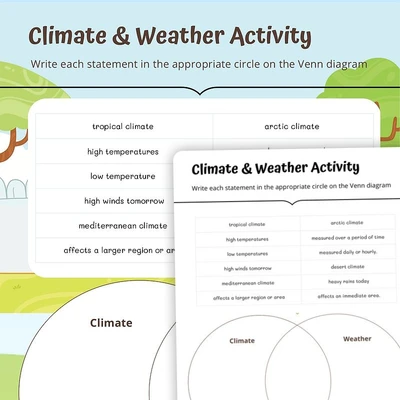
Climate and weather activity
This worksheet is perfect for understanding the differences between climate and weather. Students will read the phrases ...
What Is Space Weather and How Does It Affect the Earth?
This NGSS-aligned science passage for middle school explains what space weather is and how it affects Earth. Students le...
MS-ESS2-2
What's The Main Idea?
These short science texts are a great way to practice main idea. Students will read the paragraphs and then choose the m...
RI.2.6
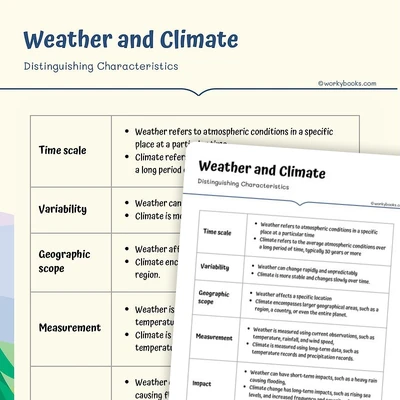
Climate and Weather — Distinguishing Characterstics
This worksheet highlights the differences between climate and weather. The chart format makes comparing and contrasting ...
Reading for Main Details—Birds
This informational text on birds is a great way to practice main idea. Students will read the passage, then give the mai...
RI.2.6RI.2.8
Koi Fish—What’s the Main Idea?
This informational text on koi fish is a great introduction to teaching main idea. Students will be asked, in multiple c...
RI.3.2RF.3.4RI.3.1
Spider—Main Idea
This informational text on spiders is a great introduction to teaching main idea. Students will be asked, in multiple ch...
RI.3.2RF.3.4RI.3.1RI.2.6
Reading for Main Details—Beavers Teeth
This informational text on beavers is a great way to practice main idea. Students will read the passage, then give the m...
RI.2.6RI.2.10
Reading for Main Details—Veternarians
Practie summarizing paragraphs with this fun informational text on veternarians! Students will give the main idea of eac...
RI.2.2RI.2.10
Main Idea and Supporting Details in Informational Text
RI.3.1RI.3.2RI.3.8
Tools and Technology in Earth Science
This middle school science reading passage explores the wide range of tools and technologies used in Earth science, from...
MS-ESS2-2MS-ESS3-2MS-ETS1-1MS-PS4-3
What Is Earth Science?
This engaging middle school science passage introduces students to the field of Earth science, aligning with NGSS standa...
MS-ESS1MS-ESS2MS-ESS3SEP
Main Idea and Details Graphic Organizer
This graphic organizer on main idea includes space to write the main idea and three supporting details.
RI.1.2RI.2.2RI.3.2RI.4.2
Polar Bears and Climate
This informational text on polar bears is a great way to practice reading comprehension. Students will read the passage ...
RI.4.1W.4.72-LS4-1RF.4.4
Main Idea and Suporting Details Graphic Organizer
This graphic organizer on main idea includes space to write the main idea and three supporting details.
RI.1.2RI.2.2RI.3.2RI.4.2
Bats and Butterflies—Informational Text
This informational text on bats and butterflies is a great way to practice spotting similarities between texts. Students...
RI.K.3
Penguins— Main Purpose
This informational text on penguins with comprehension questions is a great way to practice reading fluency and main ide...
RI.1.2RI.1.10RF.1.4.ARF.1.4.B
Informational Text — Astronauts
Practice this second grade context clues worksheet with this informational text on astronauts. Students will read the te...