What is an Abiotic Factor? — Reading Comprehension
Rate this
Premium Resource
Present
Present in classroom. No work saved
Assign
Classroom with student accounts, Track progress
Quick Play
No student accounts, assign with a link
Grades
3
4
5
6
PRINT+DIGITAL RESOURCE
This learning resource is available in interactive and printable formats. The interactive worksheet can be played online and assigned to students. The Printable PDF version can be downloaded and printed for completion by hand.
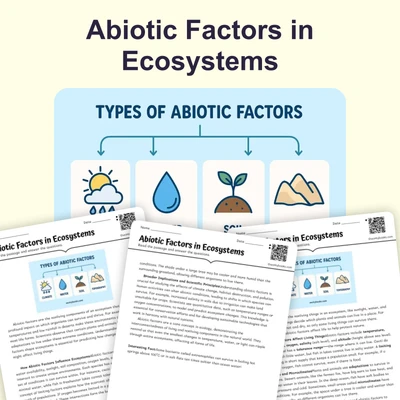
This audio integrated reading passage explains abiotic factors for 4th-grade students in clear, simple terms. Students will learn that abiotic factors are the non-living parts of an ecosystem, such as sunlight, water, air, soil, rocks, and temperature. The passage contrasts biotic and abiotic factors, provides real-world examples like cacti in deserts and polar bears in the Arctic, and explains how changes in abiotic factors can affect entire ecosystems. A fun fact about the Dead Sea highlights extreme abiotic conditions. The included comprehension questions cover DOK levels 1–3, helping students recall, infer, and apply knowledge. Audio integration makes the content accessible for diverse learners. SEO keywords like abiotic factors, non-living, and NGSS ensure discoverability for teachers, homeschooling, and science classrooms.
CONTENT PREVIEW
Expand content preview
An abiotic factor is any nonliving part of an ecosystem. The word "abiotic" means "not living." Abiotic factors include water, air, soil, sunlight, temperature, and minerals. These nonliving parts are important because they provide the raw materials and conditions that all living things need to survive.
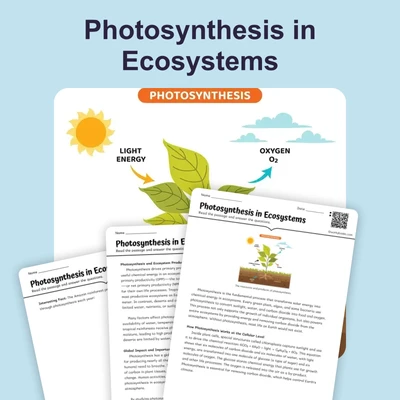
Every ecosystem contains both living things (like plants and animals) and nonliving things. The nonliving parts create the environment where life can exist. For example, plants need sunlight to make food through a process called photosynthesis—when plants use light energy to turn carbon dioxide and water into sugar. Without sunlight, an abiotic factor, plants could not survive. Animals need water to drink and air to breathe. These are also abiotic factors.
Soil is another important abiotic factor. Soil is made of tiny pieces of rock, minerals, and decayed plant and animal matter. Plants grow their roots in soil to get water and nutrients like nitrogen and phosphorus. These nutrients are nonliving chemicals that help plants grow strong and healthy. Think of soil like a pantry that stores food for plants—without it, most plants cannot get what they need.
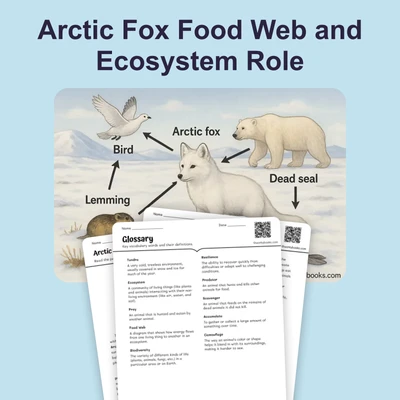
Temperature is an abiotic factor that affects where organisms can live. Some animals, like polar bears, live in very cold places. Other animals, like camels, live in hot deserts. Each organism has adapted to the temperature of its environment. Water temperature also matters. Cold ocean water holds more oxygen than warm water, which affects the fish and other animals living there.
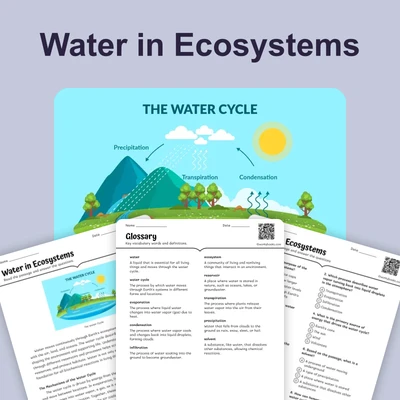
All abiotic factors work together to create conditions for life. When water evaporates from lakes and oceans, it rises into the air and later falls as rain. This moving water brings nutrients to soil and provides drinking water for animals. The matter—the physical substance that makes up water, air, and minerals—cycles through the environment. Abiotic factors are the environment that keeps this cycle going.
Interesting Fact: The driest place on Earth is the Atacama Desert in Chile, where some areas have not received rain for over 400 years! This extreme abiotic factor makes it nearly impossible for most living things to survive there.
What does the word abiotic mean?
Not livingVery smallLiving thingsPlant food
Which is an abiotic factor?
A birdSunlightA treeA fish
What do plants use photosynthesis for?
To drink waterTo breathe airTo make foodTo grow roots
Why does temperature affect where organisms live?
It changes soil colorOrganisms adapt to specific temperaturesIt makes water disappearIt creates more sunlight
How does soil help plants?
It gives them sunlightIt provides water and nutrientsIt makes them warmerIt helps them breathe
What happens when water evaporates from lakes?
It disappears foreverIt rises and later falls as rainIt turns into soilIt becomes sunlight
Abiotic factors are living parts of ecosystems.
TrueFalse
What are nutrients in the passage?
Living animals in soilNonliving chemicals that help plants growTypes of rocksWater from rain
Perfect For:
👩🏫 Teachers
• Reading comprehension practice
• Auto-graded assessments
• Literacy skill development
👨👩👧👦 Parents
• Reading practice at home
• Comprehension improvement
• Educational reading time
🏠 Homeschoolers
• Reading curriculum support
• Independent reading practice
• Progress monitoring
Reading Features:
📖
Reading Passage
Engaging fiction or nonfiction text
❓
Comprehension Quiz
Auto-graded questions
📊
Instant Feedback
Immediate results and scoring
📄
Printable Version
Download for offline reading
🔊
Read Aloud
Voice-over with word highlighting
Reviews & Ratings
No reviews yet. Be the first to share your experience!
Related Content
Informational Text — Penguins
This informational text on penguins is a great way to practice reading comprehension. Students will read the short passa...
RI.2.1RI.2.10
Informational Text — Armadillos
This informational text on armadillos is a great way to practice reading comprehension. Students will read the short pas...
RI.2.1RI.2.10
Reading for Main Details—Birds
This informational text on birds is a great way to practice main idea. Students will read the passage, then give the mai...
RI.2.6RI.2.8
Informational Text — Habitats
This short informational text on habitats will teach your students what a habitat is, as well as provide some examples o...
RF.3.4.A
Reading for Main Details—Beavers Teeth
This informational text on beavers is a great way to practice main idea. Students will read the passage, then give the m...
RI.2.6RI.2.10
Informational Text — Astronauts
Practice this second grade context clues worksheet with this informational text on astronauts. Students will read the te...
RI.2.4RI.2.10RI.3.4RI.3.10
Reading for Main Details—Veternarians
Practie summarizing paragraphs with this fun informational text on veternarians! Students will give the main idea of eac...
RI.2.2RI.2.10
Informational Text —Importance of Sound
This Reading Informational Text Common Core standards calls for 4th graders to be able to effectively describe and analy...
RI.4.5
Key Details in Text
RI.1.1RI.1.2RI.1.10
Informational Text —Bioluminescence
This informational text on bioluminescence will teach your students about this phenomenon. Examples in nature are provid...
RI.3.10RF.3.4RF.3.4.ARI.3.1
Informational Text —Sea Stars
Use this second grade worksheet on context clues with this informational text on sea stars. Students will read the text ...
RI.2.4RI.2.10RI.3.4RI.3.10
The Nature of Life Science
This passage, aligned with NGSS MS-LS1-1, introduces students in grades 6-8 to the foundational concepts of life science...
MS-LS1-1
Using Dichotomous Keys to Identify Organisms
This audio-integrated passage, 'Using Dichotomous Keys to Identify Organisms,' introduces 6th-grade students to a fundam...
Informational Text —Snowflakes
This informational text on snowflakes will teach your students how snowflakes are formed. Images of several different fl...
RI.3.10RF.3.4RF.3.4.ARI.3.1
Informational Text—Tardigrades
This informational text on tardigrades will teach your students all about this strange animal! Free response comprehensi...
RI.2.1RI.2.10RI.3.1RI.3.10
The Pumpkin Life Cycle
This informational worksheet explores the pumpkin lifecycle, guiding students through procedural steps in a scientific t...
RI.2.3RI.2.10
Informational Text —Migratory Birds
Engage young minds with this worksheet that delves into the wonders of migratory birds. Learn about their extraordinary ...
RI.4.10RI.4.3RF.4.4RF.4.4.A
Informational Text — Cloud Gazing
This informational text teaches students how different types of clouds are formed. A page with pictures of the different...
RI.3.10RF.3.4RF.3.4.ARI.3.1
Informational Text on Butterflies
This resource is a great way to practice differntiating between information gained from illustrations and words in a tex...
RI.1.6RI.10RF.1.4.ARF.1.4
Informational Text on Parts of a Tree
This informational text on the parts of a tree is a great way to practice using images during reading. Students will rea...