Aerobic Organisms
Interactive passage with audio narration, comprehension questions, and printable PDF.
By completing this purchase you agree to our Terms of Use and Privacy Policy. Your subscription renews automatically until you cancel. You can cancel anytime from your account settings. All sales are final and non-refundable. Digital content is available for download in your account immediately upon purchase.
What's included
Aerobic Organisms preview and details
About this printable Aerobic Organisms science reading passage, NGSS-aligned (Grade 6)
Sample passage and quiz from Aerobic Organisms
Reading passage and comprehension quiz preview
Aerobic Organisms
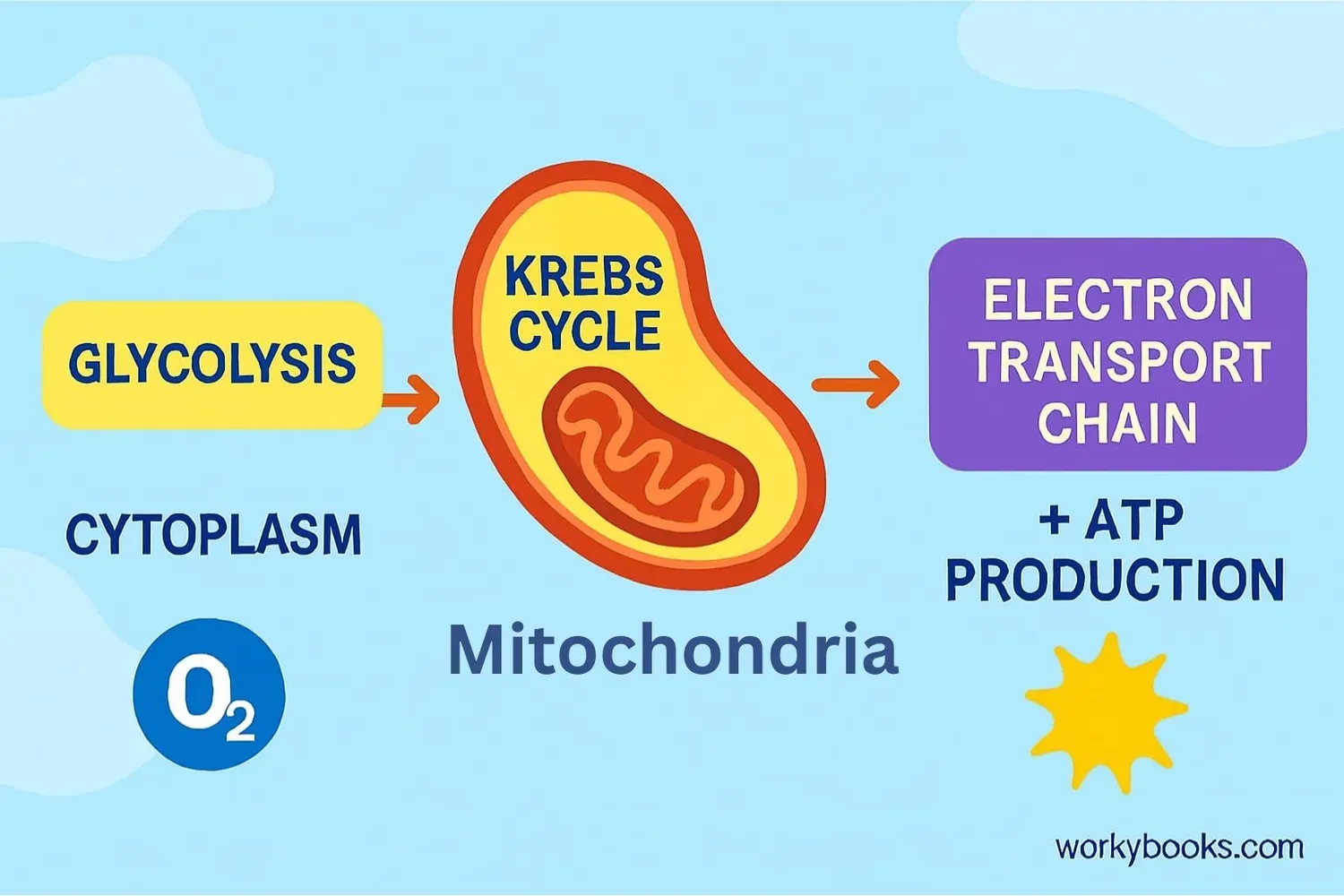
Imagine a world where every breath you take fuels your body, allowing you to run, play, and think. This isn't just imagination; it's the reality for many living things on Earth, including humans. These organisms are called aerobic organisms, and they rely on oxygen to survive and get energy.
What exactly does it mean to be aerobic? The word "aerobic" comes from the Greek word "aero," meaning air or oxygen. So, aerobic organisms are those that need oxygen to carry out their life processes. This need for oxygen is a fundamental part of their metabolism, which is the sum of all chemical reactions that occur in an organism to maintain life. One of the most important metabolic processes is how organisms get energy from their food.
Think about what happens when you eat. Your body breaks down food into smaller molecules, like glucose (a type of sugar). To get energy from this glucose, your cells perform a process called cellular respiration. During cellular respiration, oxygen acts like a key that unlocks the energy stored in glucose. Without oxygen, this process wouldn't work efficiently, and your cells wouldn't be able to get enough energy to function.
When oxygen is present, cellular respiration is incredibly efficient. It allows organisms to release a lot of energy from a single food molecule. This energy is then used for everything: growing, repairing tissues, moving, and even thinking. Many different types of organisms are aerobic, from tiny bacteria to large animals like us. They all share this common need for oxygen to power their lives.
Some organisms, called anaerobic organisms, can survive without oxygen. They use different chemical reactions to get energy from food, but these methods are usually less efficient than aerobic respiration. However, for aerobic organisms, oxygen is absolutely essential for releasing the energy needed to live and thrive.
Interesting Fact: Even though they need oxygen, aerobic organisms release carbon dioxide as a waste product, which plants then use for their own energy production!
Comprehension quiz (10 questions)
1. What do aerobic organisms need to survive?
2. What is glucose a type of?
3. Which process unlocks energy from glucose?
4. Why is cellular respiration efficient with oxygen?
5. What does 'aerobic' mean in science?
6. What happens if aerobic organisms lack oxygen?
7. Which of these is NOT an aerobic organism?
8. True or False: Anaerobic organisms use oxygen.
9. How does carbon dioxide relate to aerobic organisms?
10. If a new organism is discovered living in an environment with no oxygen, what can you infer about its metabolism?
Perfect for the way you teach
- Build comprehension skills
- Auto-graded quiz
- Differentiated reading
- Read together at home
- Improve fluency
- Quiet reading time
- Reading curriculum support
- Independent practice
- Track Lexile growth