Worky Genie β€” AI-powered reading passage generator with vocabulary, quiz, flashcards & more

Why Are Pollinators Important? β€” Reading Comprehension

No ratings yet
Premium Resource
Grades
  • 5
  • 6
  • 7
  • 8
Standards
  • MS-LS2-4
  • RI.6.3
  • RI.7.3
  • RI.8.8
Rate this resource
SHARE

About This Reader

This passage explores the critical ecological role of pollinators in maintaining ecosystem stability and supporting human food systems, aligning with NGSS standard MS-LS2-4 on ecosystem dynamics. Written at an appropriate reading level for 7th-grade students, the content introduces various pollinator species including bees, butterflies, moths, birds, bats, and flies, explaining how each helps transfer pollen between flowering plants. Students learn that approximately 75% of flowering plants depend on animal pollinators for reproduction, including many food crops that provide essential nutrients in the human diet. By connecting pollinator activity to food security and ecosystem services valued at over $200 billion annually, the passage helps students recognize the economic and ecological significance of these species. The content addresses current population declines in pollinators, identifying key threats including habitat loss, pesticide use, and climate change, while also suggesting practical conservation actions students can take. Through examining this critical ecological relationship, students develop understanding of how disruptions to biological components of an ecosystem can affect multiple species and even human well-being. The passage reinforces the concept that seemingly small organisms can have outsized impacts on ecosystem stability and biodiversity maintenance.

Perfect For:

πŸ‘©β€πŸ« Teachers
  • β€’ Reading comprehension practice
  • β€’ Auto-graded assessments
  • β€’ Literacy skill development
πŸ‘¨β€πŸ‘©β€πŸ‘§β€πŸ‘¦ Parents
  • β€’ Reading practice at home
  • β€’ Comprehension improvement
  • β€’ Educational reading time
🏠 Homeschoolers
  • β€’ Reading curriculum support
  • β€’ Independent reading practice
  • β€’ Progress monitoring

Reading Features:

πŸ“–
Reading Passage
Engaging fiction or nonfiction text
❓
Comprehension Quiz
Auto-graded questions
πŸ“Š
Instant Feedback
Immediate results and scoring
πŸ“„
Printable Version
Download for offline reading
πŸ”Š
Read Aloud
Voice-over with word highlighting

Reviews & Ratings

No reviews yet. Be the first to share your experience!

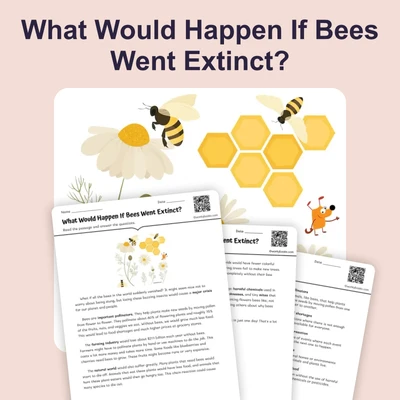
What Would Happen If Bees Went Extinct? - reading educational content
What Would Happen If Bees Went Extinct?
This passage examines the potential consequences of bee extinction, perfectly aligned with NGSS standard MS-LS2-4 on eco...
MS-LS2-4RI.6.3RI.7.3RI.8.8
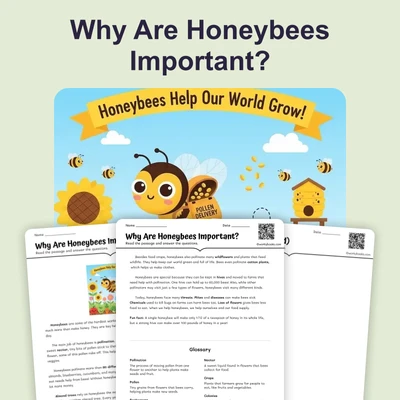
Why Are Honeybees Important? - reading educational content
Why Are Honeybees Important?
This passage explores the essential ecological and agricultural roles of honeybees, supporting NGSS standard MS-LS2-4 on...
MS-LS2-4RI.6.3RI.7.3RI.8.8
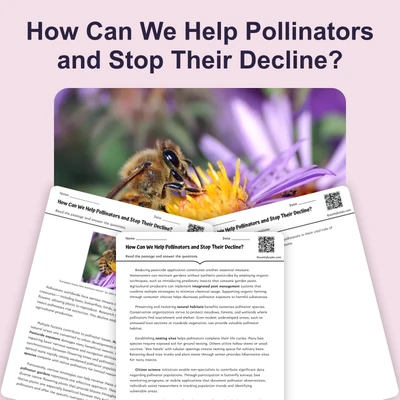
How Can We Help Pollinators and Stop Their Decline? - reading educational content
How Can We Help Pollinators and Stop Their Decline?
Pollinators including bees (Apis mellifera), butterflies (Lepidoptera), birds, and bats face severe threats with 40% of ...
MS-LS2-4RI.7.3RI.8.8RI.8.3
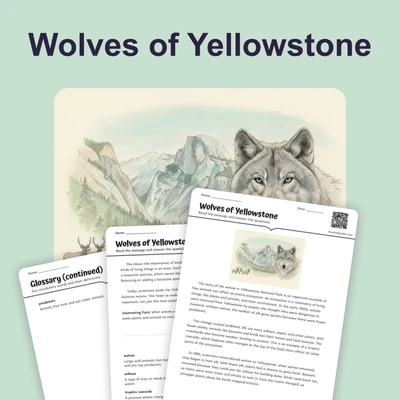
Wolves of Yellowstone - reading educational content
Wolves of Yellowstone
This passage explores the ecological concept of trophic cascades through the landmark case study of wolf reintroduction ...
MS-LS2-4RI.6.3RI.7.3RI.8.8
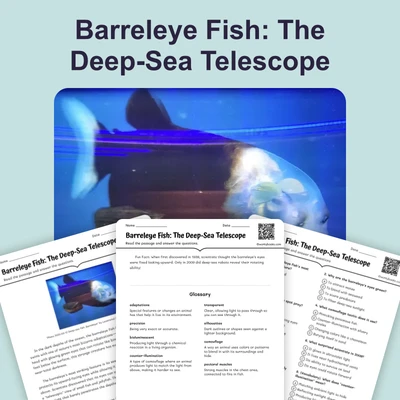
Barreleye Fish: The Deep-Sea Telescope - reading educational content
Barreleye Fish: The Deep-Sea Telescope
This science passage explores the barreleye fish's extraordinary adaptations aligned with NGSS standard MS-LS2-4 (Ecosys...
MS-LS2-4RI.6.3RI.7.3RI.8.8
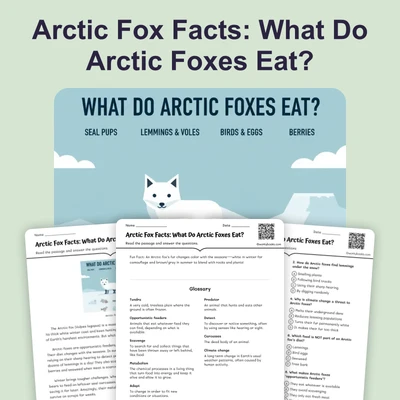
Arctic Fox Facts: What Do Arctic Foxes Eat? - reading educational content
Arctic Fox Facts: What Do Arctic Foxes Eat?
This passage explores the Arctic fox's dietary adaptations aligned with NGSS standard MS-LS2-4 (Ecosystem Interactions)....
MS-LS2-4RI.6.3RI.7.3RI.8.8
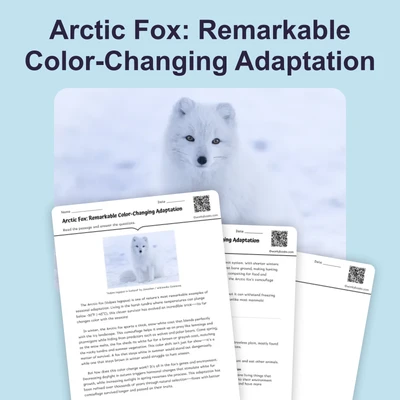
Arctic Fox: Remarkable Color-Changing Adaptation - reading educational content
Arctic Fox: Remarkable Color-Changing Adaptation
This NGSS-aligned passage (MS-LS4-4) examines the Arctic fox's remarkable seasonal color change from winter white to su...
MS-LS2-4RI.6.3RI.7.3RI.8.8
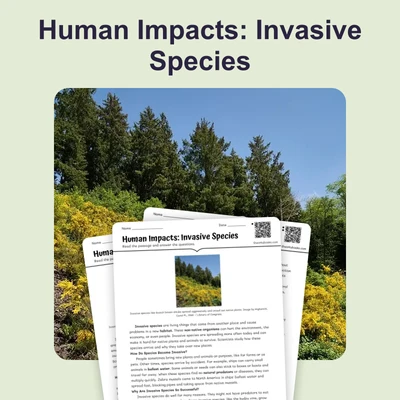
Human Impacts: Invasive Species - reading educational content
Human Impacts: Invasive Species
This passage explores the science behind invasive speciesβ€”non-native organisms that harm native ecosystems. Aligned to N...
MS-LS2-4MS-LS2-5
Human Impacts: Pollution - reading educational content
Human Impacts: Pollution
This middle school science reading passage, aligned with NGSS standards MS-LS2-4 and MS-ESS3-3, examines the mechanisms ...
MS-LS2-4MS-ESS3-3
Human Impacts: Climate Change - reading educational content
Human Impacts: Climate Change
This standards-aligned science reading passage for grades 6-8 explains the mechanisms and effects of human-driven climat...
MS-LS2-4MS-ESS3-5
Human Impacts: Habitat Destruction - reading educational content
Human Impacts: Habitat Destruction
This grade 6-8 science passage explores human impacts on ecosystems, focusing on habitat destruction as the leading caus...
MS-LS2-4MS-LS2-5MS-ESS3-3
Human Impacts: Overexploitation - reading educational content
Human Impacts: Overexploitation
This middle school science passage aligns with NGSS standards MS-LS2-4 and MS-LS2-5, focusing on human impacts through o...
MS-LS2-4MS-LS2-5
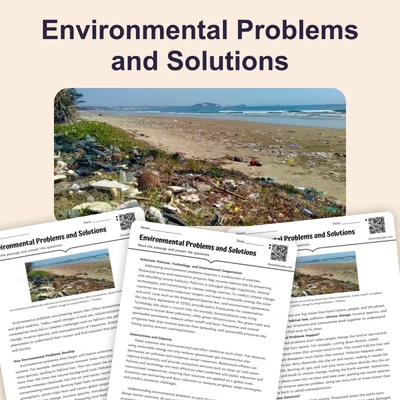
Environmental Problems and Solutions - reading educational content
Environmental Problems and Solutions
This passage for grades 6-8 introduces major environmental problems such as habitat loss, pollution, climate change, inv...
MS-LS2-4MS-ESS3-3MS-ESS3-4
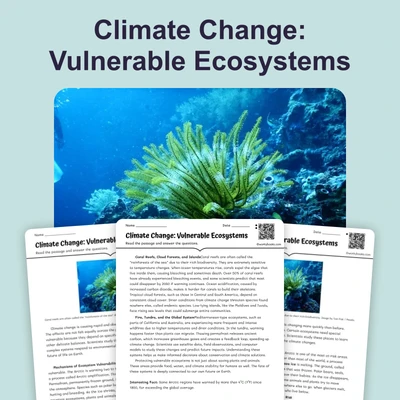
Climate Change: Vulnerable Ecosystems - reading educational content
Climate Change: Vulnerable Ecosystems
This middle school science passage, aligned with NGSS standards MS-ESS3-5 and MS-LS2-4, helps students understand how cl...
MS-ESS3-5MS-LS2-4
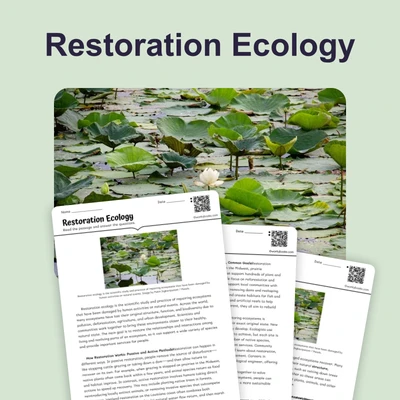
Restoration Ecology - reading educational content
Restoration Ecology
This passage introduces middle school students to the vital field of restoration ecology, aligning with NGSS standards M...
MS-LS2-4MS-ESS3-4
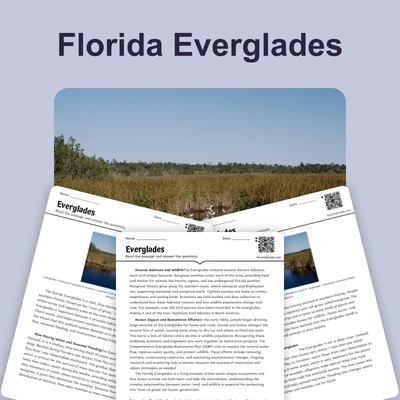
Florida Everglades - reading educational content
Florida Everglades
This comprehensive passage introduces middle school students to the Florida Everglades, a distinctive wetland ecosystem ...
MS-LS2-1MS-LS2-4MS-ESS3-3MS-ESS3-4
Great Barrier Reef - reading educational content
Great Barrier Reef
This passage introduces middle school students to the Great Barrier Reef, the world's largest coral reef system, located...
MS-LS2-1MS-LS2-4MS-ESS3-5
What Is a Tropical Savanna? - reading educational content
What Is a Tropical Savanna?
This NGSS-aligned science passage for grades 6-8 explores the rich animal diversity of the savanna ecosystem. Students w...
MS-LS2-1MS-LS2-2MS-LS2-4MS-LS1-4
Predators and Scavengers of Savanna - reading educational content
Predators and Scavengers of Savanna
This comprehensive science passage introduces middle school students to the vital roles of predators and scavengers in e...
MS-LS2-1MS-LS2-2MS-LS2-4
Copyright © 2026Β Workybooks. Made with β™₯ in California.