This learning resource is available in interactive and printable formats. The interactive worksheet can be played online and assigned to students. The Printable PDF version can be downloaded and printed for completion by hand.
This NGSS-aligned reading passage explains what causes the wind to blow. Students will learn how differences in air temperature and pressure lead to moving air, or wind, and how Earth's rotation causes the Coriolis effect, which curves wind patterns. The passage explores key science concepts like warm air rising, low and high pressure systems, and the role of wind in Earth's weather and ecosystems. It supports NGSS standard MS-ESS2-6 and strengthens science reading comprehension with real-world atmospheric examples.
CONTENT PREVIEW
Expand content preview
Wind is moving air, and it plays a big role in shaping our weather and climate. But what makes the wind blow? The answer has to do with the sun, air pressure, and the way Earth heats up.
When sunlight shines on Earth, it doesn’t warm all areas equally. Land, water, and air heat up at different rates. This causes some places to become warmer than others. Warm air is lighter than cold air, so it rises. As it rises, it creates a space below with lower air pressure.
Cooler air from nearby areas, which is heavier, moves in to fill that space. This movement of air from high pressure to low pressure is what we feel as wind. The bigger the difference in air pressure, the stronger the wind.
Wind direction and speed can also be affected by the rotation of the Earth, a force known as the Coriolis effect. This causes winds to curve instead of moving in a straight line. Mountains, oceans, and forests can also change how wind moves across the land.
Wind helps move clouds, spread seeds and pollen, and even power wind turbines that create electricity. It is an important part of Earth’s atmosphere system and helps keep temperatures balanced around the globe.
Fun Fact: The fastest wind speed ever recorded on Earth was 253 miles per hour during a tornado in Oklahoma in 1999!
What is wind?
Cold clouds in the skyMoving water in the oceanMoving air caused by pressure differencesA kind of earthquake
What causes warm air to rise?
It is heavier than cold airIt is pushed by cloudsIt is lighter than cold airIt moves faster than water
What creates a low-pressure area?
Cold air moving upwardWarm air rising and leaving space belowRain falling from cloudsThe moon pulling on air
What moves in to fill the low-pressure space?
WaterCloudsHeavy, cooler airSunlight
What is the Coriolis effect?
A change in temperatureWind moving in a straight lineThe way Earth's rotation causes wind to curveThe shape of a cloud
Which surface heats up faster—land or water?
WaterIceLandSky
What is the main idea of the passage?
Wind is caused by plants and treesWind is caused by moving air from pressure and temperature changesWind only happens near the oceanWind makes clouds disappear
What role does wind play in nature?
It keeps birds groundedIt slows down weatherIt moves clouds and spreads seedsIt only blows in winter
Perfect For:
👩🏫 Teachers
• Reading comprehension practice
• Auto-graded assessments
• Literacy skill development
👨👩👧👦 Parents
• Reading practice at home
• Comprehension improvement
• Educational reading time
🏠 Homeschoolers
• Reading curriculum support
• Independent reading practice
• Progress monitoring
Reading Features:
📖
Reading Passage
Engaging fiction or nonfiction text
❓
Comprehension Quiz
Auto-graded questions
📊
Instant Feedback
Immediate results and scoring
📄
Printable Version
Download for offline reading
🔊
Read Aloud
Voice-over with word highlighting
Reviews & Ratings
No reviews yet. Be the first to share your experience!
Related Content
Comparing Weather and Climate Texts
This reading comprehension worksheet has 5th graders read two informational texts about Weather and Climate. Students th...
RI.5.9
Climate and weather activity
This worksheet is perfect for understanding the differences between climate and weather. Students will read the phrases ...
What Is Space Weather and How Does It Affect the Earth?
This NGSS-aligned science passage for middle school explains what space weather is and how it affects Earth. Students le...
MS-ESS2-2
Climate and Weather — Distinguishing Characterstics
This worksheet highlights the differences between climate and weather. The chart format makes comparing and contrasting ...
What's The Main Idea?
These short science texts are a great way to practice main idea. Students will read the paragraphs and then choose the m...
RI.2.6
Reading for Main Details—Birds
This informational text on birds is a great way to practice main idea. Students will read the passage, then give the mai...
RI.2.6RI.2.8
Koi Fish—What’s the Main Idea?
This informational text on koi fish is a great introduction to teaching main idea. Students will be asked, in multiple c...
RI.3.2RF.3.4RI.3.1
Spider—Main Idea
This informational text on spiders is a great introduction to teaching main idea. Students will be asked, in multiple ch...
RI.3.2RF.3.4RI.3.1RI.2.6
Reading for Main Details—Beavers Teeth
This informational text on beavers is a great way to practice main idea. Students will read the passage, then give the m...
RI.2.6RI.2.10
Reading for Main Details—Veternarians
Practie summarizing paragraphs with this fun informational text on veternarians! Students will give the main idea of eac...
RI.2.2RI.2.10
Main Idea and Supporting Details in Informational Text
RI.3.1RI.3.2RI.3.8
Tools and Technology in Earth Science
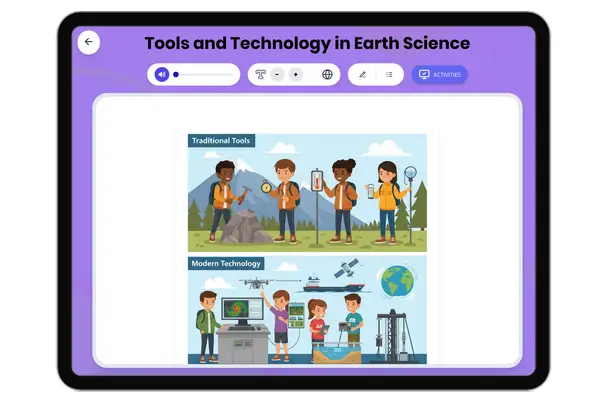
This middle school science reading passage explores the wide range of tools and technologies used in Earth science, from...
MS-ESS2-2MS-ESS3-2MS-ETS1-1MS-PS4-3
What Is Earth Science?
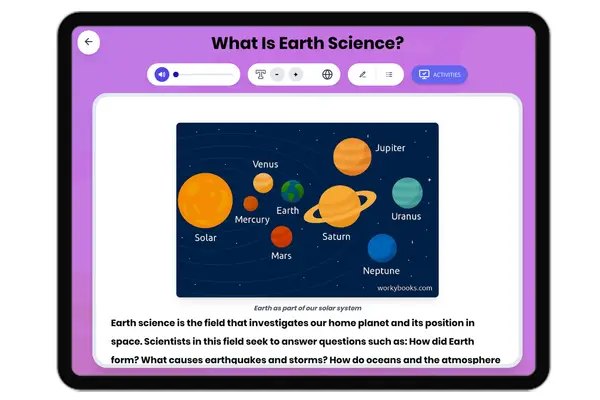
This engaging middle school science passage introduces students to the field of Earth science, aligning with NGSS standa...
MS-ESS1MS-ESS2MS-ESS3SEP
Polar Bears and Climate
This informational text on polar bears is a great way to practice reading comprehension. Students will read the passage ...
RI.4.1W.4.72-LS4-1RF.4.4
Main Idea and Details Graphic Organizer
This graphic organizer on main idea includes space to write the main idea and three supporting details.
RI.1.2RI.2.2RI.3.2RI.4.2
Main Idea and Suporting Details Graphic Organizer
This graphic organizer on main idea includes space to write the main idea and three supporting details.
RI.1.2RI.2.2RI.3.2RI.4.2
Bats and Butterflies—Informational Text
This informational text on bats and butterflies is a great way to practice spotting similarities between texts. Students...
RI.K.3
Penguins— Main Purpose
This informational text on penguins with comprehension questions is a great way to practice reading fluency and main ide...
RI.1.2RI.1.10RF.1.4.ARF.1.4.B
Informational Text — Astronauts
Practice this second grade context clues worksheet with this informational text on astronauts. Students will read the te...