California Rancho Culture
Interactive passage with audio narration, comprehension questions, and printable PDF.
By completing this purchase you agree to our Terms of Use and Privacy Policy. Your subscription renews automatically until you cancel. You can cancel anytime from your account settings. All sales are final and non-refundable. Digital content is available for download in your account immediately upon purchase.
What's included
California Rancho Culture preview and details
About this printable California Rancho Culture reading passage (Grades 3-5)
Sample passage and quiz from California Rancho Culture
Reading passage and comprehension quiz preview
California Rancho Culture
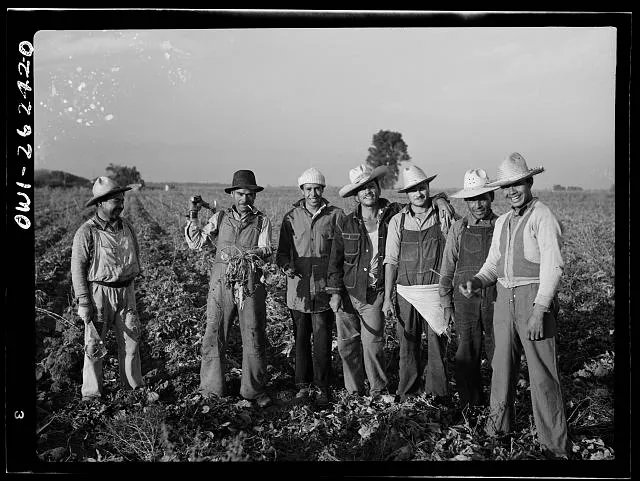
"Stockton (vicinity), California. Mexican agricultural laborer topping sugar beets" by Collins, Marjory, 1912-1985 / Library of Congress.
California rancho culture grew in the early 1800s when Mexico owned the area. The Mexican government gave out large land grants to people called rancheros. These grants were pieces of land, sometimes as big as a small city. Each rancho had hundreds or even thousands of cattle and horses. The ranchos became the center of life in California.
The rancheros were the owners of these big ranches. They built large houses and managed the workers. The ranchos were far apart, so each was like a small town. Families, workers, and visitors all gathered at the rancho for work and celebrations. The houses often had thick adobe walls to keep them cool in the hot sun.
The work on the ranchos was done by people known as vaqueros. Vaqueros were skilled cowboys. They were experts at riding horses and herding cattle. Vaqueros used lassos, wide-brimmed hats, and boots. Their traditions and skills became the model for American cowboys later on.
Rancho life was busy. People raised cattle for their meat and hides. The hides, called "California banknotes," were traded for goods like cloth, tools, and tea. Ranchos helped California grow by bringing in trade and new people. They also influenced the land. Many California cities and towns today have names that come from old ranchos, such as Los Angeles, San Diego, and Santa Barbara.
As time passed, the United States took control of California. The rancho system slowly faded, but its impact lasted. Vaquero traditions became part of cowboy culture. The names and stories of ranchos are still seen across California today.
Interesting Fact: The word "rodeo" comes from the Spanish word for "round up," showing how vaquero language shaped the American West.
Comprehension quiz (8 questions)
1. Who owned the ranchos?
2. What did vaqueros do?
3. What were cattle hides called?
4. Why did the Mexican government give land grants?
5. How did ranchos help California?
6. What happened when the United States took control?
7. The word 'rodeo' comes from Spanish. True or false?
8. What does 'adobe' mean?
Perfect for the way you teach
- Build comprehension skills
- Auto-graded quiz
- Differentiated reading
- Read together at home
- Improve fluency
- Quiet reading time
- Reading curriculum support
- Independent practice
- Track Lexile growth