This learning resource is available in interactive and printable formats. The interactive worksheet can be played online and assigned to students. The Printable PDF version can be downloaded and printed for completion by hand.
This engaging reading passage introduces students to the important changes and reforms of the Progressive Era in U.S. history, focusing on the fight for fair work and safer jobs between 1879 and 1920. Students will learn about key figures like Lewis Hine and Mary Harris Jones, the role of labor unions, and the impact of new laws to protect workers and children. Using simple language and a clear narrative, the passage builds literacy skills while teaching history. The resource includes a glossary, timeline, multiple choice quiz, writing activities, and a graphic organizer to deepen understanding. Spanish translation and read aloud audio are included for accessibility. This lesson aligns with C3 Framework D2.His.5.3-5, D2.His.16.3-5, and ELA standards RI.4.3, RI.4.4, W.4.2, making it perfect for classroom or independent learning.
CONTENT PREVIEW
Expand content preview
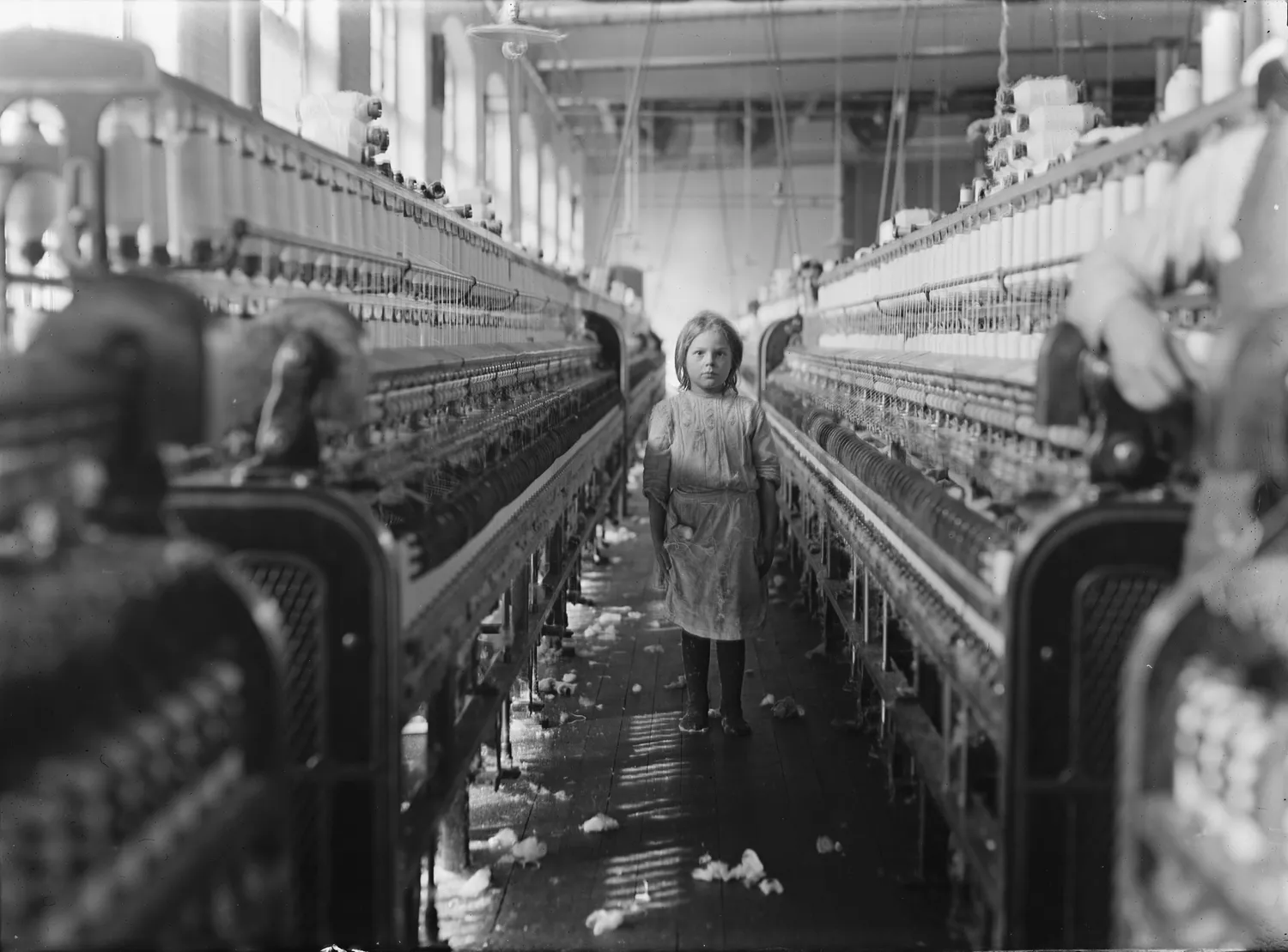
"Child laborer" by Lewis W. Hine for the National Child Labor Committee. Source: Wikimedia Commons (Public domain).
California labor reform began in the early 1900s, during a time called the Progressive Era. Many workers in California, including men, women, and children, worked long hours in unsafe factories, farms, and mines. Jobs were often dangerous, and there were few rules to keep people safe. Children as young as eight or nine worked instead of going to school. This was unfair and unsafe for everyone.
Workers started to speak out for better treatment. They formed unions to join together and ask for changes. Unions gave workers a strong voice. They held meetings, marches, and strikes to show how important their needs were. Famous leaders like Dolores Huerta and Cesar Chavez helped farm workers organize for fair pay and safe workplaces. In factories, labor groups demanded shorter workdays and better conditions.
The government began to listen. In 1911, California passed new labor laws. These laws limited the number of hours children and adults could work. They made it illegal for very young children to work in dangerous places. The state also created rules for workplace safety. Owners had to provide clean, safe spaces, and workers had the right to rest breaks. In 1913, the California Industrial Welfare Commission was formed to protect workers’ rights even more.
These reforms made a big difference. Children were able to go to school instead of working all day. Adults worked fewer hours, so they had more time for their families. Workplaces became safer, and fewer people got hurt on the job. Over time, these ideas spread across the United States. Labor reform helped shape the kind of rights and protections we expect at work today.
California labor reform shows how people working together can change unfair systems. The bravery of workers and leaders during the Progressive Era helped build a better future for everyone.
Interesting Fact: California’s early child labor laws inspired other states to create similar protections for young workers.
When did California labor reform begin?
Early 1900s1800s1960s2000s
Who helped farm workers organize?
Dolores HuertaAbraham LincolnMartin Luther King Jr.George Washington
What did labor laws limit?
Work hoursFood pricesSchool timeVoting age
Why did workers form unions?
To get better treatmentTo open new schoolsTo build more factoriesTo make new laws
What was the result of labor reforms?
Safer workplacesLonger work hoursMore child laborFewer unions
What is a strike?
Stopping work for better conditionsBuilding new factoriesVoting for a leaderGoing to school
California’s labor reforms inspired other states. (True or False)
TrueFalse
What is a union?
Group of workersGroup of teachersLaw for childrenFactory machine
Perfect For:
👩🏫 Teachers
• Reading comprehension practice
• Auto-graded assessments
• Literacy skill development
👨👩👧👦 Parents
• Reading practice at home
• Comprehension improvement
• Educational reading time
🏠 Homeschoolers
• Reading curriculum support
• Independent reading practice
• Progress monitoring
Reading Features:
📖
Reading Passage
Engaging fiction or nonfiction text
❓
Comprehension Quiz
Auto-graded questions
📊
Instant Feedback
Immediate results and scoring
📄
Printable Version
Download for offline reading
🔊
Read Aloud
Voice-over with word highlighting
Reviews & Ratings
No reviews yet. Be the first to share your experience!
Related Content
Informational Text —Healthy Teeth and Gums
RI.4.10RI.4.3RF.4.4RF.4.4.A
Informational Text —Migratory Birds
Engage young minds with this worksheet that delves into the wonders of migratory birds. Learn about their extraordinary ...
RI.4.10RI.4.3RF.4.4RF.4.4.A
Natural Disasters and Urban flooding
This reading comprehension worksheet focuses on the topic of natural disasters, specifically urban flooding. Following t...
RI.4.44-ESS3ESS3.B4-ESS3-1
The Formation of Fossils
L.4.2.DL.4.6RI.4.4
Climate and Water Cycle
W.4.2.ARI.4.4RI.4.1
Ocean Acidification
Download this reading comprehension worksheet about ocean acidification. The worksheet includes an informational text ab...
RI.4.4
Understanding Climate Action Context Clues
Understanding Climate Action" worksheet, aligned with CCS L.4.4.A and NGSS. This resource introduces key concepts such a...
L.4.4.ARI.4.1RI.4.4
Informational Text —The History of Toothpaste
RI.4.4RI.4.4
Informational Text —All About Dentists
Students read an informational text explaining what dentists do and how they are trained. Aligned to RI.4.3-2
RI.4.10RI.4.3RF.4.4RF.4.4.A
The Role of Pollinators in Nature
Learn about the fascinating world of pollinators and discover their crucial role in the reproductive process of flowerin...
RI.4.2RI.4.3RI.4.4RI.5.1
Pollination: A Crucial Ecosystem Service
Explore the vital role of pollination beyond plant reproduction, as it sustains ecosystems by ensuring food security, pr...
RI.4.2RI.4.3RI.4.4RI.5.1
Seed Dispersal: How Plants Travel
Plants may seem stationary, but their seeds have amazing ways to travel! Explore the fascinating world of seed dispersal...
RI.4.2RI.4.3RI.4.4RI.5.1
The States of Matter: Solid
Discover the differences between solids, liquids and gases by exploring how their particles are arranged and move. This ...
RI.4.2RI.4.3RI.4.4RI.5.1
What is a Simple Machine
Discover the power of simple machines! This informational text explores how basic tools like levers, pulleys and incline...
RI.4.2RI.4.3RI.4.4RI.5.1
The Life Cycle of a Salmon
Salmon have a remarkable life cycle that takes them from rivers to the ocean and back again. They hatch as alevin, grow ...
RI.3.1RI.4.4RI.4.2
Journey of a Sea Turtle
Sea turtles lay their eggs on beaches, and their hatchlings begin a dangerous journey to the ocean. After growing in the...
RI.3.1RI.4.4RI.4.2
Heroes for Freedom: Harriet Tubman
Harriet Tubman, born into slavery, became a hero who risked her life to lead others to freedom through the Underground R...
RI.3.1RI.4.4RI.4.2RI.5.2
Heroes for Freedom: Fannie Lou Hamer
Fannie Lou Hamer overcame racial segregation and poverty to become a powerful voice for civil rights. Her fight for voti...
RI.3.1RI.4.4RI.4.2RI.5.2
Sports: Lionel Messi
Lionel Messi, known for his unparalleled dribbling and passing, has broken records, won multiple FIFA Ballon d'Or awards...
RI.3.1RI.4.4RI.4.2RI.5.2
Natural Disaster: Droughts
Droughts are long periods with insufficient water, leading to crop failures and water shortages. Conserving water and pl...