This learning resource is available in interactive and printable formats. The interactive worksheet can be played online and assigned to students. The Printable PDF version can be downloaded and printed for completion by hand.
This 250-word informational reading passage introduces Grade 4-5 students to the fundamental concepts of electric circuits. Aligned with NGSS standard 4-PS3-2, the passage explains how electric circuits are complete paths that allow electric current to flow from an energy source through devices and back. Students learn about the essential components of a circuit: a power source like a battery, wires that carry electricity, and a load such as a light bulb. The passage uses the familiar example of a flashlight to demonstrate how circuits need an unbroken loop to function properly. Through clear explanations and concrete examples, students discover why switches are important for controlling the flow of electricity and what happens when a circuit is broken. The content includes audio integration for enhanced accessibility and engagement. Key vocabulary terms like circuit, current, power source, load, and switch are defined naturally within the text. The passage connects abstract electrical concepts to everyday experiences, helping students understand the science behind devices they use daily. Supplementary activities include multiple-choice questions, writing prompts, and graphic organizers that reinforce comprehension and application of circuit concepts.
CONTENT PREVIEW
Expand content preview
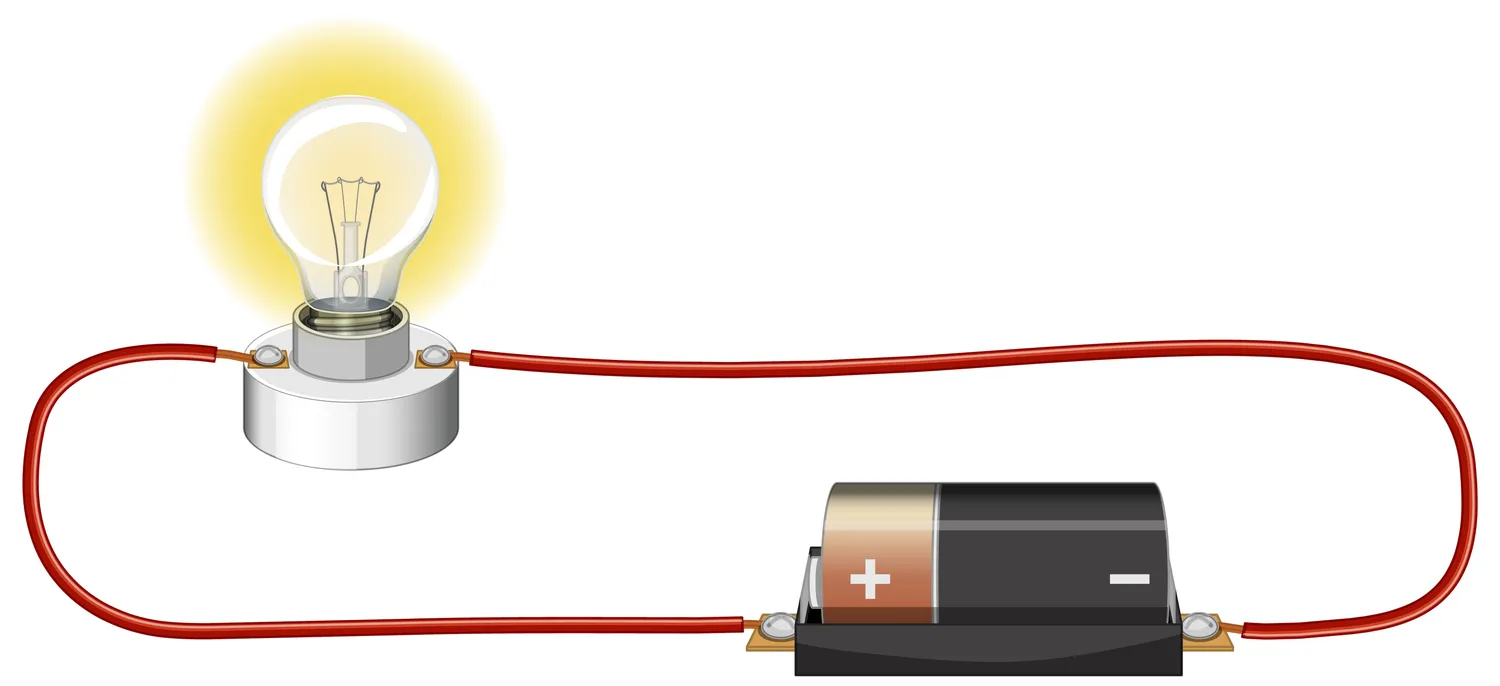
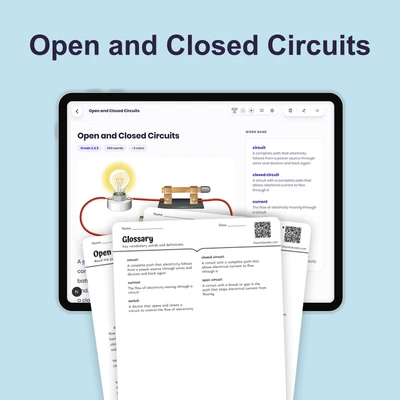
All parts are connected in an unbroken loop, you have a closed circuit, and electricity flows continuously. Image Credit Freepik.
An electric circuit is a complete path that allows electricity to flow from a power source through devices and back again. Without a complete circuit, electricity cannot flow, and electrical devices will not work. Understanding circuits helps us use electricity safely and explains how many everyday objects function.
Every circuit needs three main parts to work properly. First, it needs a power source, like a battery, which provides the energy to push electricity through the circuit. Second, it needs wires to carry the electric current, which is the flow of electricity moving through the path. Third, it needs a load, which is a device that uses the electricity, such as a light bulb, buzzer, or motor. Think of a circuit like a race track where electricity is the runner—the runner needs a complete loop to keep moving around and around.
A flashlight is a perfect example of how circuits work in real life. Inside a flashlight, the batteries serve as the power source. Metal strips and wires create the path for electricity to flow. The light bulb acts as the load, using the electrical energy to produce light. When you press the switch, you complete the circuit by closing a gap in the path, allowing electricity to flow from the battery, through the bulb, and back to the battery.
If any part of the circuit is broken or disconnected, the electricity stops flowing. This is called an open circuit. When you turn off a flashlight, the switch opens the circuit by creating a gap. No electricity can jump across that gap, so the bulb goes dark. When all parts are connected in an unbroken loop, you have a closed circuit, and electricity flows continuously.
Circuits can be found in almost every electrical device we use. Televisions, computers, toys, and even cars all contain circuits that control how electricity flows to different parts. The wires must form a complete loop, or the device will not function. Engineers design circuits carefully to make sure electricity flows exactly where it needs to go.
Understanding electric circuits helps us appreciate how electricity powers our modern world. Circuits are complete paths that need a power source, wires, and a load connected in an unbroken loop. Whether in a simple flashlight or a complex computer, the same basic principle applies: electricity must have a complete path to flow and do useful work.
What is an electric circuit?
A complete path for electricityA type of batteryA kind of light bulbA broken wire
What provides energy in a circuit?
The wiresThe power sourceThe switchThe light bulb
What is a load in a circuit?
The batteryThe wiresA device that uses electricityThe switch
What happens when you press a flashlight switch?
The battery diesThe wires breakYou complete the circuitThe bulb explodes
Why does a bulb go dark?
The circuit is openThe circuit is closedThere are too many wiresThe battery is too strong
What do all electrical devices need?
Multiple batteriesA complete circuit loopVery long wiresMany light bulbs
A closed circuit allows electricity to flow.
TrueFalse
What is electric current?
A type of batteryThe flow of electricityA broken circuitA kind of switch
Perfect For:
👩🏫 Teachers
• Reading comprehension practice
• Auto-graded assessments
• Literacy skill development
👨👩👧👦 Parents
• Reading practice at home
• Comprehension improvement
• Educational reading time
🏠 Homeschoolers
• Reading curriculum support
• Independent reading practice
• Progress monitoring
Reading Features:
📖
Reading Passage
Engaging fiction or nonfiction text
❓
Comprehension Quiz
Auto-graded questions
📊
Instant Feedback
Immediate results and scoring
📄
Printable Version
Download for offline reading
🔊
Read Aloud
Voice-over with word highlighting
Reviews & Ratings
No reviews yet. Be the first to share your experience!
Related Content
Parts of a Circuit
This engaging 250-word passage introduces Grade 4-5 students to the essential components of electric circuits aligned wi...
NGSS 4-PS3-2
What Is Energy Transfer
This engaging reading passage introduces elementary students to the concept of energy transfer, aligned with NGSS standa...
NGSS 4-PS3-2
What Is Electric Current?
This 250-word informational science passage introduces elementary students to the concept of electric current and how it...
NGSS 4-PS3-2
Open and Closed Circuits
This engaging 250-word reading passage teaches Grade 4-5 students about open and closed circuits, aligned with NGSS 4-PS...