Open and Closed Circuits
Interactive passage with audio narration, comprehension questions, and printable PDF.
By completing this purchase you agree to our Terms of Use and Privacy Policy. Your subscription renews automatically until you cancel. You can cancel anytime from your account settings. All sales are final and non-refundable. Digital content is available for download in your account immediately upon purchase.
What's included
Open and Closed Circuits preview and details
About this printable Open and Closed Circuits science reading passage, NGSS-aligned (Grades 3-5)
Sample passage and quiz from Open and Closed Circuits
Reading passage and comprehension quiz preview
Open and Closed Circuits
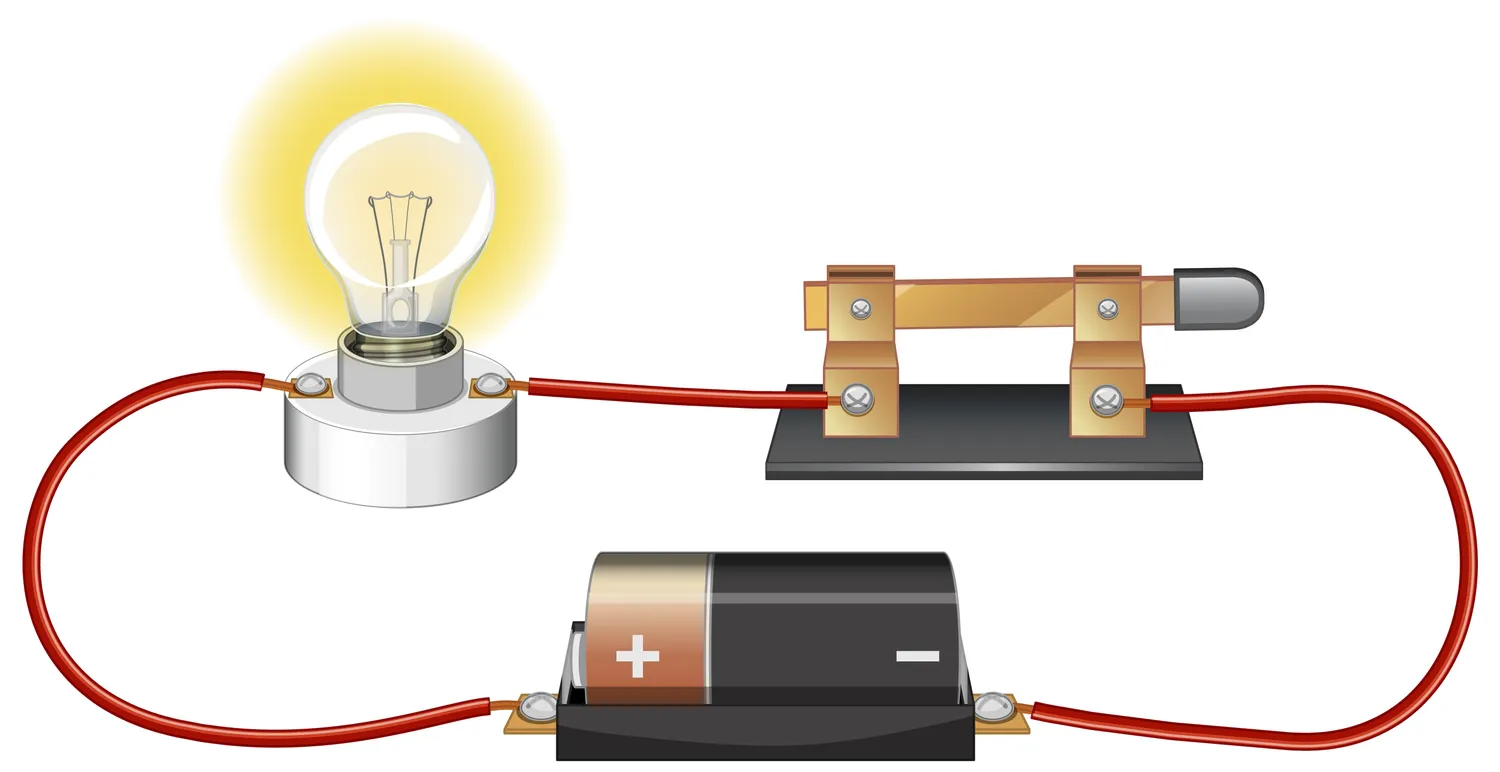
A circuit is a path that electricity follows. Electricity needs a complete path to flow from one end of a power source, like a battery, through wires and devices, and back to the other end. When the path is complete, we call it a closed circuit. In a closed circuit, current—the flow of electricity—can move through the path and make devices work.
Understanding circuits matters because almost everything that uses electricity needs a complete path to work. Your lamp, tablet, and classroom lights all depend on closed circuits to function.
When there is a break or gap anywhere in the path, we call it an open circuit. In an open circuit, current cannot flow because the path is not complete. Think of it like a road with a missing bridge—cars cannot get across. Without a complete path, devices cannot get the electricity they need, so they stop working.
A switch is a device that opens and closes a circuit. When you flip a light switch up, it closes the circuit by connecting the path. Current flows through the wires to the light bulb, and the bulb lights up. When you flip the switch down, it opens the circuit by creating a gap in the path. Current stops flowing, and the light bulb turns off.
Every time you use a switch, you control whether a circuit is open or closed. This simple action controls the flow of electrical energy in your home and school.
Comprehension quiz (8 questions)
1. What is a circuit?
2. What is current in a circuit?
3. What happens in an open circuit?
4. Why does a light turn on?
5. What does a switch do?
6. Which is like an open circuit?
7. A closed circuit has a complete path.
8. Which word means flow of electricity?
Perfect for the way you teach
- Build comprehension skills
- Auto-graded quiz
- Differentiated reading
- Read together at home
- Improve fluency
- Quiet reading time
- Reading curriculum support
- Independent practice
- Track Lexile growth