This learning resource is available in interactive and printable formats. The interactive worksheet can be played online and assigned to students. The Printable PDF version can be downloaded and printed for completion by hand.
This 250-word informational science passage introduces elementary students to the concept of electric current and how it powers everyday devices. Aligned with NGSS 4-PS3-2, the passage explains that electric current is the flow of tiny charged particles called electrons moving through materials like wires. Students learn how electric current carries energy from one place to another and can power devices that use electrical energy. The passage connects abstract concepts to familiar experiences by discussing electricity flowing through wires in homes to power lights, televisions, and computers. Audio-integrated features support diverse learners. The passage includes bold key vocabulary terms defined in context, concrete analogies comparing electron flow to water flowing through pipes, and age-appropriate explanations of cause-and-effect relationships. Supplementary activities include a multiple-choice quiz testing recall and comprehension, writing prompts requiring students to explain concepts and make real-world connections, and graphic organizers helping students visualize the flow of electrical energy. A simplified differentiated version ensures accessibility for all learners, while Spanish translations support English language learners. This comprehensive resource helps students understand fundamental concepts about electrical energy transfer and prepares them for deeper exploration of energy and circuits.
CONTENT PREVIEW
Expand content preview
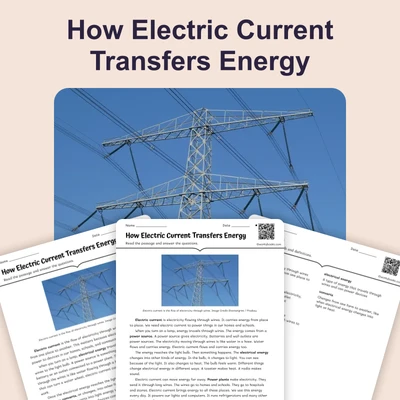
Circuit that allows electrons to flow from the power source through wires to the light bulb. Image Credit Freepik.
Electric current is the flow of tiny charged particles called electrons moving through materials like wires. These electrons are so small that millions of them could fit on the head of a pin, yet their movement creates the electricity that powers countless devices we use every day. Understanding electric current helps us know how energy travels from power sources to the things we need.
Electrons flow through certain materials called conductors, which are materials that allow electricity to move through them easily. Metals like copper and aluminum are excellent conductors, which is why most electrical wires are made from these materials. When electrons move through a conductor, they carry electrical energy with them, similar to how water flowing through a pipe carries energy that can turn a water wheel. The path that electrons follow is called a circuit, and electricity can only flow when the circuit forms a complete loop.
Electric current carries energy from one place to another, making it incredibly useful. When you flip a light switch, you complete a circuit that allows electrons to flow from the power source through wires to the light bulb. The electrical energy carried by these moving electrons is then converted into light and heat energy in the bulb. Without the flow of electric current, the bulb would remain dark.
In your home, electric current flows through wires hidden inside walls and ceilings. This flowing electricity delivers energy to power lights, televisions, computers, refrigerators, and many other devices. Each device is designed to use the electrical energy in different ways—a television converts it to light and sound, while a toaster converts it to heat.
The amount of electric current flowing through a wire depends on how many electrons are moving past a certain point each second. More electrons flowing means more electrical energy is being delivered. This is why some devices, like air conditioners, need thicker wires than small devices like phone chargers—they require more current to operate.
Electric current is essential to modern life because it provides a safe and efficient way to transport energy wherever we need it. By understanding that electric current is simply electrons flowing through conductors and carrying energy, we can better appreciate how electricity powers our world and makes so many everyday tasks possible.
What are electrons?
Tiny charged particles that create electricityLarge wires in your homeLight bulbs that produce energySwitches that control circuits
What are conductors?
Devices that use electrical energyMaterials that block electricity completelyMaterials that let electricity move easilySwitches that turn lights on
Why are most wires made of copper?
Copper is the cheapest metal availableCopper is an excellent conductorCopper makes electricity flow backwardCopper stops electrons from moving
What happens when you flip a light switch?
Electrons stop flowing through the circuitThe circuit breaks into piecesYou complete a circuit for electronsEnergy disappears from the wire
Why do air conditioners need thicker wires?
They require more current to operateThey are located far from outletsThey use less electrical energyThey work better with thin wires
How does a television use electrical energy?
It converts energy into heat onlyIt stores energy in batteriesIt converts energy to light and soundIt sends energy back to wires
Electric current can only flow through a complete circuit.
TrueFalse
What does circuit mean in this passage?
A type of electrical wireThe path electrons followA device that uses electricityA switch on the wall
Perfect For:
👩🏫 Teachers
• Reading comprehension practice
• Auto-graded assessments
• Literacy skill development
👨👩👧👦 Parents
• Reading practice at home
• Comprehension improvement
• Educational reading time
🏠 Homeschoolers
• Reading curriculum support
• Independent reading practice
• Progress monitoring
Reading Features:
📖
Reading Passage
Engaging fiction or nonfiction text
❓
Comprehension Quiz
Auto-graded questions
📊
Instant Feedback
Immediate results and scoring
📄
Printable Version
Download for offline reading
🔊
Read Aloud
Voice-over with word highlighting
Reviews & Ratings
No reviews yet. Be the first to share your experience!
Related Content
Parts of a Circuit
This engaging 250-word passage introduces Grade 4-5 students to the essential components of electric circuits aligned wi...
NGSS 4-PS3-2
What Is Energy Transfer
This engaging reading passage introduces elementary students to the concept of energy transfer, aligned with NGSS standa...
NGSS 4-PS3-2
How Circuits Work
This 250-word informational reading passage introduces Grade 4-5 students to the fundamental concepts of electric circui...
NGSS 4-PS3-2
Open and Closed Circuits
This engaging 250-word reading passage teaches Grade 4-5 students about open and closed circuits, aligned with NGSS 4-PS...