This learning resource is available in interactive and printable formats. The interactive worksheet can be played online and assigned to students. The Printable PDF version can be downloaded and printed for completion by hand.
This engaging 250-word passage introduces Grade 4-5 students to the essential components of electric circuits aligned with NGSS 4-PS3-2 standards. Students explore how circuits require three main parts: a power source like a battery, wires to carry electric current, and devices that use energy such as light bulbs. The passage explains how all parts must be connected in a complete loop for current to flow properly. Through concrete examples of building simple circuits with batteries, wires, and light bulbs, students understand cause-and-effect relationships in electrical systems. The content uses age-appropriate language and familiar analogies to make abstract concepts tangible. Audio integration supports diverse learners by providing multiple ways to access the material. Activities include comprehension questions, writing prompts about circuit connections, and graphic organizers for identifying circuit components and their functions. This resource helps students develop foundational understanding of energy transfer and electrical systems through hands-on circuit building examples.
CONTENT PREVIEW
Expand content preview
Every circuit needs three essential parts to work properly.
A circuit is a complete path that allows electricity to flow from one place to another. Circuits are important because they power many things we use every day, from flashlights to computers. Without circuits, we wouldn't have electric lights, televisions, or most of the technology we depend on.
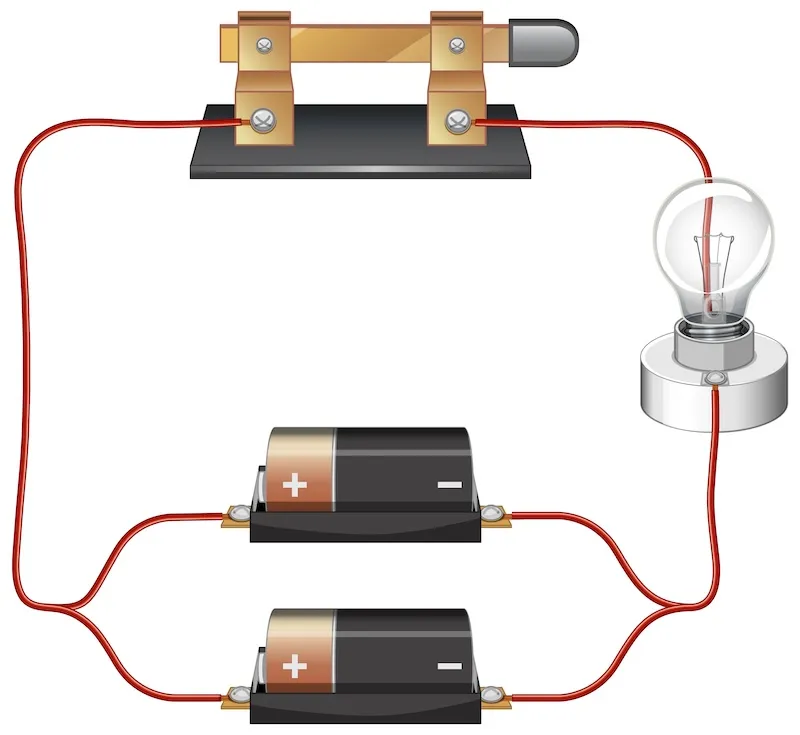
Every circuit needs three essential parts to work properly. The first part is a power source, which provides the energy to make electricity flow. A battery is a common power source that stores chemical energy and changes it into electrical energy. Think of a battery like a water pump that pushes water through pipes—it pushes electricity through the circuit.
The second essential part is wires, which are usually made of metal like copper. Wires carry the electric current, which is the flow of electricity moving through the circuit. The current travels from one end of the battery, through the wires, and back to the other end of the battery. Wires must be connected to both ends of the battery to create a complete loop.
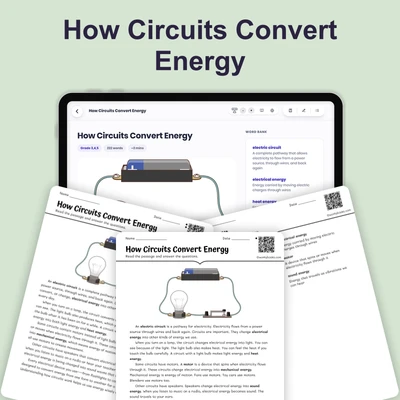
The third part is a device that uses the electrical energy, such as a light bulb, buzzer, or motor. When you connect a light bulb to a battery using wires in a complete loop, the current flows through the bulb's thin wire called a filament. The filament gets so hot from the electricity that it glows and produces light.
All three parts must be connected properly for the circuit to work. If there is a break anywhere in the loop—like a disconnected wire or a dead battery—the current cannot flow and the device won't work. This is why when you build a simple circuit, the light bulb only lights up when everything is connected in a complete path.
Understanding circuit parts helps us use electricity safely and build devices that make our lives easier. Whether it's a simple flashlight or a complex computer, all circuits follow the same basic rules: they need a power source, wires to carry current, and devices that use energy, all connected in a complete loop.
What are the three essential circuit parts?
Battery, wires, and deviceSwitch, plug, and outletMotor, fan, and lightCopper, plastic, and rubber
What does a battery do in a circuit?
It carries the currentIt provides energy for electricityIt makes lightIt connects the wires
What material are wires usually made from?
PlasticWoodCopper metalGlass
Why does a light bulb glow?
Battery heats it directlyWires produce the lightFilament gets hot from electricityAir inside bulb glows
What happens if a wire disconnects?
Current flows fasterCircuit breaks and stops workingBattery gets strongerLight gets brighter
How must circuit parts be connected?
In any random orderOnly to the batteryIn a complete loopJust touching each other
A circuit needs all parts connected properly.
TrueFalse
What is 'current' in a circuit?
The battery's powerThe flow of electricityThe wire materialThe light from bulb
Perfect For:
👩🏫 Teachers
• Reading comprehension practice
• Auto-graded assessments
• Literacy skill development
👨👩👧👦 Parents
• Reading practice at home
• Comprehension improvement
• Educational reading time
🏠 Homeschoolers
• Reading curriculum support
• Independent reading practice
• Progress monitoring
Reading Features:
📖
Reading Passage
Engaging fiction or nonfiction text
❓
Comprehension Quiz
Auto-graded questions
📊
Instant Feedback
Immediate results and scoring
📄
Printable Version
Download for offline reading
🔊
Read Aloud
Voice-over with word highlighting
Reviews & Ratings
No reviews yet. Be the first to share your experience!
Related Content
What Is Energy Transfer
This engaging reading passage introduces elementary students to the concept of energy transfer, aligned with NGSS standa...
NGSS 4-PS3-2
What Is Electric Current?
This 250-word informational science passage introduces elementary students to the concept of electric current and how it...
NGSS 4-PS3-2
How Circuits Work
This 250-word informational reading passage introduces Grade 4-5 students to the fundamental concepts of electric circui...
NGSS 4-PS3-2
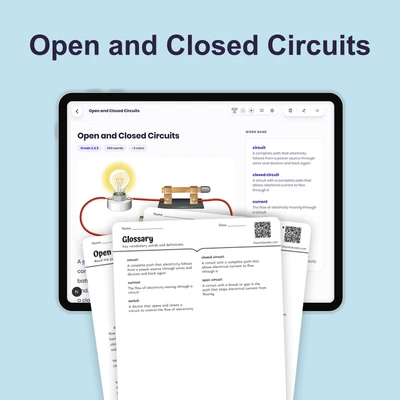
Open and Closed Circuits
This engaging 250-word reading passage teaches Grade 4-5 students about open and closed circuits, aligned with NGSS 4-PS...