Reading PassagePremium

How Do Shield Volcanoes Form

Interactive passage with audio narration, comprehension questions, and printable PDF.

No ratings yet
Grades 5–8ScienceElaEnglish · SpanishInteractive · Printable
Aligned toCCSS.RST.6-8.4MS-ESS2-2
Just this resource
$1.50
One-time purchase
Best value
Unlock everything
$49.99$24.99/yr
50% off until Sept 15 — 10,000+ resources
Renews at $49.99/year.

By completing this purchase you agree to our Terms of Use and Privacy Policy. Your subscription renews automatically until you cancel. You can cancel anytime from your account settings. All sales are final and non-refundable. Digital content is available for download in your account immediately upon purchase.

Unlock above to use these actions

What's included

Reading passage
Audio narration
Comprehension quiz
Writing activity
Glossary & flashcards
Differentiated version
Spanish translation

How Do Shield Volcanoes Form preview and details

About this printable How Do Shield Volcanoes Form science reading passage, NGSS-aligned (Grades 5-8)

This 400-500 word informational science passage explains how shield volcanoes form for middle school students in grades 6-8. Aligned with NGSS standards MS-ESS2.A and MS-ESS2-3, the passage explores the mechanism behind shield volcano formation through gentle, effusive eruptions of thin, runny basaltic lava. Students learn why low-silica lava flows easily and spreads over great distances, creating broad volcanoes with gently sloping sides shaped like a warrior's shield. The passage features real-world examples including Hawaii's Mauna Loa, one of Earth's largest mountains when measured from the seafloor. Audio-integrated content supports diverse learners through multiple modalities. Activities include reading comprehension questions, writing prompts, and graphic organizers that reinforce understanding of volcanic processes and Earth's dynamic systems.
Written by Workybooks TeamPublished by Workybooks
Preview

Sample passage and quiz from How Do Shield Volcanoes Form

Reading passage and comprehension quiz preview

How Do Shield Volcanoes Form
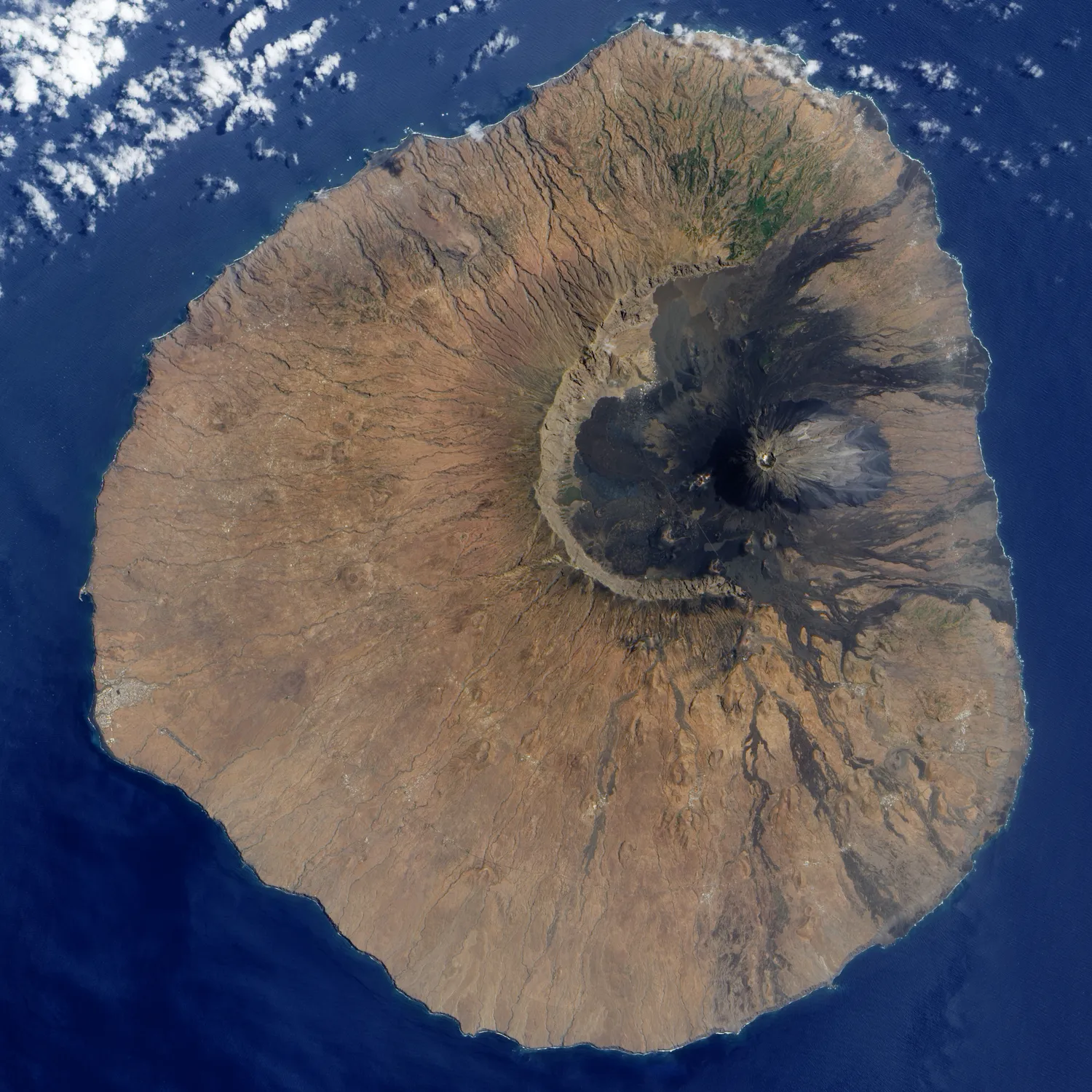
Fogo, Cape Verde Islands

View from space on the West African island of Fogo, Cape Verde. It is some 30 km in diameter, with the caldera of the shield volcano measuring some 9 km across.Image by Jesse Allen
Image created using data from instrument EO-1 ALI, provided courtesy of the NASA EO-1 Team. / Wikimedia Commons

Shield volcanoes form through gentle, effusive eruptions of thin, runny lava over long periods of time. Unlike explosive volcanic eruptions that blast rock and ash into the sky, shield volcanoes grow from many quiet lava flows. The lava that builds these volcanoes is basaltic, meaning it contains low amounts of silica. This low-silica composition makes the lava flow easily, like syrup poured on a plate.

Scientists explain that the runny nature of basaltic lava is key to shield volcano formation. When this lava erupts, it spreads out over great distances before cooling and hardening. Each eruption adds a new layer of mafic rock to the volcano's surface. Over thousands of years, these layers stack up to create a very broad mountain with gently sloping sides. The shape resembles a warrior's shield lying flat on the ground, which is how these volcanoes got their name.

Evidence shows that shield volcanoes are usually non-explosive because their lava contains fewer trapped gases. When gases can escape easily from runny lava, pressure does not build up inside the volcano. This allows the lava to flow steadily rather than explode violently. The volcanic vent at the top releases lava in a relatively calm manner compared to other volcano types.

The Hawaiian Islands provide the most famous examples of shield volcanoes on Earth. Mauna Loa, located on the Big Island of Hawaii, is one of the largest mountains on our planet. When measured from its base on the ocean floor to its peak, Mauna Loa rises more than 30,000 feet. This massive size developed from countless eruptions of basaltic lava over hundreds of thousands of years. Scientists observe that Mauna Loa and other Hawaiian volcanoes continue to grow today through ongoing lava flows.

Understanding how shield volcanoes form helps scientists predict volcanic activity and assess hazards. Shield volcanoes connect to Earth's internal heat and the movement of tectonic plates. These volcanoes demonstrate how Earth's systems work together to shape our planet's surface over geological time scales.

Interesting Fact: Mauna Loa contains enough rock to fill a cube measuring 40 miles on each side. Despite its enormous size, you could walk up its gentle slopes without climbing equipment.

Comprehension quiz (10 questions)

1. What type of eruptions build shield volcanoes?

Gentle, effusive eruptions of runny lava
Explosive eruptions that blast rock and ash
Underwater eruptions only
Eruptions that happen once every million years

2. Why does basaltic lava flow easily?

It contains high amounts of silica
It is very cold when it erupts
It contains low amounts of silica
It has many trapped gases

3. What does the term 'mafic rock' refer to in the passage?

Rock formed from explosive volcanic eruptions
Rock formed from hardened basaltic lava
Rock found only in Hawaii
Rock that contains high amounts of silica

4. According to the passage, what is the main reason shield volcanoes are usually non-explosive?

They are located underwater
Their lava contains fewer trapped gases that can escape easily
They erupt only once in their lifetime
They are smaller than other volcanoes

5. How tall is Mauna Loa when measured from the ocean floor to its peak?

More than 10,000 feet
More than 20,000 feet
More than 30,000 feet
More than 40,000 feet

6. Based on the passage, what can scientists learn by studying shield volcanoes?

How to stop all volcanic eruptions
How Earth's internal heat and tectonic plates shape the surface
How to create new islands instantly
How to make lava flow faster

7. Why are these volcanoes called 'shield' volcanoes?

They protect nearby cities from earthquakes
They are shaped like a warrior's shield lying flat
Ancient warriors built them
They can shield people from lava flows

8. What happens to lava after it erupts from a shield volcano?

It evaporates immediately
It sinks back into the volcano
It spreads over great distances, then cools and hardens
It explodes into tiny pieces

9. True or False: Shield volcanoes form quickly from one or two large explosive eruptions.

True
False

10. True or False: Mauna Loa and other Hawaiian volcanoes continue to grow today through ongoing lava flows.

True
False
Who it's for

Perfect for the way you teach

Teachers
  • Build comprehension skills
  • Auto-graded quiz
  • Differentiated reading
Parents
  • Read together at home
  • Improve fluency
  • Quiet reading time
Homeschoolers
  • Reading curriculum support
  • Independent practice
  • Track Lexile growth
Topics

Reviews & Ratings

No reviews yet. Be the first to share your experience!

More reading you might love

19 more
Worksheet
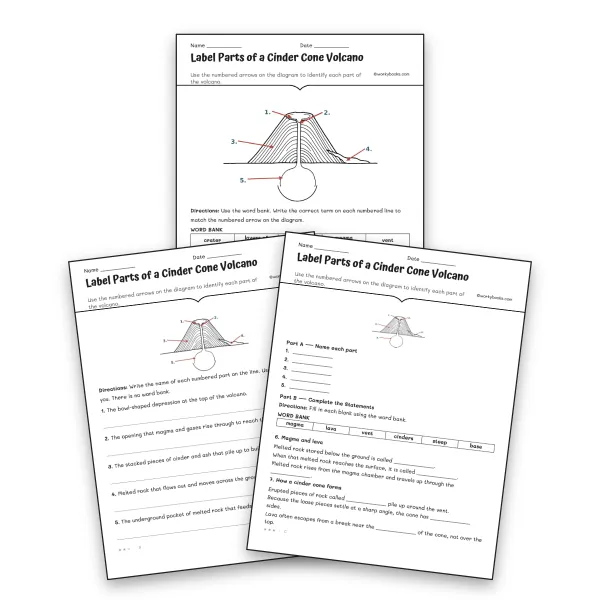
Label Parts of a Cinder Cone Volcano - worksheet educational content
Grades 5–8

Label Parts of a Cinder Cone Volcano

earth and space science · CCSS.RST.6-8.4+1

$1.50
Worksheet
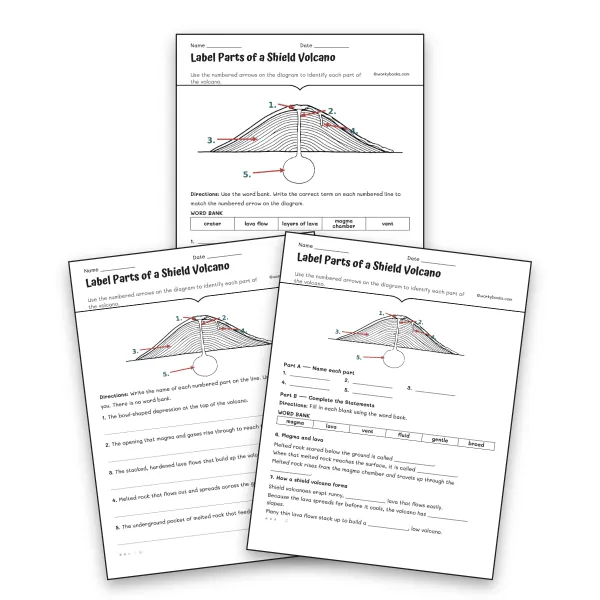
Label Parts of a Shield Volcano - worksheet educational content
Grades 5–8

Label Parts of a Shield Volcano

earth and space science · CCSS.RST.6-8.4+1

$1.50
Passage
Talus Slopes: Formation and Features - reading educational content
Grades 5–8

Talus Slopes: Formation and Features

science · MS-ESS2-1+2

Free
Passage
Stratigraphic Columns: Decoding Earth’s Geological Layers - reading educational content
Grades 5–8

Stratigraphic Columns: Decoding Earth’s Geological Layers

science · MS-ESS2-2+2

Free
Passage
Frost Wedging: How Ice Splits Rock - reading educational content
Grades 5–8

Frost Wedging: How Ice Splits Rock

earth and space science · MS-ESS2-1+2

$1.50
Passage
Chemical Weathering: The Breakdown of Rocks Through Chemical Reactions - reading educational content
Grades 5–8

Chemical Weathering: The Breakdown of Rocks Through Chemical Reactions

earth and space science · MS-ESS2-1+2

Free
Passage
What Is Space Weather and How Does It Affect the Earth? - reading educational content
Grades 3–7

What Is Space Weather and How Does It Affect the Earth?

earth and space science · MS-ESS2-2

$1.50
Passage
When Was The Last Ice Age - reading educational content
Grade 6

When Was The Last Ice Age

earth and space science · MS-ESS2-2

$1.50
Passage
Tools and Technology in Earth Science - reading educational content
Grades 5–8

Tools and Technology in Earth Science

science · MS-ESS2-2+4

$1.50
Passage
Maps and Mapping - reading educational content
Grades 5–8

Maps and Mapping

earth and space science · MS-ESS2-2

$1.50
Passage
Latitude and Longitude - reading educational content
Grades 5–8

Latitude and Longitude

earth and space science · MS-ESS2-2

$1.50
Passage
Topographic Maps - reading educational content
Grades 5–8

Topographic Maps

earth and space science · MS-ESS2-2+3

$1.50
Passage
Contour Lines and Elevation - reading educational content
Grades 5–8

Contour Lines and Elevation

earth and space science · MS-ESS2-2+3

$1.50
Passage
Maps and Their Uses - reading educational content
Grades 5–8

Maps and Their Uses

earth and space science · MS-ESS2-2+5

$1.50
Passage
Mountains and Mountain Building - reading educational content
Grades 5–8

Mountains and Mountain Building

earth and space science · MS-ESS2-1+1

$1.50
Passage
Earth's Interior - reading educational content
Grades 5–8

Earth's Interior

earth and space science · MS-ESS2-1+1

$1.50
Passage
Continental Drift Theory - reading educational content
Grades 5–8

Continental Drift Theory

earth and space science · MS-ESS2-2+1

Free
Passage
Seafloor Spreading - reading educational content
Grades 5–8

Seafloor Spreading

science · MS-ESS2-2+1

$1.50
Passage
Theory of Plate Tectonics - reading educational content
Grades 5–8

Theory of Plate Tectonics

earth and space science · MS-ESS2-2

$1.50
Copyright © 2026 Workybooks. Made with ♥ in California.