How Light Bends
Interactive passage with audio narration, comprehension questions, and printable PDF.
By completing this purchase you agree to our Terms of Use and Privacy Policy. Your subscription renews automatically until you cancel. You can cancel anytime from your account settings. All sales are final and non-refundable. Digital content is available for download in your account immediately upon purchase.
What's included
How Light Bends preview and details
About this printable How Light Bends science reading passage, NGSS-aligned (Grades 3-5)
Sample passage and quiz from How Light Bends
Reading passage and comprehension quiz preview
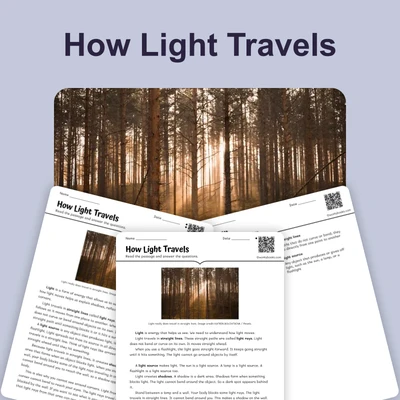
How Light Bends
Light is a form of energy that travels in straight lines. When light moves through one material (a substance like air, water, or glass) and enters a different material, it can change direction. This change helps explain many things we observe in everyday life.
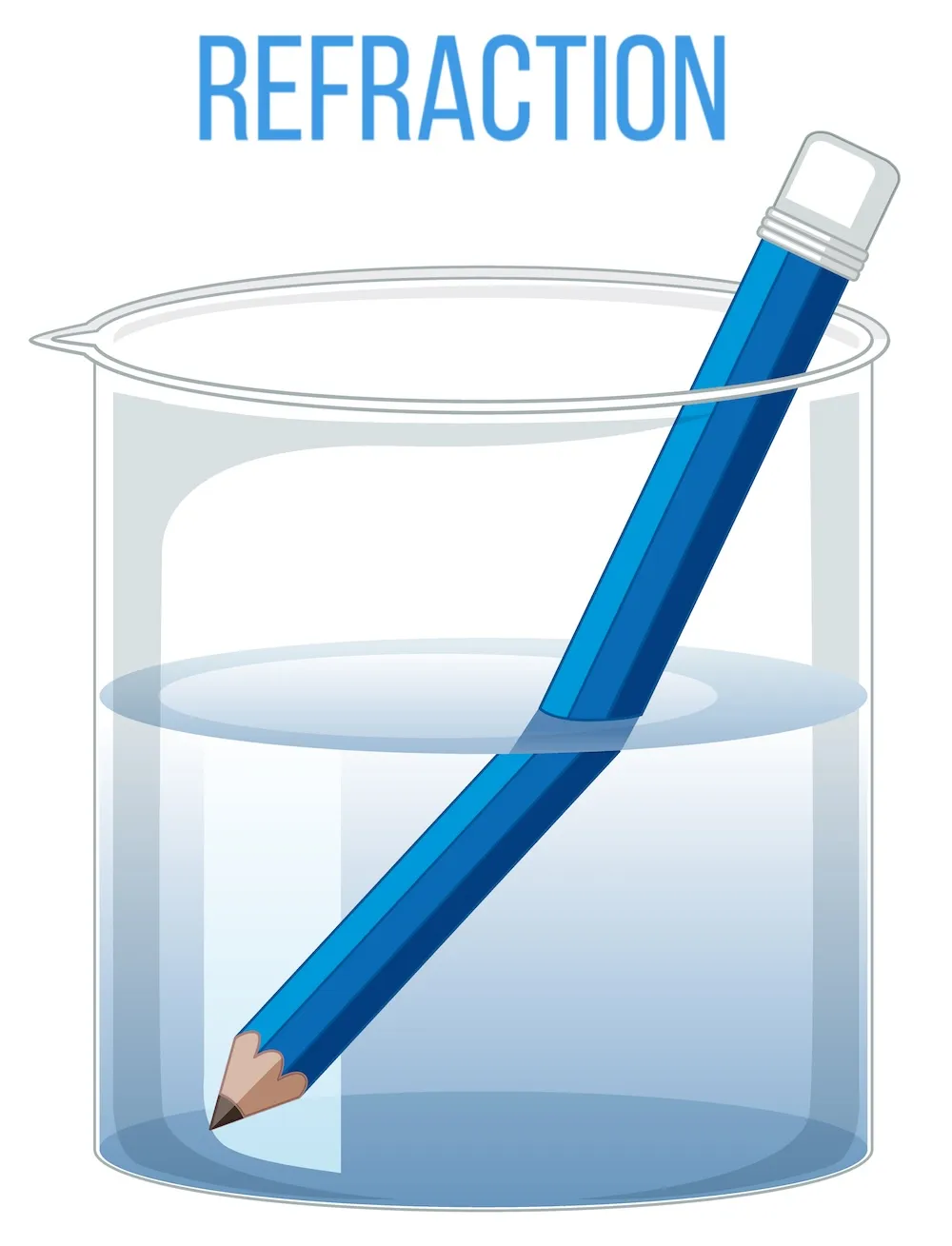
Have you noticed that a straw in a glass of water looks bent or broken at the surface? The straw is not actually bent. Light travels at different speeds through different materials. When light moves from air into water, it slows down and changes direction slightly. This makes the straw appear bent even though it is straight.
The same thing happens when you look at a fish in an aquarium or a pool. The fish may not be exactly where it appears to be. Light coming from the fish bends when it leaves the water and enters the air. Your eyes see the bent light, so the fish looks like it is in a different spot.
This bending of light is why lenses (curved pieces of glass or plastic) work. Eyeglasses use lenses to bend light in helpful ways. The lenses change the direction of light before it reaches your eyes, helping you see more clearly. Magnifying glasses also use this principle to make objects look bigger.
Understanding how light bends when it moves between materials helps us create useful tools and explains the interesting things we see every day.
Comprehension quiz (8 questions)
1. How does light normally travel?
2. What happens to light in water?
3. What are lenses made from?
4. Why does a straw look bent?
5. How do eyeglasses help people see?
6. Why might a fish appear differently?
7. Light is a form of energy.
8. What is a material?
Perfect for the way you teach
- Build comprehension skills
- Auto-graded quiz
- Differentiated reading
- Read together at home
- Improve fluency
- Quiet reading time
- Reading curriculum support
- Independent practice
- Track Lexile growth