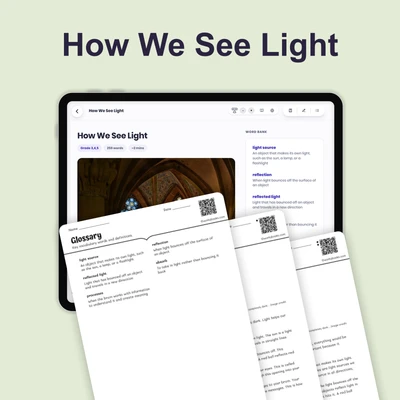
What Is Light
Interactive passage with audio narration, comprehension questions, and printable PDF.
By completing this purchase you agree to our Terms of Use and Privacy Policy. Your subscription renews automatically until you cancel. You can cancel anytime from your account settings. All sales are final and non-refundable. Digital content is available for download in your account immediately upon purchase.
What's included
What Is Light preview and details
About this printable What Is Light science reading passage, NGSS-aligned (Grades 3-5)
Sample passage and quiz from What Is Light
Reading passage and comprehension quiz preview
What Is Light
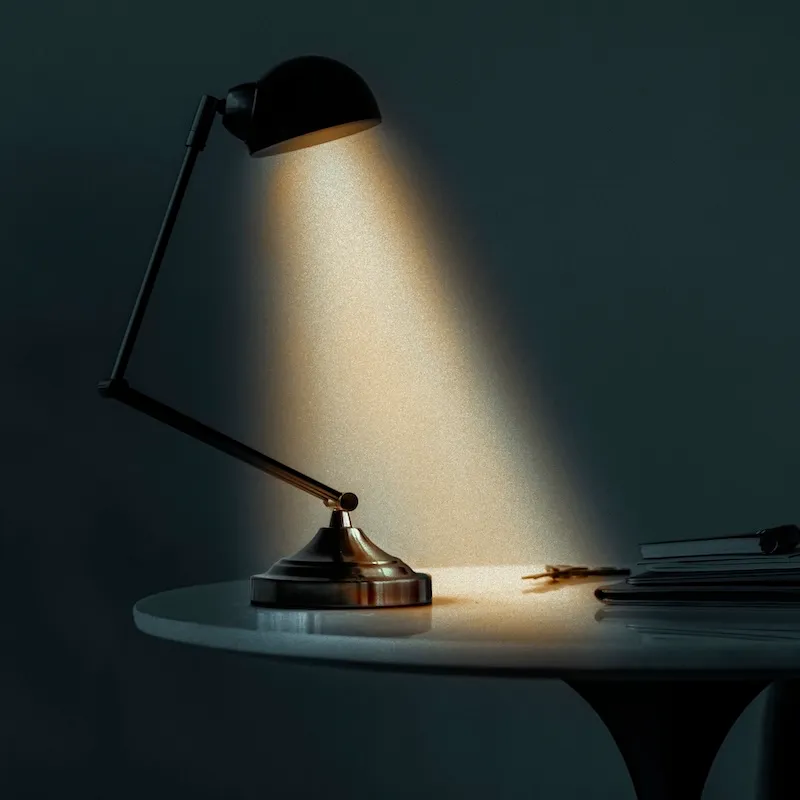
Light is a form of energy that we can see. Energy is the ability to make things happen or change. Light makes it possible for us to see everything around us.
Light comes from different sources. A source is where something comes from. The sun is our biggest and most important light source. It gives us light during the day. Other light sources include light bulbs in our homes and schools, flashlights, candles, and fire. Even some animals, like fireflies, can make their own light!
Without light, we cannot see anything. When you are in a completely dark room, you cannot see the toys, books, or furniture around you. This is because light must travel from a source to the objects around us, and then to our eyes. Think of it like this: light is like a messenger that carries information about objects to your eyes.
During the day, sunlight bounces off objects like your desk, your friend's face, or a tree. This bouncing light then travels to your eyes, and that is how you see things. At night, we use artificial light from light bulbs and other sources. Artificial means made by people, not natural. These light sources help us see when the sun is not shining.
Light travels very fast—faster than anything else in the universe. It can travel through air, water, and even empty space. That is how sunlight reaches Earth from millions of miles away!
Comprehension quiz (8 questions)
1. What is light?
2. What is our biggest light source?
3. What does artificial light mean?
4. Why can't we see in darkness?
5. How does light help us see?
6. What can light travel through?
7. Light is the fastest thing in universe.
8. What does the word 'source' mean?
Perfect for the way you teach
- Build comprehension skills
- Auto-graded quiz
- Differentiated reading
- Read together at home
- Improve fluency
- Quiet reading time
- Reading curriculum support
- Independent practice
- Track Lexile growth