Light Absorption
Interactive passage with audio narration, comprehension questions, and printable PDF.
By completing this purchase you agree to our Terms of Use and Privacy Policy. Your subscription renews automatically until you cancel. You can cancel anytime from your account settings. All sales are final and non-refundable. Digital content is available for download in your account immediately upon purchase.
What's included
Light Absorption preview and details
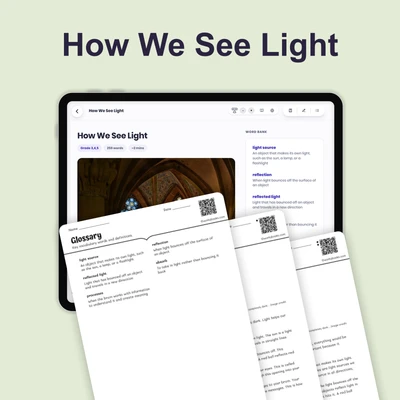
About this printable Light Absorption science reading passage, NGSS-aligned (Grades 3-5)
Sample passage and quiz from Light Absorption
Reading passage and comprehension quiz preview
Light Absorption
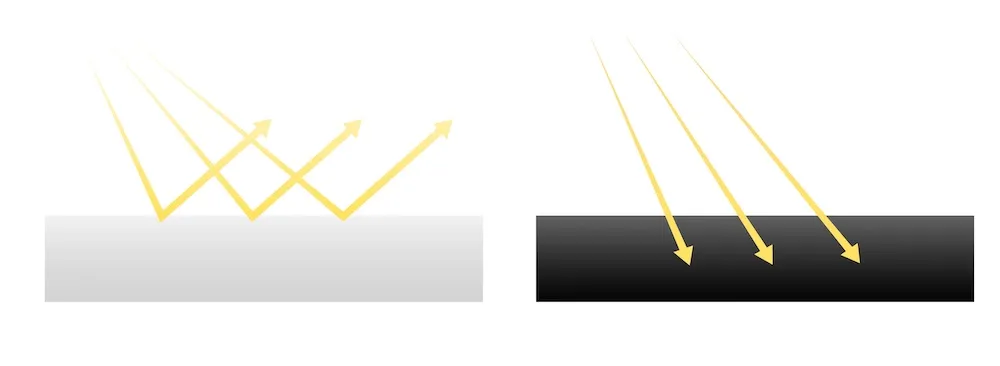
When light from the sun or a lamp hits an object, something interesting happens. The light does not just disappear. Some of the light is absorbed, which means the object takes in the light energy. Some of the light is reflected, which means it bounces off the object and travels in a different direction. The reflected light is what allows us to see the object's color.
Different objects absorb and reflect light in different amounts. Dark-colored objects absorb more light than they reflect. When they absorb light, the energy changes into heat. This is why a black car sitting in the sun feels much hotter than a white car. Light-colored objects do the opposite. They reflect most of the light that hits them and absorb very little. This keeps them cooler.
Think about wearing a dark blue shirt versus a white shirt on a sunny day. The dark shirt absorbs more light wavelengths, which are the different forms of light energy. As it absorbs this energy, it gets warmer, and you feel hotter. The white shirt reflects most wavelengths, so less energy turns into heat. This is why people in hot, sunny places often wear light-colored clothing. Understanding how objects absorb and reflect light helps us make smart choices about what to wear and what colors to use for things like cars, buildings, and even playground equipment.
Comprehension quiz (8 questions)
1. What happens to light energy objects absorb?
2. Which color absorbs more light?
3. What does reflected light let us see?
4. Why does a white car stay cooler?
5. Which shirt keeps you cooler outside?
6. Why do people wear light colors?
7. Light that hits an object always disappears.
8. What are wavelengths?
Perfect for the way you teach
- Build comprehension skills
- Auto-graded quiz
- Differentiated reading
- Read together at home
- Improve fluency
- Quiet reading time
- Reading curriculum support
- Independent practice
- Track Lexile growth