Indigenous Dugout Canoes
Interactive passage with audio narration, comprehension questions, and printable PDF.
By completing this purchase you agree to our Terms of Use and Privacy Policy. Your subscription renews automatically until you cancel. You can cancel anytime from your account settings. All sales are final and non-refundable. Digital content is available for download in your account immediately upon purchase.
What's included
Indigenous Dugout Canoes preview and details
About this printable Indigenous Dugout Canoes reading passage (Grades 5-8)
Sample passage and quiz from Indigenous Dugout Canoes
Reading passage and comprehension quiz preview
Indigenous Dugout Canoes
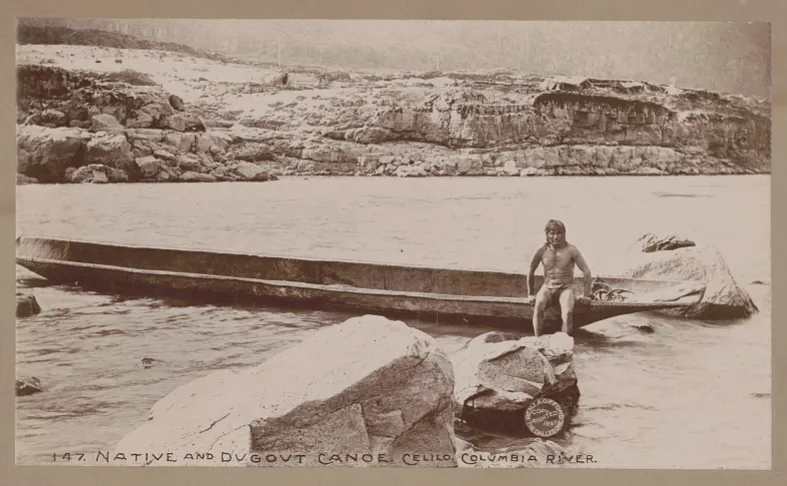
Across the Americas, Indigenous peoples developed innovative solutions to travel and trade in their environments. One of the most important inventions was the dugout canoe, a boat made by hollowing out a single log. Archaeological evidence shows that dugout canoes have been used for thousands of years, with some of the oldest examples found in Florida dating to around 5000 BCE. These watercraft were essential for daily life, helping people move across lakes, rivers, and coastal waters.
The process of making a dugout canoe required both skill and patience. Builders first selected a large, straight tree such as cedar, cypress, or cottonwood. Using controlled burning, they softened the wood and burned away the inner part of the log. This technique was followed by scraping and shaping with stone tools like adzes and chisels. In some regions, such as the Pacific Northwest, carvers decorated the canoes with symbolic designs, showing the connection between technology and culture. An example of this artistry can be seen in the Haida and Chinook peoples, who created large dugout canoes for ocean travel and fishing. Archaeologists have found tools and charred wood remains at ancient canoe-building sites, giving us insight into these methods.
Dugout canoes varied in size and shape according to their purpose and the environment. In the Great Lakes region, the Ojibwe and other groups built canoes for fishing and transporting goods between villages. Some canoes were small enough for one person, while others could hold 20 or more passengers and cargo. The ability to travel by water encouraged trade across great distances, the sharing of ideas, and contact between different groups. This shows how geography influenced Indigenous technology and adaptation to local resources. When European explorers arrived in North America, they noted the skill of Indigenous canoe makers, and some even adopted canoe designs for their own travels.
Over time, the tradition of dugout canoe building continued, although new materials like metal tools and different woods became available. In some areas, such as the Pacific Northwest, communities still build and use dugout canoes as part of cultural celebrations and educational programs. The continuity of this craft demonstrates the importance of technology in shaping daily life and social organization. Dugout canoes are not just practical inventions; they are symbols of identity and community for many Indigenous peoples.
The history of dugout canoes highlights the creativity and ingenuity of Indigenous societies. Their ability to adapt tools and techniques to their environment allowed them to thrive and build complex networks of trade and communication. The study of dugout canoes connects to broader themes in world history, such as technological innovation, the relationship between people and their environment, and the impact of geography on human development.
Interesting Fact: Archaeologists discovered a 6,000-year-old dugout canoe in Newnans Lake, Florida, showing just how ancient this technology is.
Comprehension quiz (8 questions)
1. Where were the oldest dugout canoes found?
2. What tool was used to burn out logs?
3. Which group built large ocean canoes?
4. Why did canoes vary in size?
5. How did canoes impact trade?
6. What does 'adaptation' mean in the passage?
7. Dugout canoes are still built today. (True/False)
8. What does 'ingenuity' mean?
Perfect for the way you teach
- Build comprehension skills
- Auto-graded quiz
- Differentiated reading
- Read together at home
- Improve fluency
- Quiet reading time
- Reading curriculum support
- Independent practice
- Track Lexile growth