Native American Moccasins
Interactive passage with audio narration, comprehension questions, and printable PDF.
By completing this purchase you agree to our Terms of Use and Privacy Policy. Your subscription renews automatically until you cancel. You can cancel anytime from your account settings. All sales are final and non-refundable. Digital content is available for download in your account immediately upon purchase.
What's included
Native American Moccasins preview and details
About this printable Native American Moccasins reading passage (Grades 5-8)
Sample passage and quiz from Native American Moccasins
Reading passage and comprehension quiz preview
Native American Moccasins
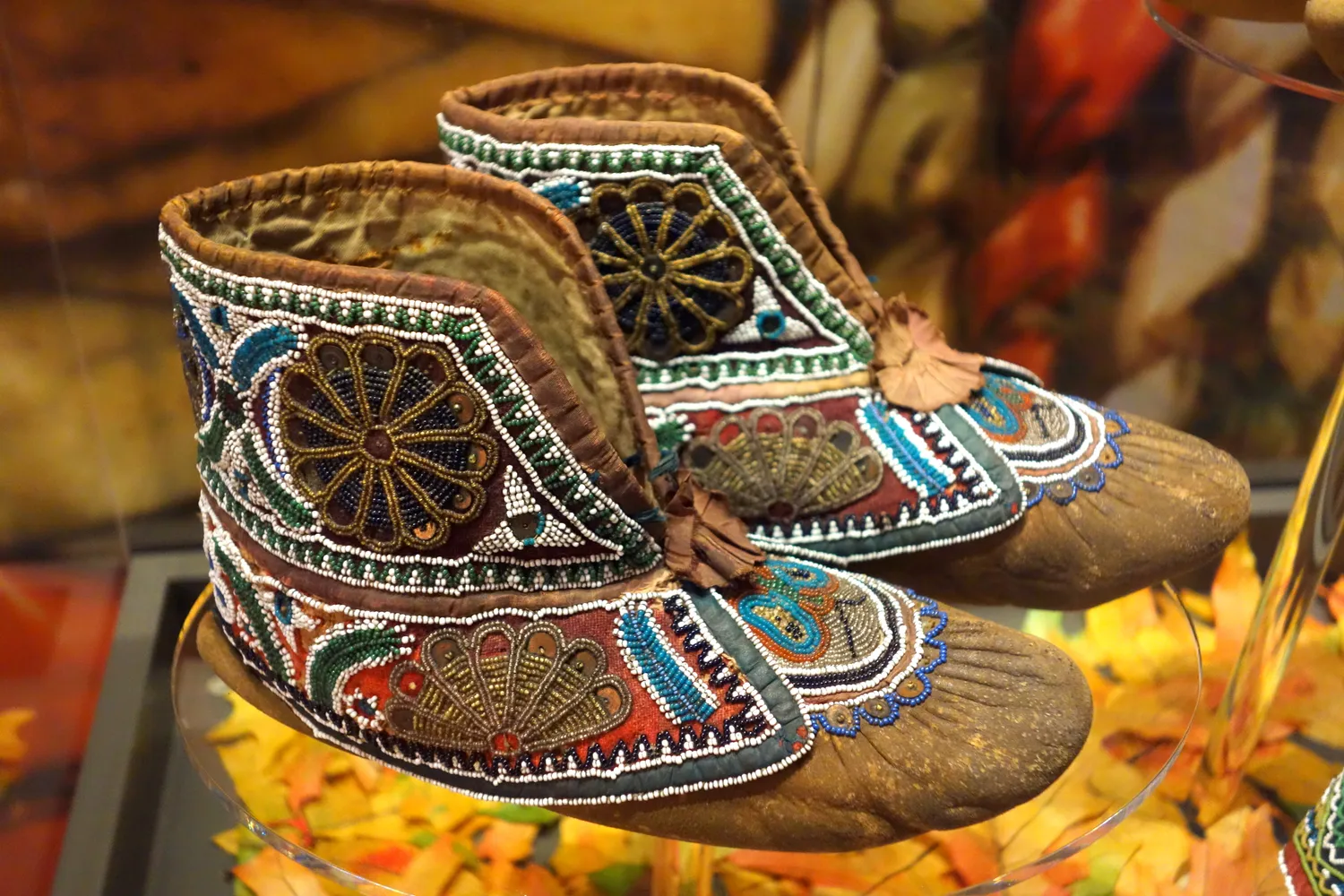
"Huron moccasins, c. 1880 - Bata Shoe Museum - Image by Daderot / Wikimedia Commons (CC0).
Moccasins are a type of soft leather footwear first developed by Native American nations across North America. These shoes were expertly crafted to provide comfort, protection, and flexibility for walking in natural environments. Over time, different Indigenous groups created region-specific designs that reflected not only their culture but also their adaptation to local geography and climate. Today, moccasins remain an important example of technological innovation and cultural identity.
Each Native American nation designed moccasins to fit the needs of their environment. For example, the Plains tribes, such as the Sioux and Cheyenne, made moccasins with hard, thick soles. These hard-sole moccasins protected feet from sharp rocks and dry prairie grasses. Archaeological evidence shows that by the 1700s, Plains moccasins often featured rawhide soles and decorative beadwork, which also reflected social status. In contrast, the Eastern Woodlands peoples, like the Iroquois, wore soft-sole moccasins made from a single piece of deerskin. These shoes allowed quiet movement through forested areas and were often decorated with quillwork or painted designs. The Arctic and Subarctic peoples, including the Inuit, developed tall boots called mukluks, made from sealskin or caribou hide. Mukluks provided insulation against freezing temperatures and snow, demonstrating adaptation to one of the harshest climates on Earth.
Primary sources, such as early European accounts and existing examples in museums, show the diversity and skilled craftsmanship of moccasins. For instance, explorer Samuel de Champlain described the "comfortable and light" shoes worn by Algonquin guides during his expeditions in the early 1600s. Archaeologists have uncovered centuries-old moccasins in dry caves in the American Southwest, revealing construction techniques and materials. While designs varied, all moccasins shared features like soft uppers, stitched seams, and the use of natural resources such as animal hides and sinew thread. Family members often made moccasins for one another, passing down skills and decorative patterns through generations.
Moccasins played a significant role in daily life and social organization. They enabled hunters, traders, and children to travel safely and efficiently, supporting survival and trade. The process of creating moccasins reflected gender roles and community traditions, with women usually responsible for tanning hides and sewing. Over time, moccasins also became symbols of cultural identity and pride, especially during ceremonies and in resistance to outside influences. Even today, many Native communities continue to produce and wear moccasins, keeping traditional techniques alive while also adapting designs for modern use.
Moccasins demonstrate how people creatively responded to their environment. They are not just simple shoes, but a technological achievement that connected resources, climate, and culture. Studying moccasins helps us understand how invention arises from necessity and how daily life shapes and is shaped by geography and history.
Interesting Fact: Some ancient moccasins found in Nevada’s Lovelock Cave are over 2,000 years old, showing that this invention has a very long history in North America.
This topic connects to broader themes of world history, such as innovation, adaptation, and the relationship between people and their environment.
Comprehension quiz (8 questions)
1. Who made the first moccasins?
2. What are mukluks made from?
3. Which tribe developed hard-sole moccasins?
4. Why did Eastern Woodlands moccasins have soft soles?
5. How did climate affect moccasin design?
6. What does archaeological evidence show?
7. Moccasins are still made today. (True or False)
8. What does 'resources' mean in the passage?
Perfect for the way you teach
- Build comprehension skills
- Auto-graded quiz
- Differentiated reading
- Read together at home
- Improve fluency
- Quiet reading time
- Reading curriculum support
- Independent practice
- Track Lexile growth